What comes to mind first when you hear “anti-aging”?
NMN, NAD⁺, metformin, rapamycin, senolytics, biological-age tests…
But whenever I look at this research, I always start with one question.
Did people actually age less?
An improvement in a biomarker is quite different from the brain, heart, and muscles still functioning properly 10 years later.
One line of research has provided a strong answer when it comes to brain health.
It is blood pressure management.
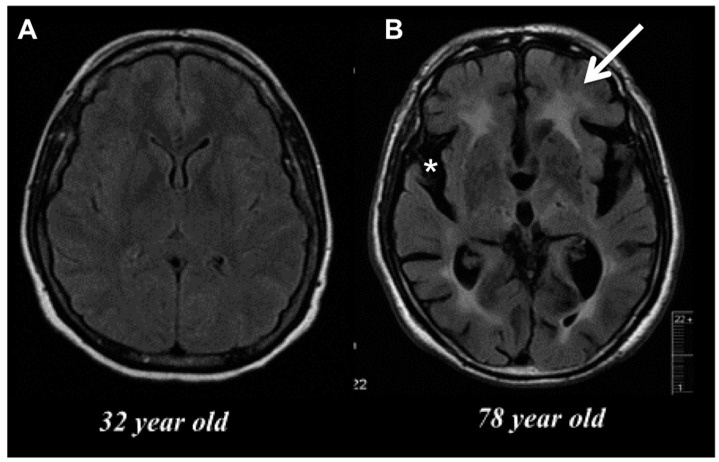
9,361 People Were Divided into Two Groups
SPRINT, led by the U.S. National Institutes of Health, was a large randomized clinical trial.
It enrolled 9,361 people aged 50 or older who had hypertension and cardiovascular risk, and researchers divided them into two groups.
Standard-treatment group
Systolic blood pressure target: below 140 mmHg
Intensive-treatment group
Systolic blood pressure target: below 120 mmHg
In other words, the study tested how far blood pressure should be lowered, rather than testing a particular blood pressure medication.
People with diabetes or a previous stroke were excluded.

The Original Goal Was Not to Study Dementia
SPRINT’s main focus was cardiovascular disease.
In the intensive-treatment group, major cardiovascular events decreased by about 25% and the risk of death from any cause by about 27%. The results were clear enough for the trial to end ahead of schedule.
Researchers added another question.
Could lowering blood pressure intensively also protect the brain?
What did they find?
First, dementia.
Probable dementia was diagnosed in 149 people in the intensive-treatment group and 176 in the standard-treatment group.
The hazard ratio was 0.83, meaning that dementia was about 17% less frequent in the intensive-treatment group.
However, the 95% confidence interval was 0.67–1.04, with P=0.10, so this was not statistically significant.
We therefore cannot say that “lowering blood pressure to 120 or below prevents 17% of dementia.”
The Results Were Different for MCI
MCI, or mild cognitive impairment, can occur between normal aging and dementia.
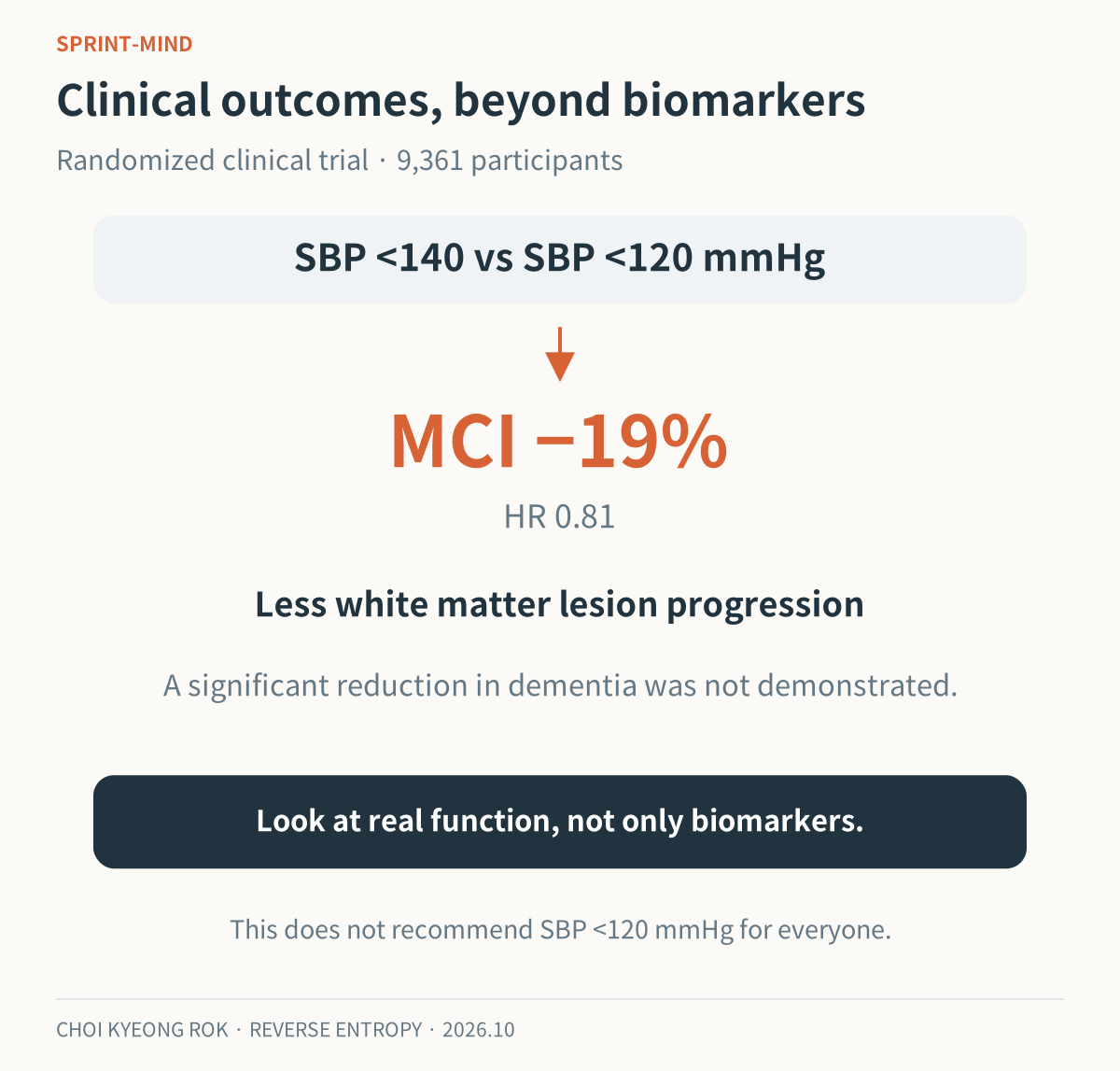
MCI developed in 353 people in the standard-treatment group and 287 in the intensive-treatment group.
The hazard ratio was 0.81.
The occurrence of MCI decreased by about 19%.
This time, the result was statistically significant: P=0.007.
The combined outcome of MCI and probable dementia also decreased by about 15%.
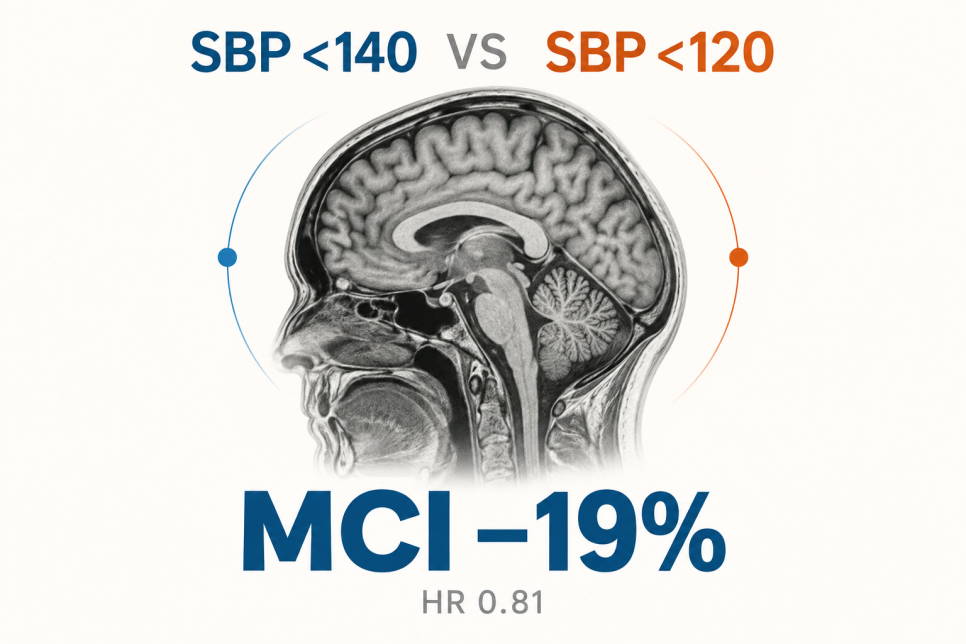
Source: Created by Reverse Entropy / OpenAI ImageGen, 2026. AI-generated explanatory image; the central MRI is not an original image from the study.
Biomarkers and Actual Function Are Different
Recent anti-aging research often reports findings such as these:
NAD⁺ increased.
DNA methylation age decreased.
Inflammatory biomarkers decreased.
These are important measures, but they are fundamentally surrogate markers.
What SPRINT-MIND examined was not the concentration of a substance in the blood, but this:
Did actual people develop cognitive impairment?
That is why I give greater weight to real function and clinical events when evaluating anti-aging research.
Were There Changes on Brain MRI Too?
Researchers performed brain MRI in a subset of participants.
One important measure was white matter lesions.
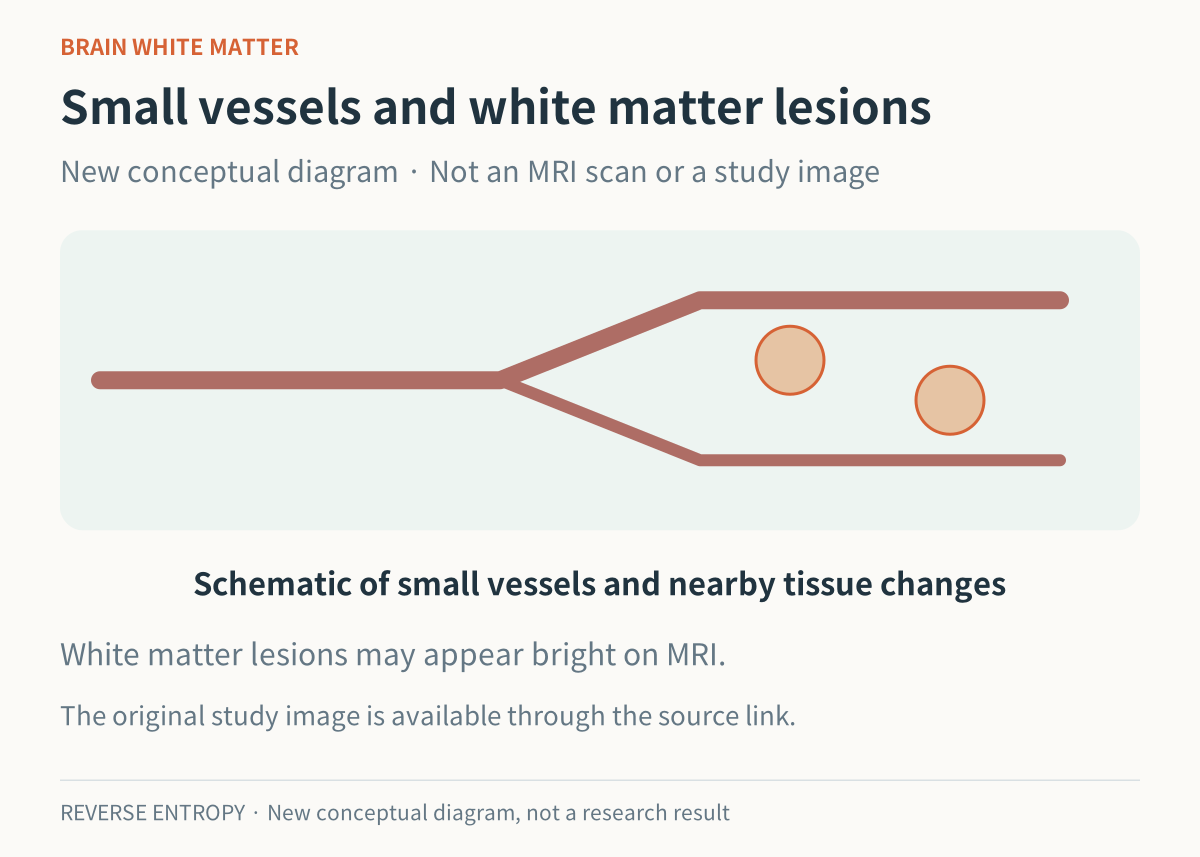
Persistent hypertension and cerebral small vessel disease can damage small vessels and allow white matter changes to accumulate on MRI.
After about four years, the increase in white matter lesion volume was:
Intensive-treatment group: +0.92 cm³
Standard-treatment group: +1.45 cm³
In other words, people whose blood pressure was controlled intensively had
less progression of white matter lesions.
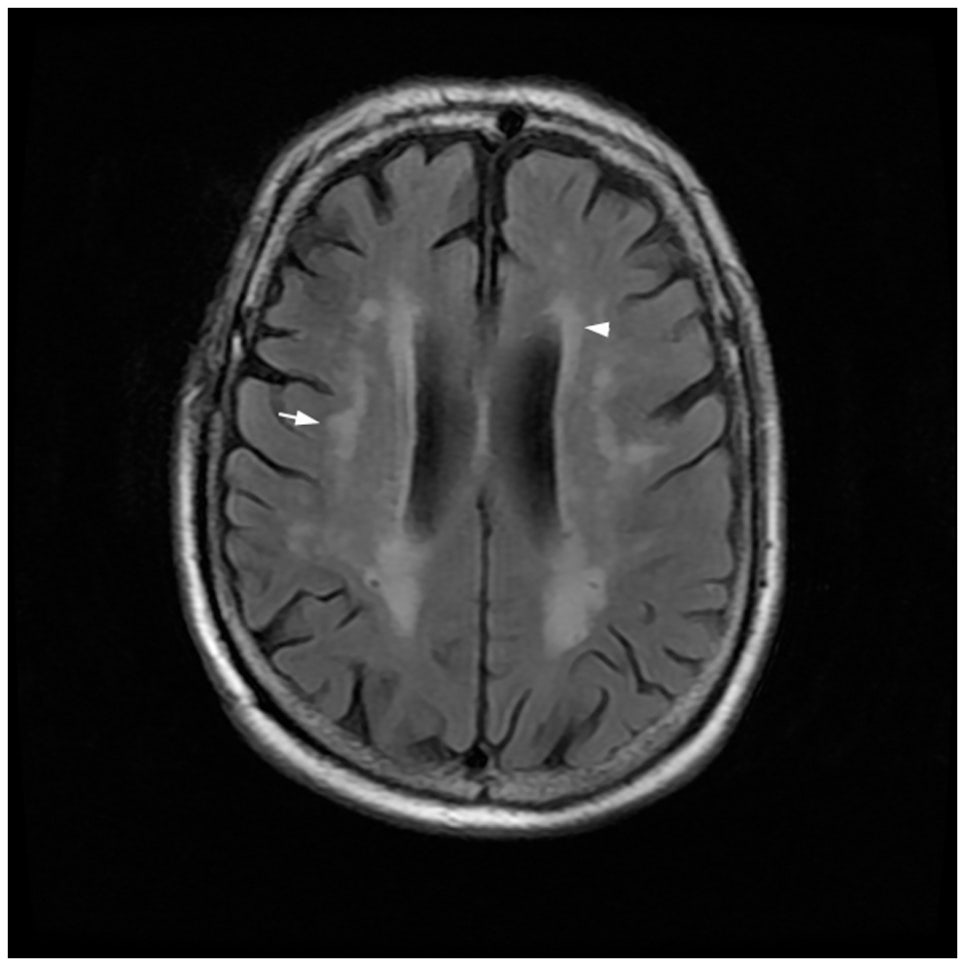
Source: Gao Z et al. White matter hyperintensities on T2-FLAIR. PLOS / Figshare, 2014, Figure 2. Source / CC BY
Does Lowering Blood Pressure Reduce Blood Flow to the Brain?
There is concern that intensively lowering blood pressure, especially in older adults, could reduce cerebral blood flow.
But in the SPRINT-MIND MRI substudy, whole-brain blood flow increased rather than decreased in the intensive-treatment group. The difference was particularly large among participants with existing cardiovascular disease.
This result alone cannot establish that increased cerebral blood flow caused the reduction in MCI.
However, it does not fit the simplistic explanation that “lowering blood pressure to around 120 leaves the brain short of blood.”
When Blood Vessels Age, the Brain Ages Too
Brain aging is often described as:
amyloid → tau → nerve-cell damage → Alzheimer disease
But the brains of older adults are more complicated in reality.
With age, small blood vessels in the brain become damaged, endothelial function declines, and microinfarcts, white matter damage, and changes in the blood–brain barrier accumulate.
Not only nerve cells but also the system supplying blood to the brain ages.
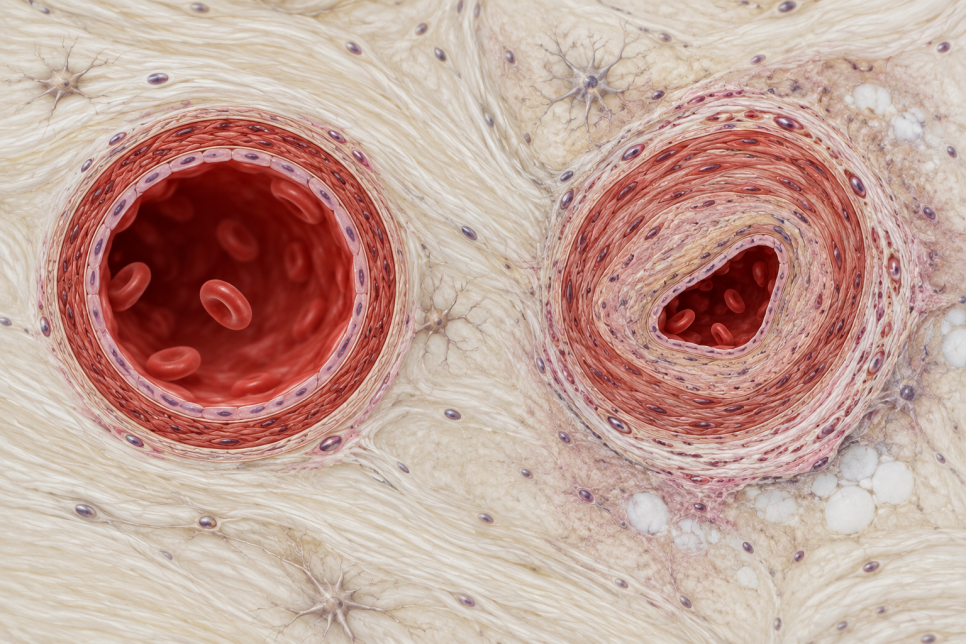
Source: Created by Reverse Entropy / OpenAI ImageGen, 2026. AI-generated explanatory illustration of the mechanism; not an actual tissue-biopsy image.
There Are Also Uncomfortable Findings
In the MRI study, total brain volume decreased by about 30.6 cm³ in the intensive-treatment group and about 26.9 cm³ in the standard-treatment group.
The reduction was actually a little greater in the intensive-treatment group.
It is unclear whether this represents an actual loss of neural tissue or an MRI change related to blood pressure and fluid shifts.
Saying that “lowering blood pressure makes the brain younger” would therefore also be an exaggeration.
What the current data allow us to say is this:
Intensive blood pressure control reduced the progression of white matter lesions associated with cerebral small vessel disease, and also reduced the occurrence of MCI.
“But It Still Did Not Reduce Dementia, Did It?”
That is correct, if we look only at the original study.
However, SPRINT ended early because the reductions in cardiovascular disease and mortality were clear. Unlike myocardial infarction, dementia does not generate large numbers of events over a short period, so there were relatively few events during the study.
The accurate interpretation is therefore not
“it was proven that there is no effect on dementia,”
but rather that dementia was 17% less frequent in the intensive-treatment group, yet the difference could not be established statistically.
What Happened with Longer Follow-Up?
The direction of the findings was similar in long-term follow-up.
For probable dementia, HR was 0.86, about 14% lower, but the result was not statistically significant.
In contrast, HR was 0.87 for MCI and 0.89 for MCI or probable dementia, both statistically significant.
The effects were not dramatic, but that may make them more realistic.
Is Blood Pressure Better the Further It Falls Below 120?
SPRINT should not be interpreted to mean that everyone must lower their blood pressure to 120 or below.
People with diabetes and a previous stroke were excluded, and hypotension, syncope, electrolyte abnormalities, and acute kidney injury were more common in the intensive-treatment group.
Age, orthostatic hypotension, kidney function, medications, and fall risk all need to be considered together.
Increasing your blood pressure medication on your own simply because you have seen the number 120 is therefore a completely different matter.
Why I Consider This Anti-Aging Research
Anti-aging is not simply about lowering a number called biological age.
A biological-age result that comes back four years younger does not mean you have actually become four years younger.
The important questions are these:
Does your brain still work properly at 70?
Can you still walk at 80?
Are you living without myocardial infarction or stroke?
From that perspective, SPRINT-MIND is an important anti-aging study.
Rather than using a new drug or supplement, it managed a long-established risk factor: blood pressure.
Actual MCI occurrence decreased,
white matter lesion progression slowed,
and cerebral blood flow did not decrease.
These findings came from a large randomized clinical trial.
The Best Anti-Aging Treatment May Already Be in Front of Us
The anti-aging field focuses heavily on new technologies such as NMN, rapamycin, senolytics, and partial reprogramming.
But
being new and having reliably demonstrated effects are different things.
More important than how many times NAD⁺ increased or how many years biological age decreased is one question:
Do people actually remain healthy and functional for longer?
This is precisely why SPRINT-MIND is interesting.
Ways to slow brain aging may not lie only in the new drugs of the future.
Managing the familiar factors of blood pressure, exercise, blood glucose, lipids, and smoking.
Some powerful anti-aging strategies that can be applied to people today may be underestimated precisely because they are so familiar.
I intend to ask the same question whenever I encounter a new anti-aging treatment:
“So, beyond the biomarkers, did people actually age less?”
Research that passes this test will be closer to genuine anti-aging research.
Key Studies Referenced
Williamson JD, et al.
Effect of Intensive vs Standard Blood Pressure Control on Probable Dementia: A Randomized Clinical Trial.
JAMA. 2019;321:553-561.
The main SPRINT-MIND cognitive outcomes study.
Nasrallah IM, et al.
Association of Intensive vs Standard Blood Pressure Control With Cerebral White Matter Lesions.
JAMA. 2019;322:524-534.
The SPRINT-MIND MRI study.
Dolui S, et al.
Association of Intensive vs Standard Blood Pressure Control With Cerebral Blood Flow.
JAMA Neurology. 2022.
The SPRINT-MIND cerebral blood flow MRI substudy.
SPRINT MIND Investigators.
Long-Term Effect of Intensive Blood Pressure Control on Mild Cognitive Impairment and Dementia.
Neurology. 2025.
The SPRINT-MIND long-term cognitive follow-up study.
#AntiAging #AgingResearch #BloodPressure #Hypertension #BrainAging #Dementia #DementiaPrevention #MildCognitiveImpairment #MCI #SPRINTMIND #VascularAging #BrainHealth #WhiteMatterLesions #Healthspan #ReverseEntropy