“Your blood glucose is a little high. Please exercise and watch what you eat.”
Some of you may have heard this at a health checkup, yet found that everyday life did not change very much afterward.
You may not have enough time to exercise. You may not want to give up the enjoyment of food. Perhaps you have tried several times but could not keep it up.
Should you wait until you can change your lifestyle perfectly?
I think that when someone has a confirmed risk of diabetes but finds it difficult to do enough through exercise and diet, prevention with metformin is also worth actively considering.

Not being able to follow the best approach does not mean you have to give up the other options too.
I also had impaired fasting glucose. After taking metformin, my fasting glucose is now controlled within the normal range. These experiences and ideas are part of why Wegovy, metformin, and continuous glucose monitoring are included in my anti-aging protocol. (Of course, I exercise hard as well, haha.)
An important human clinical trial supports this discussion.
1. Can medication prevent diabetes before it develops?
This was the Diabetes Prevention Program, or DPP, published in the New England Journal of Medicine in 2002.
Researchers randomly assigned 3,234 adults who did not yet have diabetes but had elevated fasting glucose and glucose-tolerance test results, together with overweight or obesity, to three groups. The average follow-up was 2.8 years. [1]
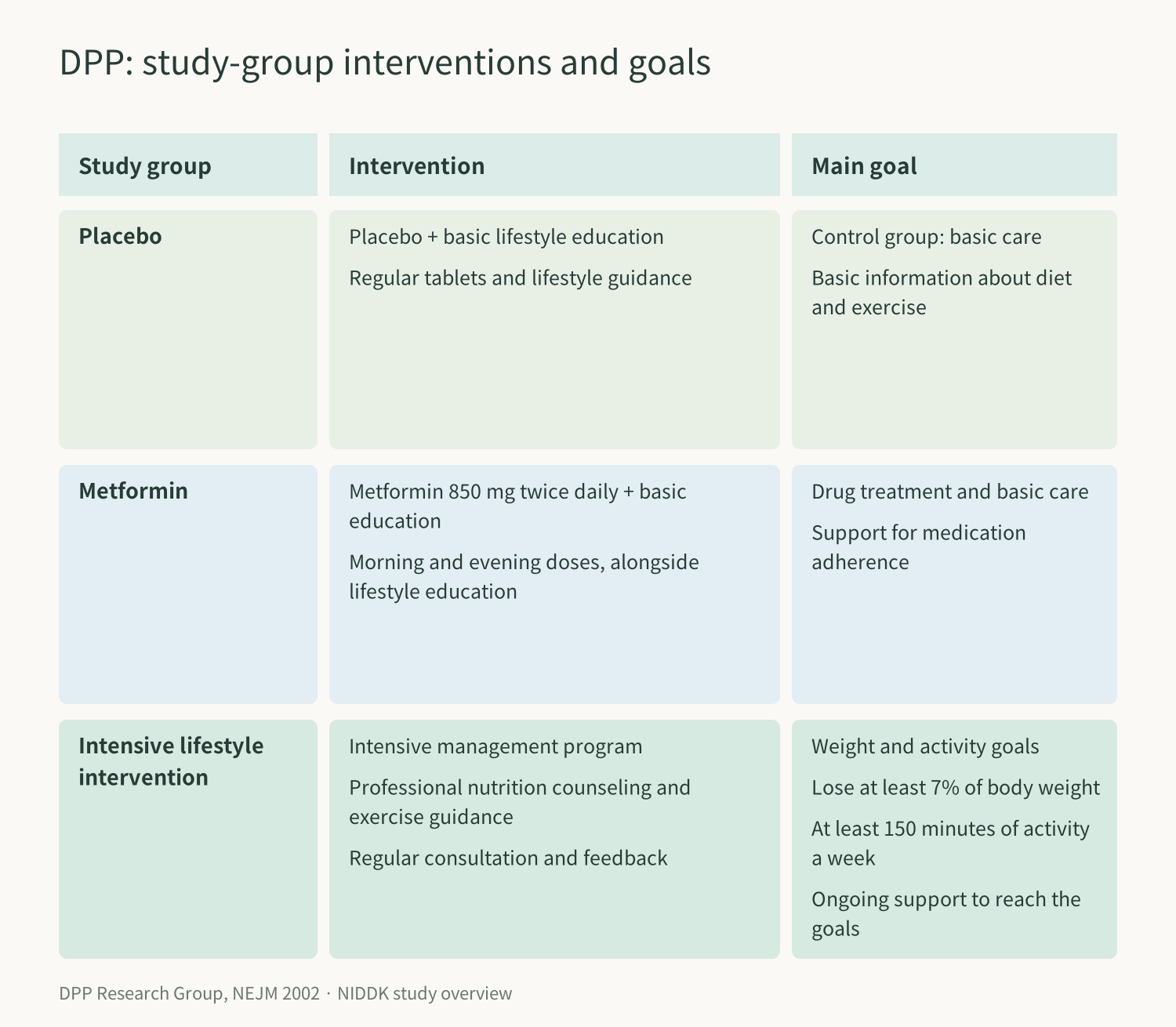
The intensive lifestyle group received at least 16 individual training sessions during the first 24 weeks, followed by ongoing support. The metformin and placebo groups received basic education about diet and exercise. [2]
The results were clear.
Compared with placebo, diabetes incidence was reduced by 58% in the lifestyle group and 31% in the metformin group. [1]
The estimated cumulative incidence at three years was as follows.
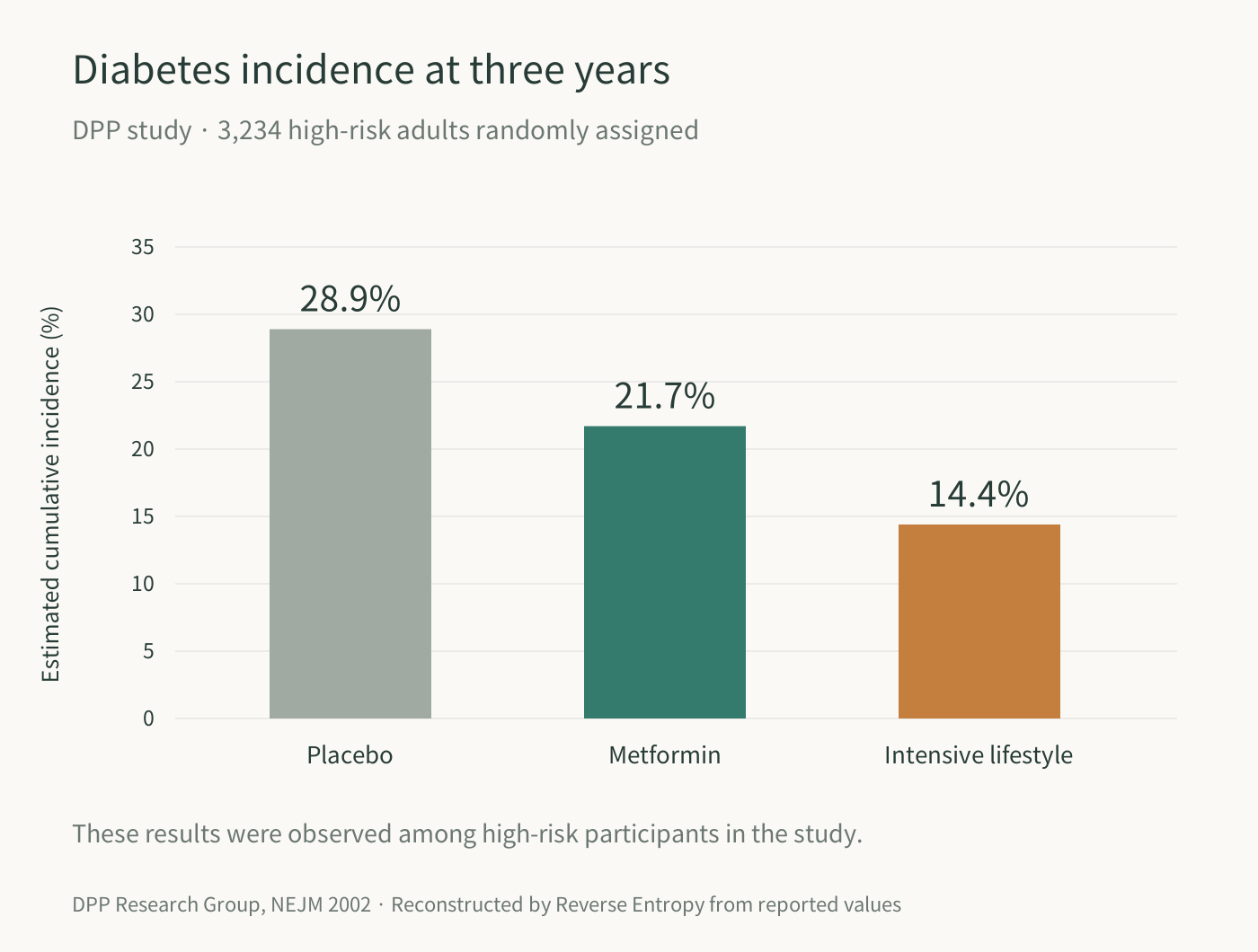
Source: Diabetes Prevention Program Research Group. New England Journal of Medicine. 2002;346:393–403, “Incidence of Diabetes” section. Reconstructed by Reverse Entropy from publicly reported values. Source paper. An original Reverse Entropy graphic, not a reproduction of a figure from the paper.
About 28.9% of the placebo group, 21.7% of the metformin group, and 14.4% of the intensive lifestyle group progressed to diabetes.
The metformin group was 7.2 percentage points lower than placebo, and the lifestyle group was 14.5 percentage points lower. The earlier figures of 31% and 58% were relative reductions comparing incidence rates across the full follow-up period. They are calculated differently from the differences in three-year cumulative incidence. [1]
Intensive lifestyle intervention was the most effective approach, and metformin also significantly reduced the development of diabetes.
2. I do not read this study only as “exercise is better than medication”
When people introduce this study, the conclusion is often, “As expected, exercise and diet are important.”
I notice another point too: people who did not take part in an intensive lifestyle program still had an effective preventive option in metformin.
In real life, not everyone can lose weight, exercise for a set number of minutes every week, and consistently manage their diet.
Is it enough to keep telling that person, “Improve your lifestyle first, then come back”?
What matters to me is reducing risk through a method that person can actually carry out.
If intensive exercise and dietary management are possible, that is excellent. If they are difficult, we should also consider help from medication.
The judgment can change if the realistic alternative to metformin is not a perfect lifestyle, but continuing without much change at all.
3. How does metformin control blood glucose?
Blood glucose is not determined only by the food you eat. The liver also makes glucose and releases it into the bloodstream.
Metformin works by reducing glucose production and release from the liver and improving the body’s response to insulin. Its mechanism differs from drugs that directly stimulate insulin secretion. [3]
I regard it as an excellent medicine that is generally well tolerated.
4. Clinical guidelines also consider it for prevention
The Korean Diabetes Association’s 2025 clinical practice guidelines recommend considering metformin for diabetes prevention in adults with prediabetes and overweight or obesity. [4]
The American Diabetes Association’s 2026 guidelines also recommend considering preventive use in adults at high risk of diabetes. They particularly highlight people aged 25–59 with severe obesity, higher fasting glucose or HbA1c, or a history of gestational diabetes. [5]
So the discussion should not end with, “Why take medication when I don’t even have diabetes?”
“What is my current diabetes risk, and are the expected benefits of medication greater than its side effects and burdens?”
It is important to answer that question by considering glucose tests, weight, age, medical history, and kidney function together. Once we establish whether someone is a candidate for medication, we can discuss preventive options more concretely.
5. Why my anti-aging protocol includes three tools
I do not want to approach metabolic management as a matter of willpower alone. I use different tools to manage how much I eat, control blood glucose, and check my actual response.
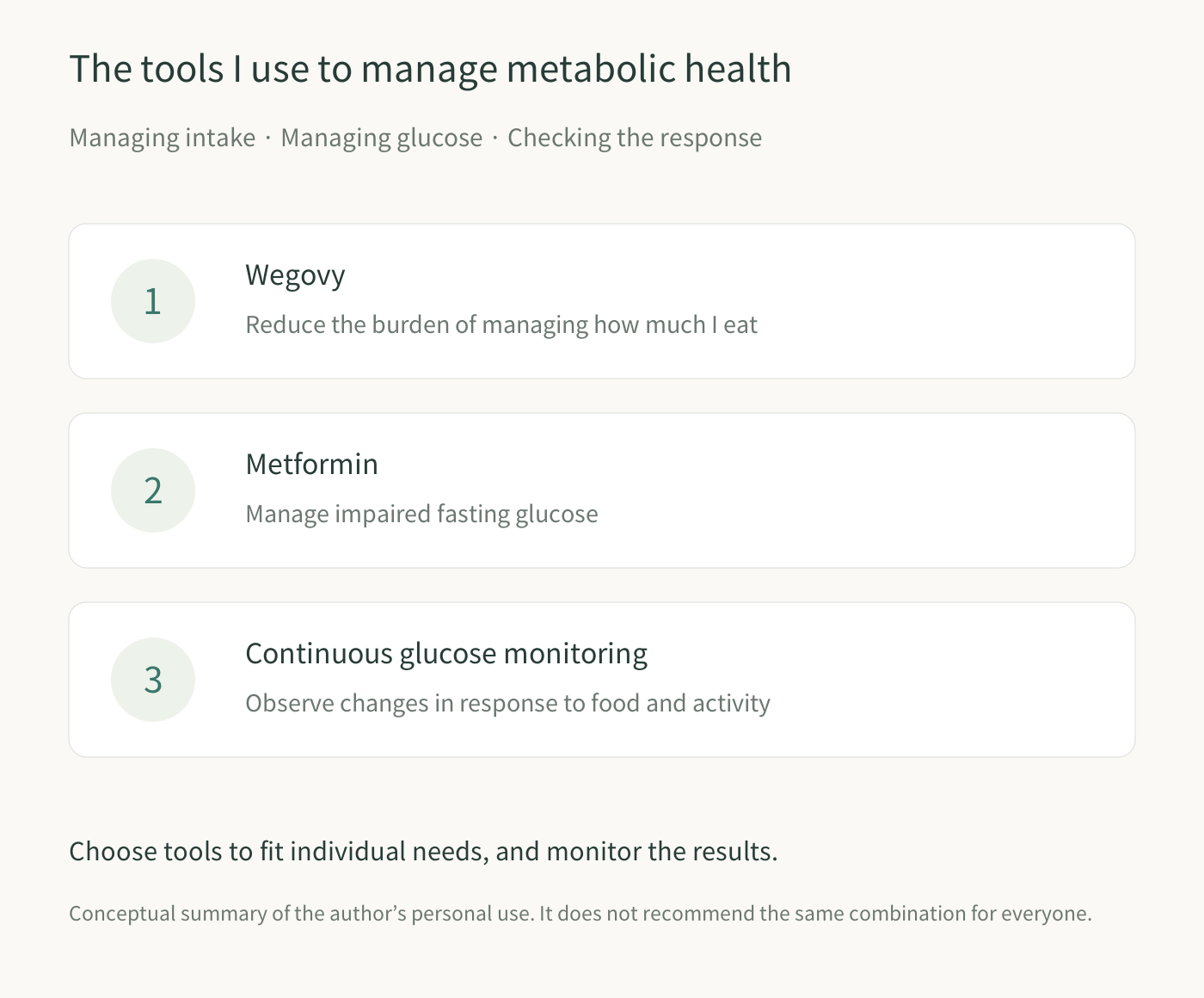
Source: Created by Reverse Entropy from the author’s account of personal use. Drug mechanisms refer to DailyMed prescribing information; the diagnostic scope of CGM refers to the ADA 2026 guidelines. Source guidance. An original Reverse Entropy graphic, not a reproduction of a research figure.
Wegovy: a tool to reduce the burden of controlling how much I eat
Semaglutide, the ingredient in Wegovy, acts on appetite to reduce calorie intake and regulates insulin and glucagon secretion in a glucose-dependent manner. [6]
One reason I use it is that I do not want to leave controlling my food intake entirely to willpower.
If constantly resisting hunger to eat less is hard to sustain, I think there is a role for a tool that reduces that burden. Whether to use it should be decided by considering weight, associated conditions, and the treatment’s indications together.
In my own case, I pay little attention to weight itself and keep the dose minimal, using it mainly to prevent late-night eating or overeating.
Metformin: blood-glucose management and anti-aging
In my case, metformin helps manage impaired fasting glucose.
I also think metformin has considerable potential as an anti-aging drug. I plan to discuss that in detail in a future post.
Continuous glucose monitoring: assessment, checking, and feedback
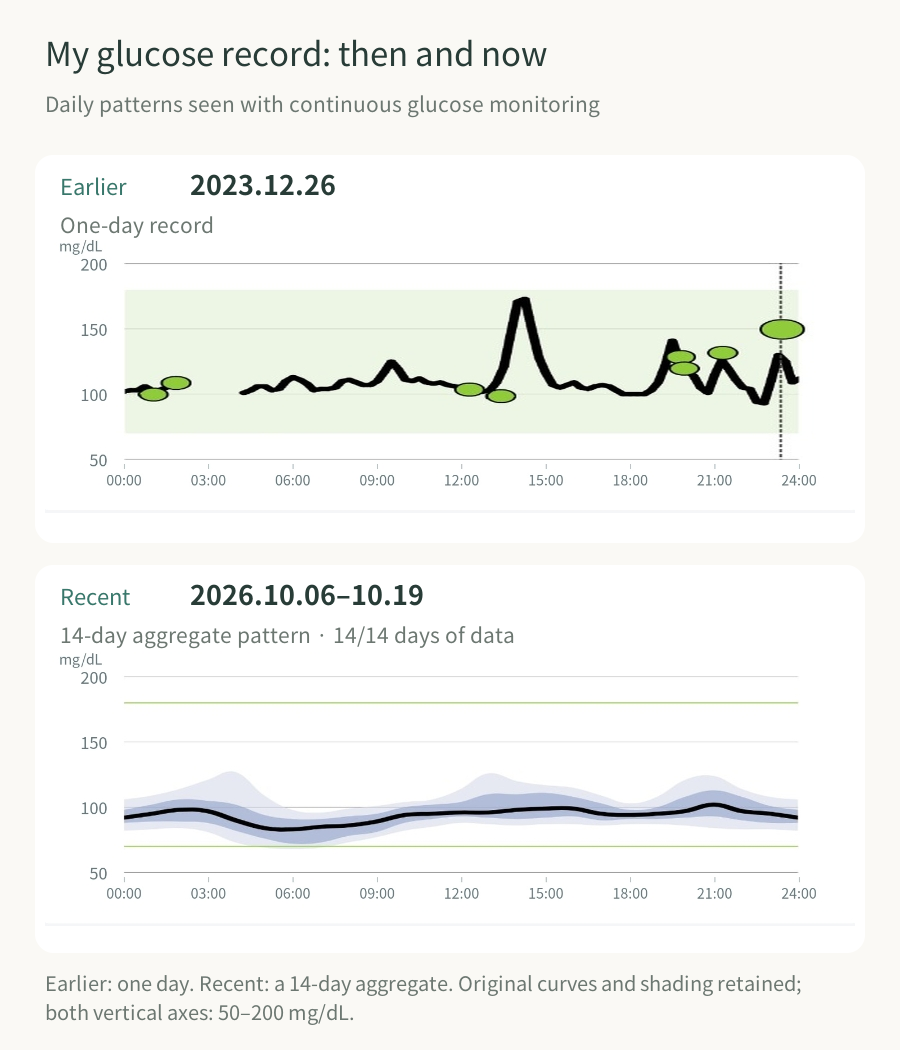
A continuous glucose monitor measures glucose in the fluid between cells under the skin and shows how it changes over time. It lets us see daily patterns that are difficult to capture with a single blood sample. [4]
I view it as a supporting tool for observing responses to food and activity.
Rather than assuming, “This is a healthy food, so it must be fine,” or, “Eating this much probably isn’t a problem,” I can refer to the changes that actually appear.
Diagnosis and long-term assessment are carried out together with validated tests, including fasting glucose and HbA1c.
My goal is not to eliminate every small wiggle in the glucose graph. It is to understand my current state, intervene where needed, and check the result.
6. What to watch out for
When choosing metformin, kidney function and any discomfort during treatment should be checked along with blood glucose.
Common problems include gastrointestinal symptoms such as diarrhea and nausea. Vitamin B12 deficiency should also be monitored with long-term use. Metformin is contraindicated in severe kidney impairment, so kidney function needs to be checked before starting and during treatment. [3] [5]
The 1,700 mg per day used in the DPP was a study dose. The actual prescription and dose should be determined by the individual’s glucose status, kidney function, and side effects.
For reference, I personally take 250 mg once a day after lunch.
7. Anti-aging can begin with managing risks that are already present
When we hear “anti-aging,” it is easy to think first of a new substance or special treatment. I also think it is important to manage problems already identified in my own body.
Impaired fasting glucose was one of those problems for me. I checked my glucose, applied the methods I needed, and continue to monitor it.
In the DPP discussed today, intervening in people at high risk did reduce or delay the development of diabetes. [1]
If you cannot do the best thing, you do not have to give up the next-best option
I do not want to read this paper and end with, “So don’t take medication; just exercise.”
If you are at risk of diabetes but do not want to exercise and manage your diet, or find it difficult to keep doing so, getting help from metformin after checking that it is appropriate for you is a realistic choice.
You do not have to postpone the opportunity for prevention just because you have not changed your lifestyle perfectly. You can use medication while adding whatever changes you can manage.
You do not have to do everything well at once in order to start.
My conclusion
Use continuous glucose monitoring to help understand your own patterns, alongside the tests discussed above.
If you have a blood-glucose problem and do not want to exercise, at least consider metformin with your clinician!
References
1. Diabetes Prevention Program Research Group. Reduction in the Incidence of Type 2 Diabetes with Lifestyle Intervention or Metformin. New England Journal of Medicine. 2002;346:393–403. DOI: 10.1056/NEJMoa012512. Source
2. NIDDK. Diabetes Prevention Program (DPP). Source
3. DailyMed. Metformin hydrochloride: prescribing information. Mechanism of action, kidney function, and vitamin B12 information. Source
4. Korean Diabetes Association. 2025 Clinical Practice Guidelines for Diabetes Management in Korea: Recommendation of the Korean Diabetes Association. Diabetes & Metabolism Journal. 2025;49:582–783. DOI: 10.4093/dmj.2025.0469. Source
5. American Diabetes Association. Prevention or Delay of Diabetes and Associated Comorbidities: Standards of Care in Diabetes—2026. Diabetes Care. 2026. DOI: 10.2337/dc26-S003. Source
6. DailyMed. Wegovy (semaglutide): prescribing information. Source
7. American Diabetes Association. Diagnosis and Classification of Diabetes: Standards of Care in Diabetes—2026. Diabetes Care. 2026. DOI: 10.2337/dc26-S002. Source
#Metformin #DiabetesPrevention #Prediabetes #ImpairedFastingGlucose #GlucoseManagement #InsulinResistance #Wegovy #ContinuousGlucoseMonitoring #CGM #AntiAging #Healthspan #ReverseEntropy #HINClinic