Hello, I’m Dr. Choi. I have a doctorate in medical science and run an anti-aging and aesthetic dermatology clinic in Cheongdam, Seoul.
Here’s the bottom line.
In some human trials, people taking metformin gained less muscle or cardiorespiratory fitness from exercise than those who did not take it.
They got less out of the same training. They still benefited from exercise.
If you’re working out to stay healthy and taking a drug in hopes of slowing aging, it’s worth asking what to do if the drug cuts into your training gains.
Same workouts, different muscle gains
In the 2019 MASTERS trial, adults aged 65 or older without diabetes took either 1,700 mg of metformin per day or a placebo. Both groups did the same strength training for 14 weeks. Of 109 people randomized, 94 completed the trial. [1]
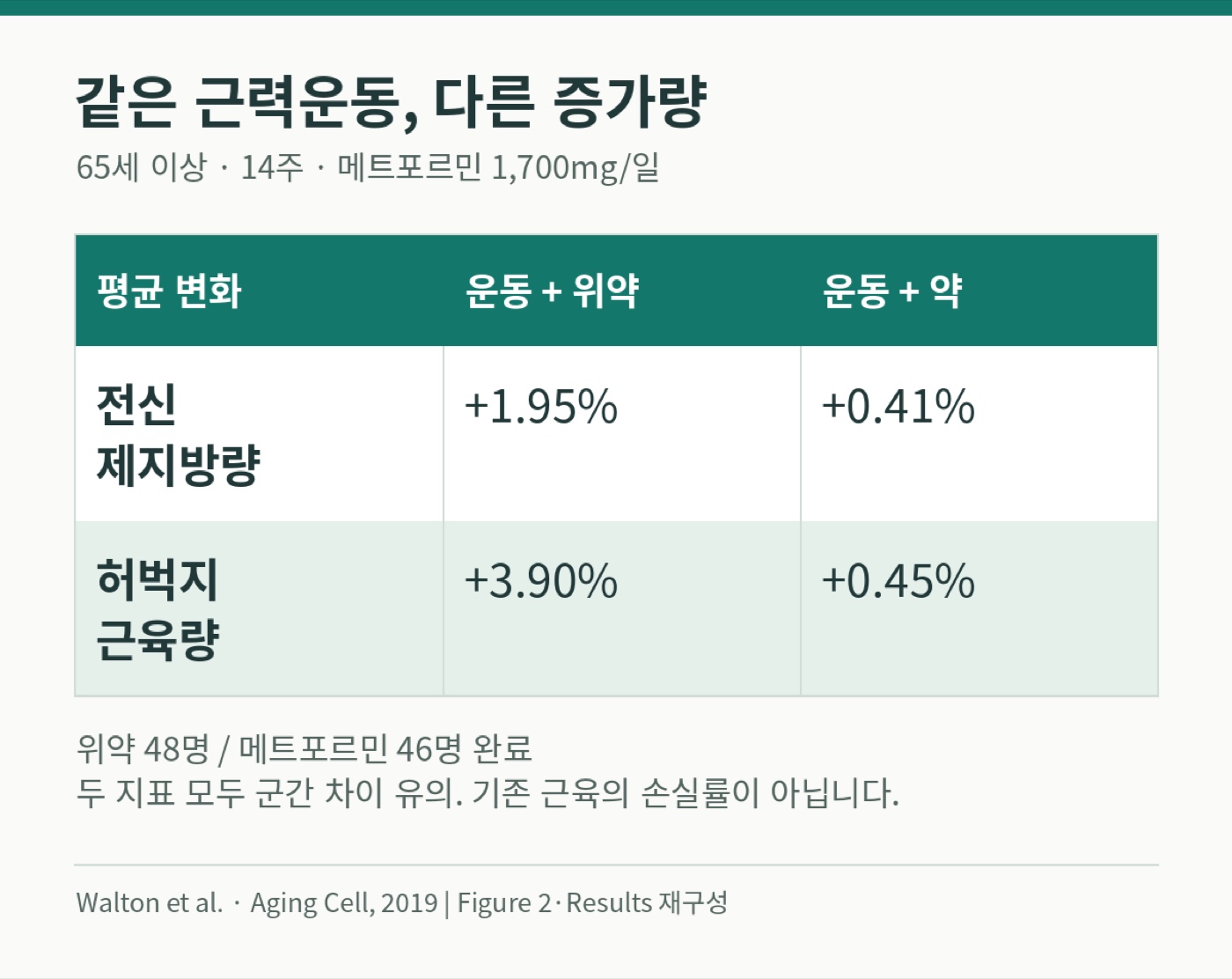
Whole-body lean mass rose by 1.95% on average in the placebo group and 0.41% in the metformin group. Thigh muscle mass rose by 3.90% and 0.45%, respectively. Both differences were statistically significant.
The metformin group still gained strength and improved exercise performance. They simply gained less muscle from the same training. Lean mass is the weight of everything other than fat; it is not the same as muscle mass.
Why might this happen?
Exercise puts the body under stress. The body responds by growing muscle and learning to use energy more efficiently. What matters is how it processes the signals it gets during a workout.
Metformin also influences cellular energy metabolism and growth signals. In some settings, its effects may overlap with the response to training and blunt muscle growth or improvements in mitochondrial function. Which pathways are involved, and how much each contributes, is still being studied. [1] [2]
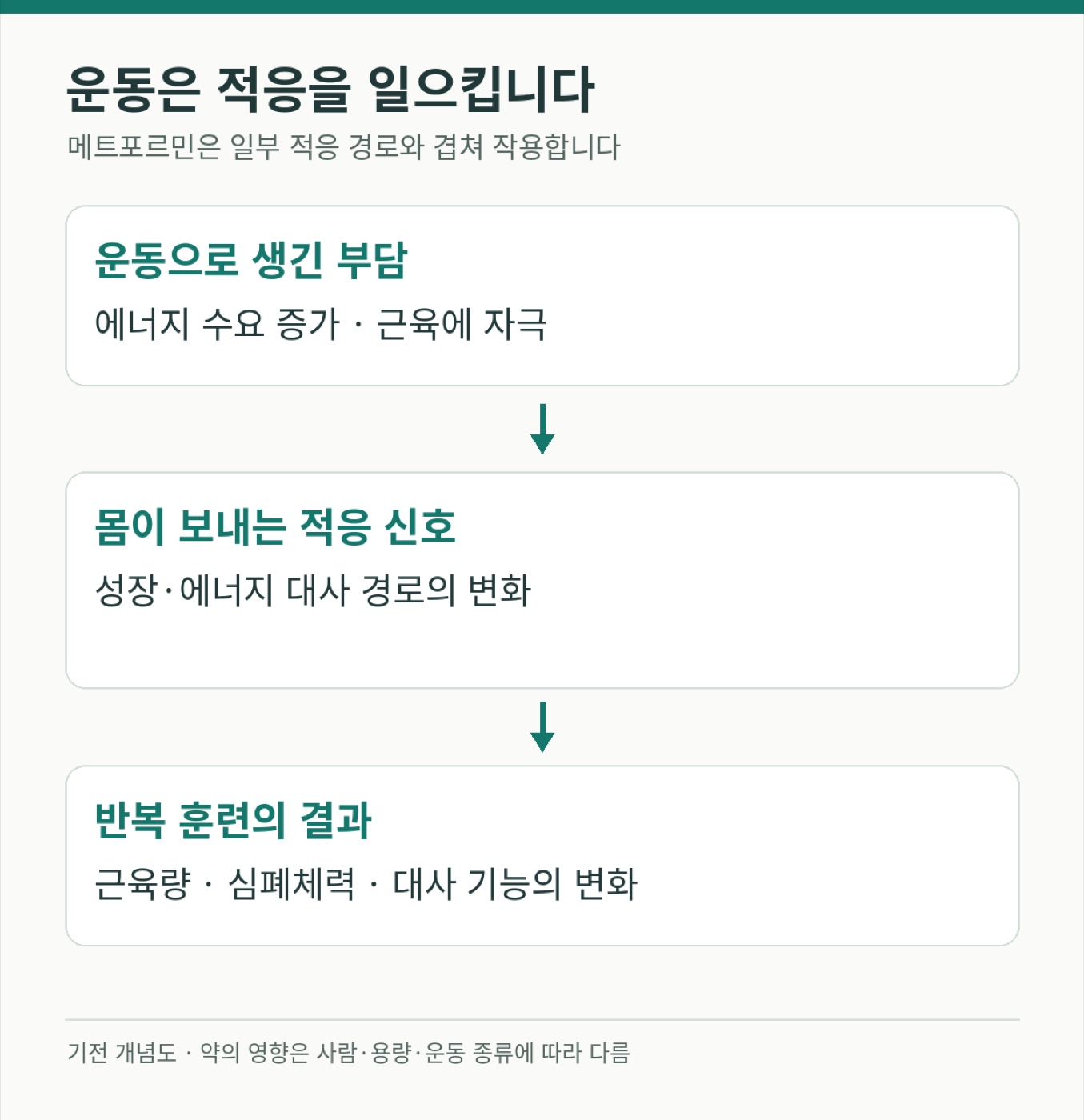
Anti-inflammatory or metabolic benefits don’t guarantee that a drug will make exercise work better. You have to study the two together to find out what happens in people.
There was a similar signal with aerobic exercise
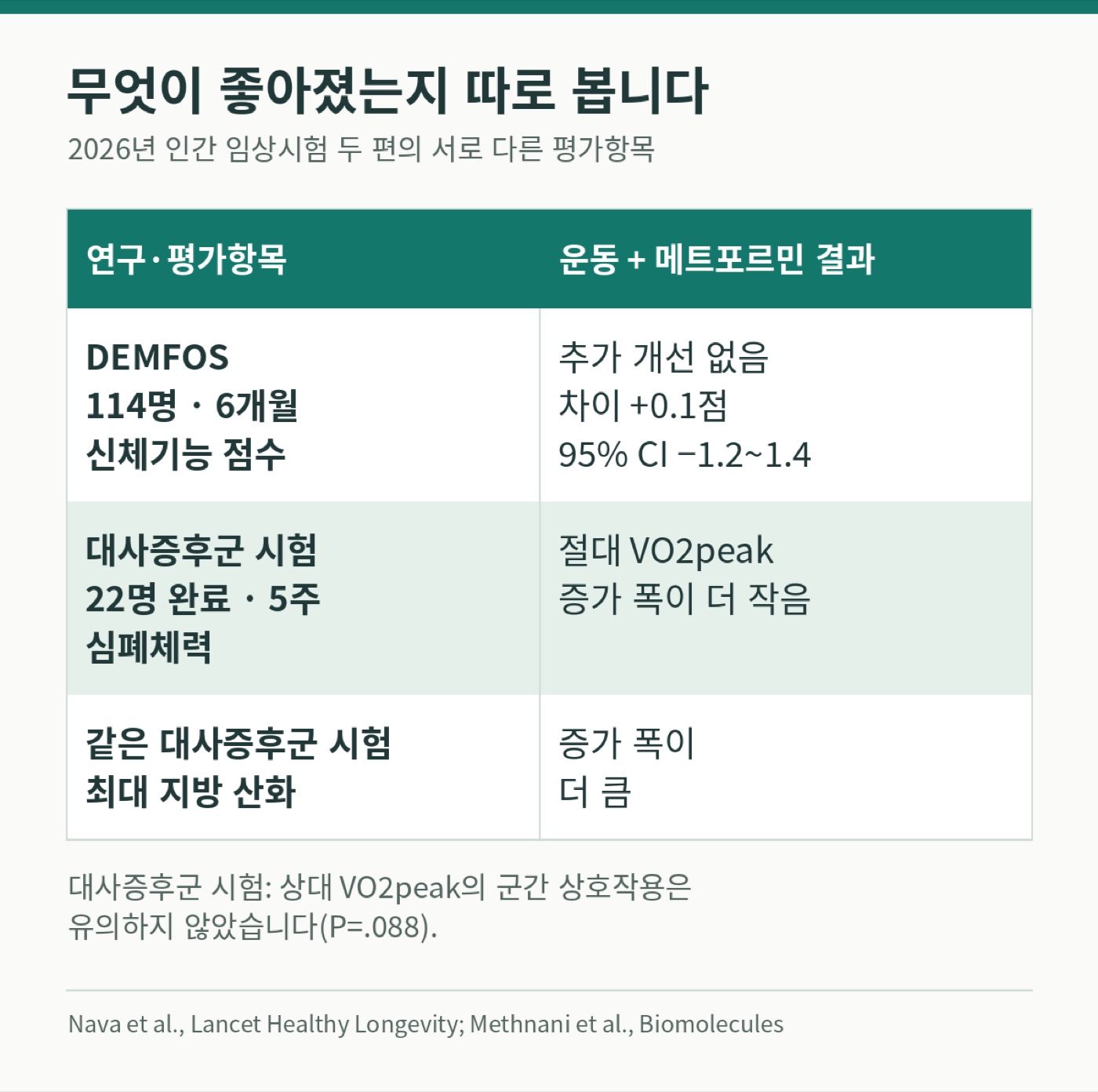
In a 12-week trial of 53 adults with an average age of 62, peak oxygen uptake tended to improve less in the metformin group. That difference was not statistically significant, but the groups differed in their adaptations in muscle mitochondrial respiration and insulin sensitivity. [2]
Was that just one study?
A 2026 meta-analysis in eClinicalMedicine reviewed nine studies with 827 participants. Among the five studies that measured cardiorespiratory fitness, the pooled gain was on average about 1.19 mL/kg/min smaller when participants combined exercise and metformin. [3]
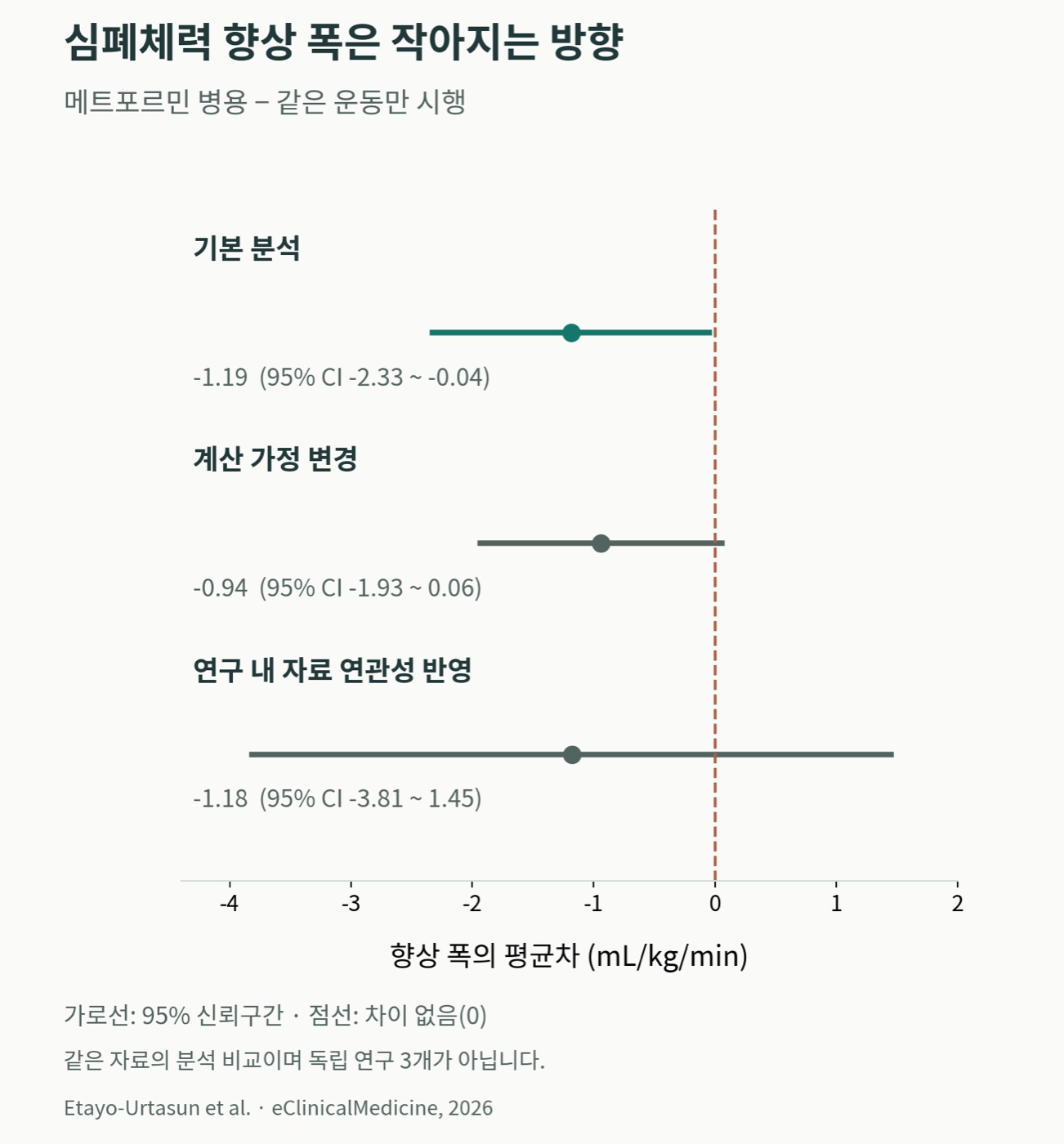
Changing the analysis method removed the statistical significance. The data do not support saying that everyone will benefit less from exercise.
Some people may see smaller adaptations to training.
Look at muscle, fitness, and blood glucose separately
Calling everything “the benefits of exercise” makes the results harder to interpret. Bigger muscles, less breathlessness, and lower blood sugar are different outcomes.
In the 2026 DEMFOS trial, which assessed 114 older adults with obesity, adding metformin to a diet and exercise program did not worsen physical function. [4]
A small trial that year in people with metabolic syndrome produced another finding. The rise in cardiorespiratory fitness tended to be smaller with metformin, but the ability to use fat during exercise improved more. [5]
This is why I start by asking why someone takes metformin. If you need to treat diabetes, controlling blood sugar is a clear goal. One finding about muscle growth is not enough to give up that benefit.
The calculation changes if your blood sugar is normal and you are considering metformin solely for healthy aging. With no established benefit for lifespan in healthy people, is the potential trade-off in exercise adaptation worth it?
What do I do?
I still take it.
I take 250 mg at lunch every day and do strength training three times a week.
Weighing the possible anti-inflammatory, glucose-control, and healthy-aging benefits, I decided I had more to gain than to lose.
As I mentioned in an earlier post, I had impaired fasting glucose, and my blood glucose profile is now steady on this routine.
My own hunch is that I can make up for smaller gains by training more. That is my judgment, not an established result.
How I think about different situations
This is my personal framework based on several studies and my prescribing experience. It may change as more evidence emerges. These examples describe options to discuss with a clinician. They are not instructions to start, stop, or change a prescription. Metformin has no established benefit as an anti-aging treatment in healthy people.
Diabetes, obesity, or cardiovascular disease. I give priority to active treatment tailored to the condition, including medication where indicated; that decision does not start and end with metformin.
Impaired glucose tolerance, impaired fasting glucose, high cholesterol, mild obesity, or age 40 and over. My original framework discusses lower-dose metformin (250–500 mg per day), more strength training, and, when clinically indicated, lower-dose semaglutide (Wegovy) or tirzepatide (Mounjaro). Age or a cholesterol result alone does not establish an indication. Approved uses vary by country.
Normal blood glucose, healthy weight, and under 40. I start with exercise. My original post also raised the possibility of taking 250 mg only on non-training days. That is a personal proposal; current evidence does not establish that it improves aging outcomes or preserves the benefits of exercise.
References
- Walton RG, et al. MASTERS trial. Aging Cell. 2019. Original paper · 2020 correction.
- Konopka AR, et al. Metformin inhibits mitochondrial adaptations to aerobic exercise training in older adults. Aging Cell. 2019. Original paper.
- Etayo-Urtasun P, et al. Systematic review and meta-analysis of exercise and metformin. eClinicalMedicine. 2026. Original paper.
- Nava MLD, et al. DEMFOS trial. Lancet Healthy Longevity. 2026. Original paper.
- Methnani J, et al. Randomized trial of aerobic training and metformin in metabolic syndrome. Biomolecules. 2026. Original paper.
#Metformin #StrengthTraining #Sarcopenia #CardiorespiratoryFitness #Prediabetes #HealthyAging #Healthspan #ReverseEntropy #HINClinic