If your hair starts shedding while you are taking Mounjaro or Wegovy, look at your rate of weight loss, food intake and pattern of shedding together. Finding the trigger may let you adjust the plan without giving up treatment.
You have lost weight and feel lighter, but one day there is much more hair in the shower drain. “Am I going to lose my hair along with the weight?” It is a reasonable concern. Shedding was reported in clinical trials. To understand it, look both at the numbers and at what your body went through while losing weight.

1. How often did trials report hair loss?
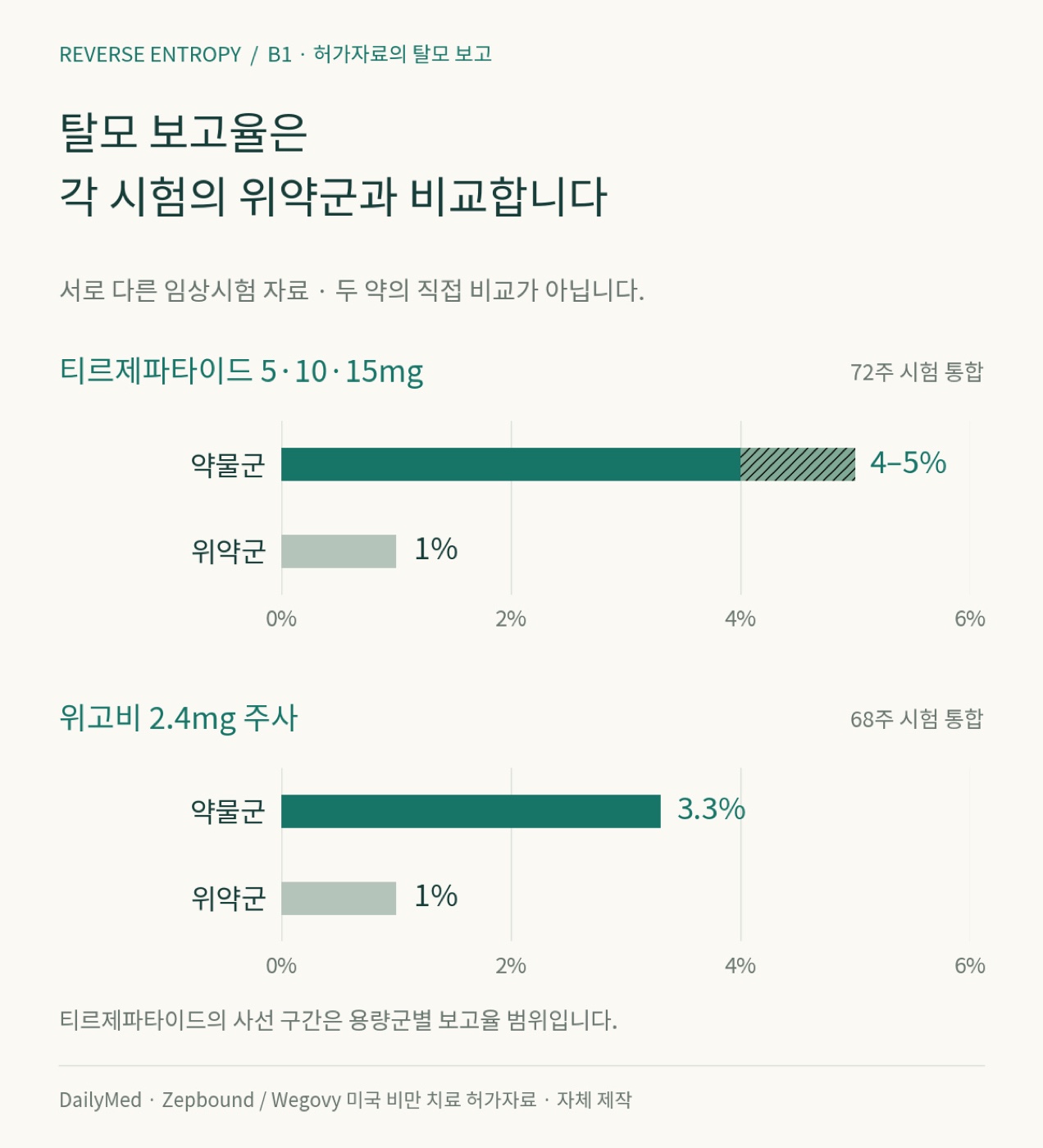
In US weight-management labeling, tirzepatide, the active ingredient in Mounjaro, is marketed for weight management as Zepbound. Hair loss was reported in 4–5% of tirzepatide recipients, depending on dose, and 3.3% with Wegovy 2.4 mg injections. These were pooled data from separate 72-week and 68-week trials, respectively, so the figures do not establish which drug is more likely to cause hair loss. [1] [2]
A 2026 meta-analysis of seven randomized trials and two nonrandomized intervention studies reported about 3.25 times the risk with GLP-1 receptor agonists versus placebo (RR 3.252; 95% CI 1.437–7.358). That leaves a more useful question: what set the shedding in motion? [3]
2. Rapid weight loss can disrupt the hair growth cycle
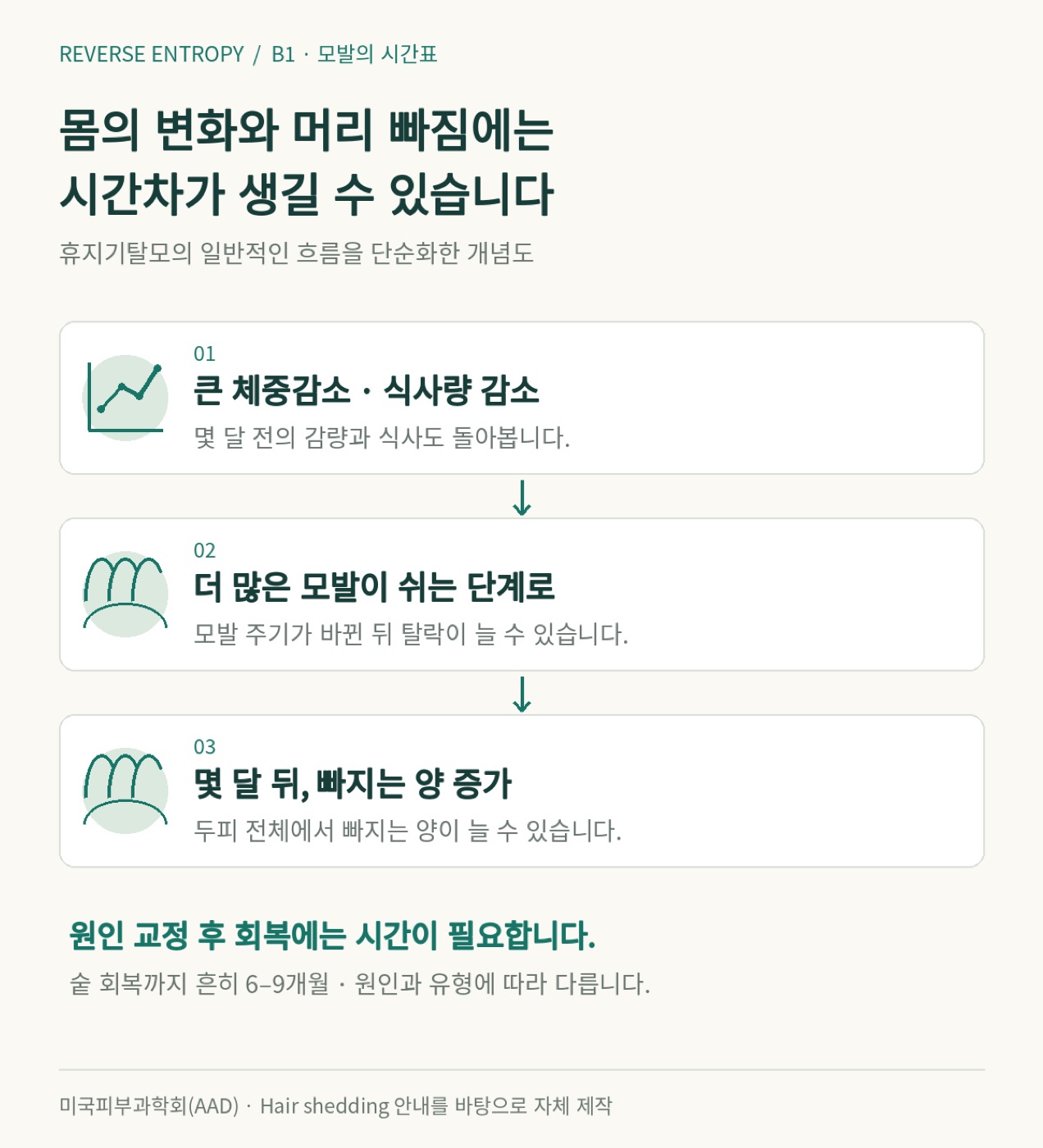
Hair alternates between growth and rest. After substantial weight loss or physical stress, more follicles can enter the resting phase together, leading to diffuse shedding across the scalp. This is telogen effluvium. The change often becomes noticeable months after the trigger. [4]
A Korean retrospective study reviewed 140 patients with weight-loss-associated telogen effluvium. Weight loss itself can matter, separately from any direct effect of a drug. US labeling likewise describes an association with weight loss, but how much the drug, weight loss and nutrition each contribute remains unclear. [7]
One practical question is whether your nutritional intake fell too far as your appetite declined. Excessive calorie restriction and inadequate protein or iron may contribute to shedding. [6]
3. Three things to review before stopping
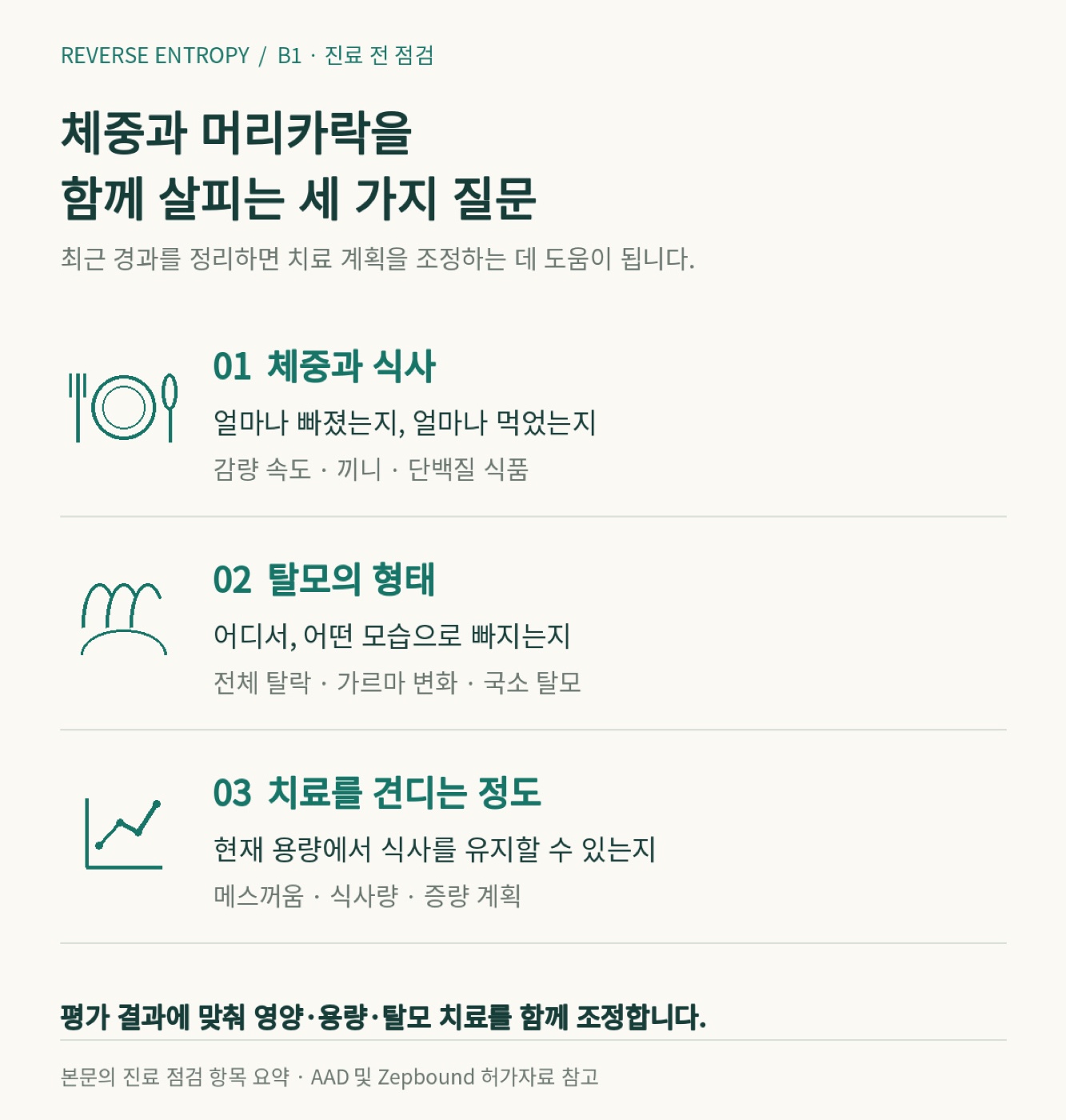
First, review recent weight and food intake. How much have you lost? Are you regularly missing meals or eating too little protein? If you can barely eat, review both your nutrition and how intensive your treatment is. [6]
Second, identify the pattern. Sudden shedding all over, gradual thinning at the crown or part, and a bald patch call for different evaluations. Inherited pattern hair loss can coexist with telogen effluvium. An exam and history can help determine whether to test for an underlying condition or deficiency. Supplements such as iron, zinc or biotin make sense when a deficiency is found. [5]
Third, discuss a dose adjustment rather than stopping on your own. If nausea makes it hard to eat, review your dose and escalation plan with your prescriber. Tirzepatide labeling calls for choosing a maintenance dose based on response and tolerability. [1]
4. There is room for recovery
Telogen effluvium can improve as the trigger resolves and the body adjusts. The AAD says excess shedding ordinarily settles and fullness can return in about 6–9 months; timing depends on the cause and type. In the pooled tirzepatide weight-management trials, no tirzepatide-treated participants stopped because of hair loss. [4] [1]
When the diagnosis is telogen effluvium, the follicles are not permanently damaged. My approach is to review the pace of weight loss and adequate protein, and consider nutritional treatment or minoxidil when appropriate. Improvement over 3–6 months may be possible; it is not a guaranteed timeline. For men whose hair is still not thickening after six months, I would look for accompanying inherited pattern loss and consider DHT-lowering treatment such as finasteride or dutasteride if indicated.
References
- DailyMed: Zepbound (tirzepatide), adverse reactions and dosage
- DailyMed: Wegovy 2.4 mg (semaglutide), hair loss in weight-management trials
- Cheng PL, Chang HC. GLP-1 receptor agonists and alopecia. Diabetes Res Clin Pract. 2026. doi:10.1016/j.diabres.2026.113333
- American Academy of Dermatology: Do you have hair loss or hair shedding?
- American Academy of Dermatology: Hair loss diagnosis and treatment
- American Academy of Dermatology: Hair loss tips
- Telogen Effluvium Associated With Weight Loss: A Single Center Retrospective Study. Ann Dermatol. 2024.