If we could change bodies, make our cells young again, or even skip ahead in time, how far could we extend our lives?
Hello, I’m Dr. Choi. I run a longevity and aesthetic medicine clinic in Cheongdam, Seoul, and hold a doctorate in medical science.
Look at a childhood photo. Your face and your thoughts have changed; you have forgotten much of what happened then. Yet you point at the child and say, “That’s me.” Where does that continuity come from: memory, personality, or the consciousness experiencing the world right now?
Our roughly 1.4-kilogram brain is a living network whose activity is bound up with the way we remember, feel and judge. Extending life to extremes brings us back to one question: can we preserve the person who will live those extra years? We might find a new body, repair the brain piece by piece, rejuvenate our own cells, make a digital copy, or skip to the distant future. Let’s start with trading one body for another.
Part 1. Repairing, replacing and rejuvenating the body and brain
1. Head transplantation: What if my brain had another body?
If the brain remains relatively healthy after the body reaches its limits, the obvious thought is to attach the head to a new body. Robert White’s team reported head transplantation in monkeys in the early 1970s; Sergio Canavero and others later attracted attention with proposals for humans.
The biggest hurdle is reconnecting the brain and body through the nerves. Restoring the blood supply to the brain and making a severed spinal cord carry signals for movement, sensation and autonomic functions are very different challenges. [1]
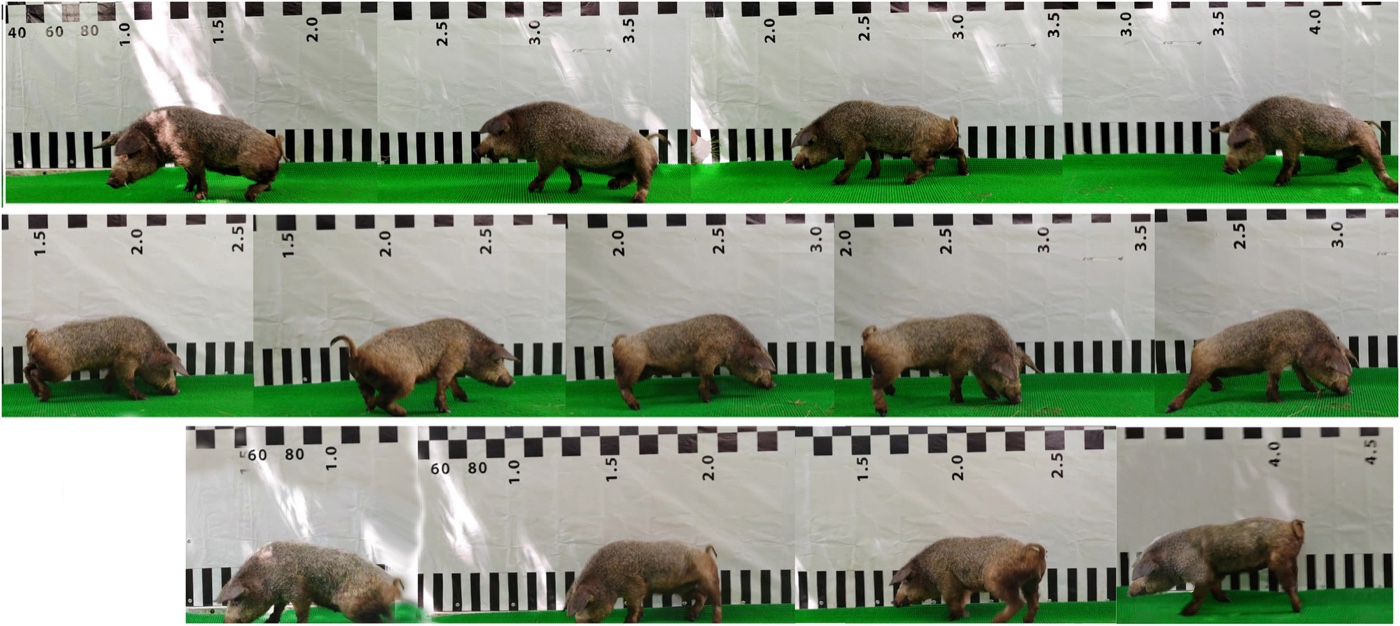
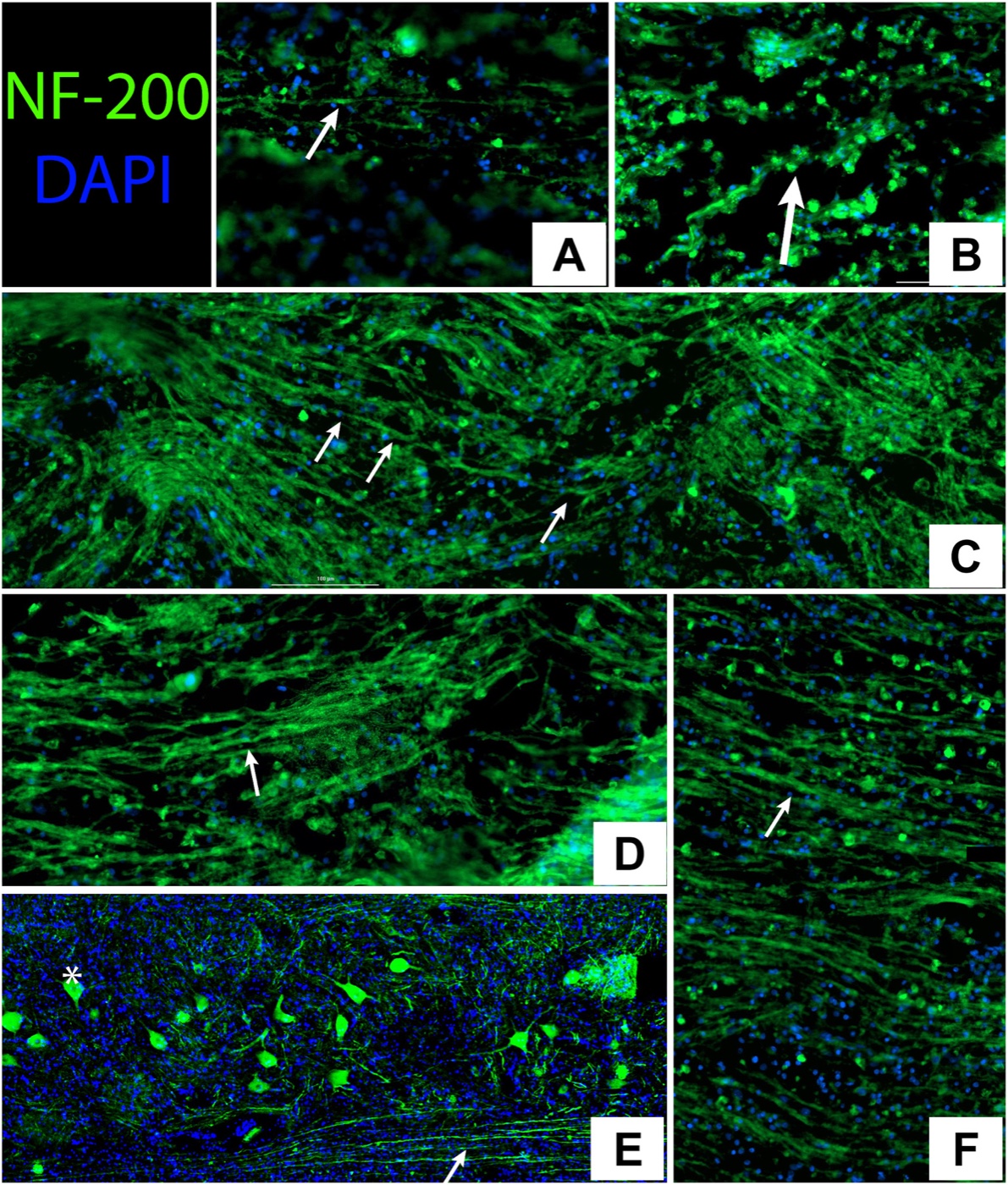
A 2026 PLOS One paper coauthored by Canavero reported a five-pig experiment. After complete thoracic spinal-cord transection, the treated group received a PEG- and chitosan-based material, spinal stabilization and rehabilitation; the authors reported recovery of walking. Would I still be me if I kept the brain and changed the body? First the two would need to function together. [2]
2. A brain in a jar: What if a machine took over for the body?
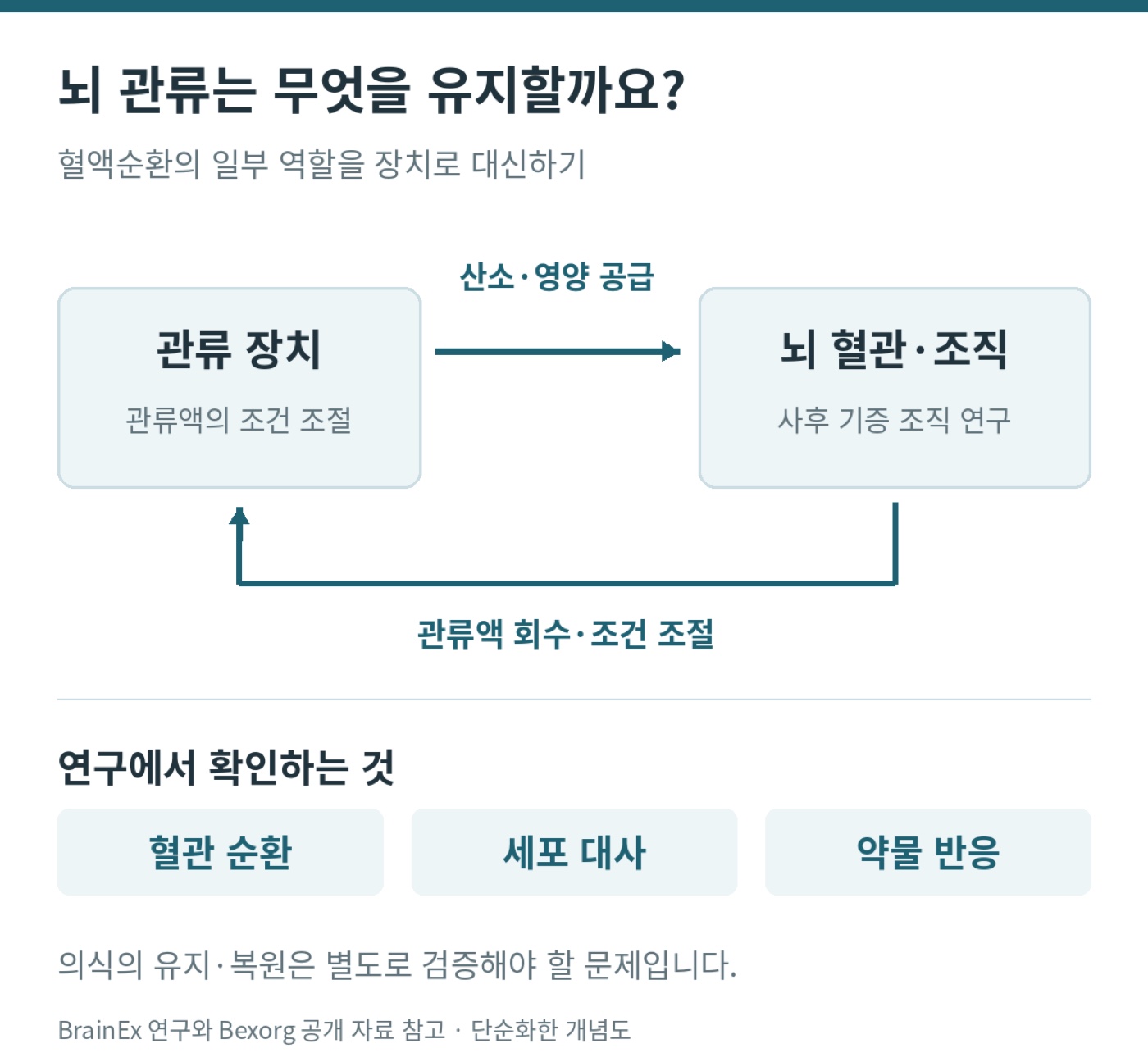
Could a device supply oxygen and nutrients and manage waste and temperature, leaving us no need for a replacement body? The real experiments look less like a brain in a jar than a circuit circulating fluid through its vessels. In 2019, Yale’s BrainEx restored microcirculation and certain cell functions in pig brains after death. Whole-brain coordinated electrical activity was not observed. [3]
Bexorg, which grew out of the work, uses donated human brains after death in drug research. In October 2026 the company announced an ARPA-H-supported goal of extending its roughly 24-hour perfusion window to as long as two weeks. A near-term use is looking at drug responses in human brain tissue. Conscious life outside the body remains a separate question. [4]
3. Replacing the brain bit by bit: The Ship of Theseus
If you replace the rotting boards on Theseus’s ship one at a time until none of the originals are left, is it the same ship? The appeal of taking the brain in stages is that new tissue might connect and take on functions while the old network continues working. I think that continuity is essential to true immortality or age reversal.
The US ARPA-H’s Functional Repair of Neocortical Tissue (FRONT) program began in 2025 and selected its team in 2026. Its five-year, three-stage goal is to restore layering, connections and function in damaged neocortex using precursor tissue made from adult-cell-derived reprogrammed stem cells. It targets damage from stroke or trauma. Replacing an entire aging brain gradually is far more speculative; it would need to preserve what its circuits had learned and remembered. [5]
If my memories and personality survived even as my neurons changed, perhaps what makes me who I am lies more in the relations between the cells than in what they are made of.
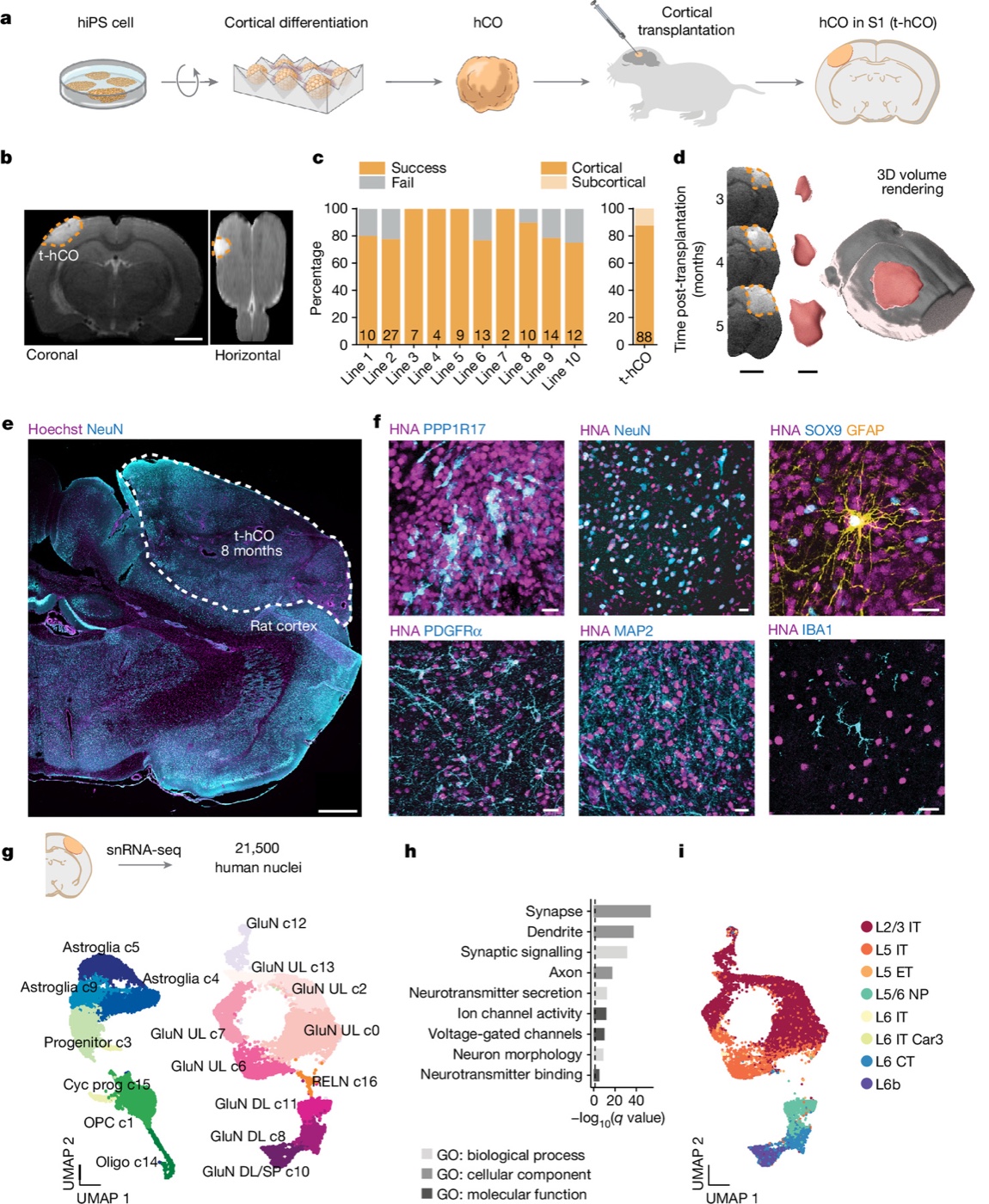
Video 1: Calcium imaging of spontaneous activity in the transplanted human cortical organoid in a living rat. Video 2: Optical stimulation of the graft and reward-seeking behavior. Neither proves that a person’s memory or identity can transfer.
4. Rejuvenating my own cells
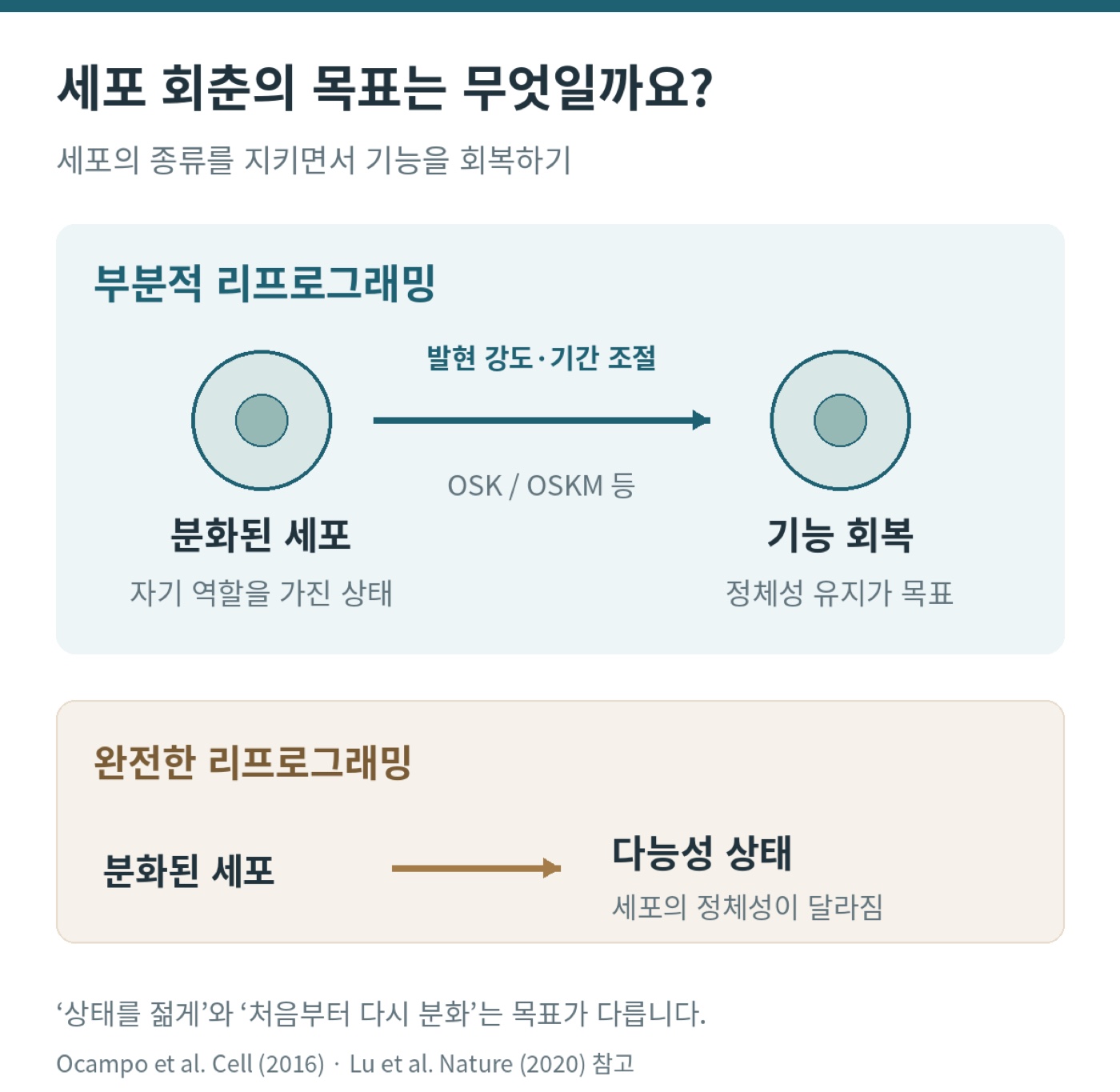
What if we helped our existing cells work as they did when they were younger? The Yamanaka factors OCT4, SOX2, KLF4 and c-MYC (OSKM) can take a differentiated cell back to a state from which various tissues can develop. Partial reprogramming aims to reverse some age-associated changes without stripping the cell of its identity. Epigenetic information consists of marks and structures around DNA that help control when and how much genes are used. Researchers are testing whether restoring that regulation also restores function. [6]
In Nature in 2020, David Sinclair’s group expressed the three factors OSK, leaving out c-MYC, in mouse retinal ganglion cells. They found axon regrowth after damage and improved visual function in an experimental glaucoma model and in aging mice. The strategy was to restore the function of existing neurons. [7]
In 2026, the OSK-regulating candidate ER-100 entered a Phase 1 trial for optic neuropathies. The trial prioritizes safety and tolerability, with long-term follow-up planned. I am personally not a fan of Dr. Sinclair, but I respect his drive and intend to write about him separately. [8]
In October 2026, Life Biosciences released early observations from three participants with glaucoma. That preliminary company disclosure marks the start of testing this idea in a human disease, not the advent of whole-body rejuvenation. Altos Labs also focuses on restoring cells’ health and resilience. [9] [10]
The goal that interests me most is keeping the cells behind my memories and personality healthy without losing either. In the brain that would require evidence of stable circuits, preserved neuronal identity and intact memory as well as rejuvenation.
Salk researchers explain partial reprogramming. Supplementary Video 3 from Lu et al. shows a cross-sectional retinal B-scan in a 16-month-old mouse expressing OSK, rather than simulating the mouse’s view.
Part 2. Extending the self through digital systems and machines
Beyond the body, we have to ask whether creating someone like me is the same as continuing to be me.
5. Mind clones: Someone who answers like me when I’m gone
Writing, voice recordings, family conversations, photos and videos could support an avatar imitating my manner of speaking and preferences. StoryFile already uses AI to surface relevant answers from recorded interviews. Generative avatars create new replies instead, but both make a person’s story interactive. [13]
For family, hearing a familiar voice again can matter. Still, my avatar can exist while I am alive. Resemblance does not show that my experience has moved into it. This is a kind of social and emotional immortality that preserves records and relationships.
StoryFile Life introduction and William Shatner demonstration.
6. Mind uploading: Reproducing the brain itself
Whole-brain emulation starts with a connectome, a map of connections among neurons, and would also need to reproduce cell properties, synaptic strengths and brain activity. In 2024 a map of an adult female fruit-fly brain captured 139,255 neurons and about 50 million chemical synapses. Humans pose a far larger problem, including what has to be measured and how to reproduce its activity. There is no reliable date for when a human mind could be uploaded. [14]
Nectome describes preserving fine structure in the brain and body after legal death in the hope of future restoration. That is a goal for future technology; there is no verified person whose consciousness has been restored or uploaded. Even if a digital brain knew my memories and insisted it was me, would I wake up in it, or would someone new wake up remembering me? [15]
The FlyWire Connectome: 3D reconstruction and Flytastic voyage: inside a fly brain. These visualize actual electron microscopy data, not a human brain upload.
7. A synthetic neocortex: The living brain and a machine working together
A brain–computer interface (BCI) connects to a working brain instead of making a copy later. In a biohybrid interface, living neurons link brain tissue with the device. Science Corporation’s design stimulates these cells or reads signals electronically. A 2024 preclinical preprint reported that rats could distinguish light stimulation of implanted cells on the cortical surface in a behavioral task. This is a step toward a channel for transmitting information to the brain. [16] [17]
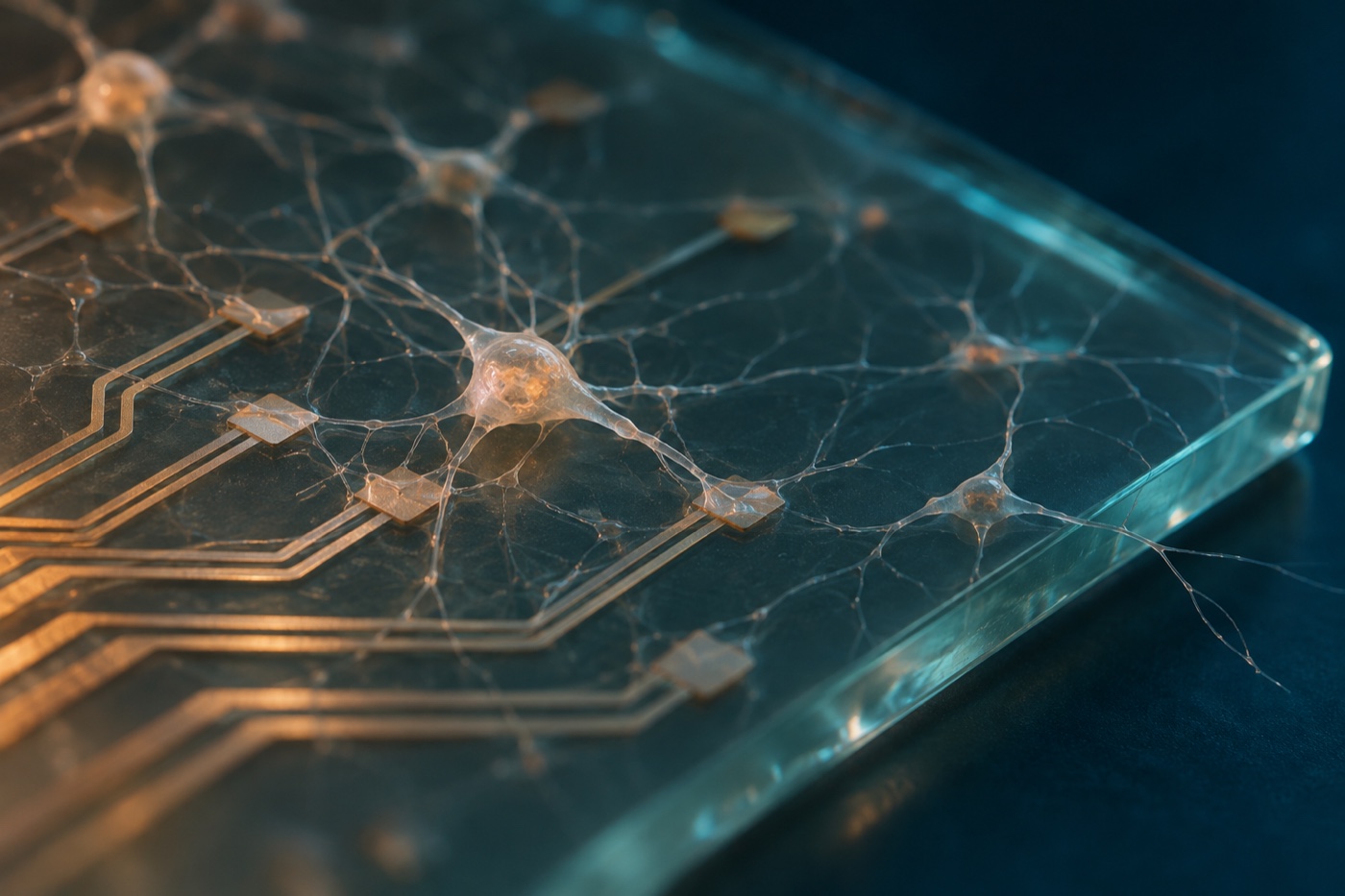
One day a link like this could aid impaired functions or let information flow between the brain and external hardware. Eightsix Science has described a longer-range vision for hybrid replacement tissue, gradual replacement and maintenance of a brain outside the body. These are company research ambitions. A biological cortex might ultimately work alongside artificial computing resources, but controlling hardware and transferring consciousness are separated by many unanswered questions. [18]
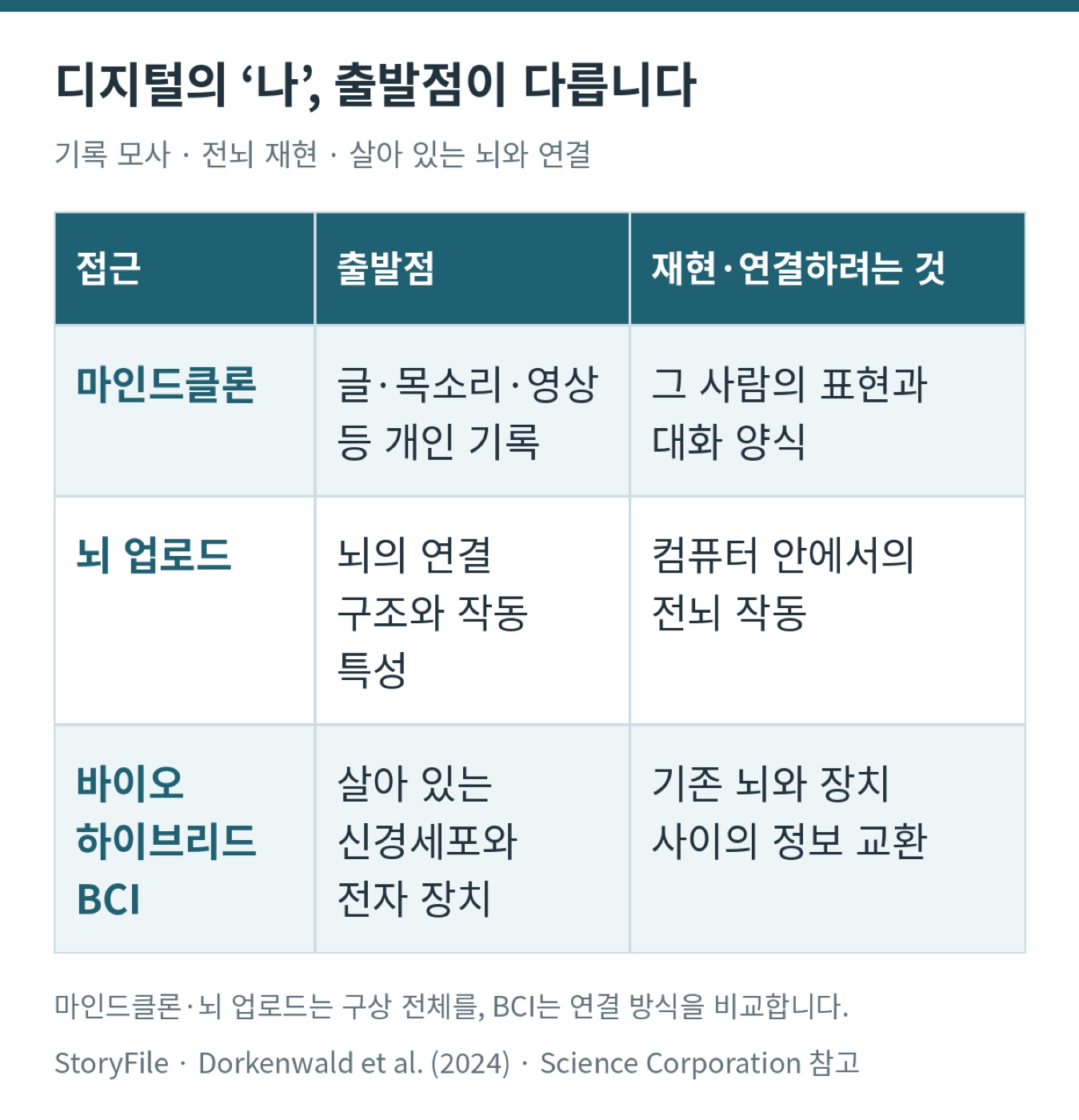
Keep the three starting points separate: a mind clone uses personal records; an upload tries to reproduce brain structure and function; a biohybrid interface connects a living brain to hardware.
Science Biohybrid Animation: a technical explainer produced in collaboration with the company, not footage from an experiment.
Part 3. Changing physical and subjective time
8. A relativistic time machine: My 10 years, Earth’s 1,000
Motion and gravity change how much elapsed time different clocks record, as shown in atomic-clock experiments. At 99.995% of the speed of light, a spacecraft’s clock would record one-hundredth as much elapsed time as Earth’s in an idealized calculation that ignores acceleration, deceleration and gravity. Ten years on board could correspond to about 1,000 years on Earth. [19]
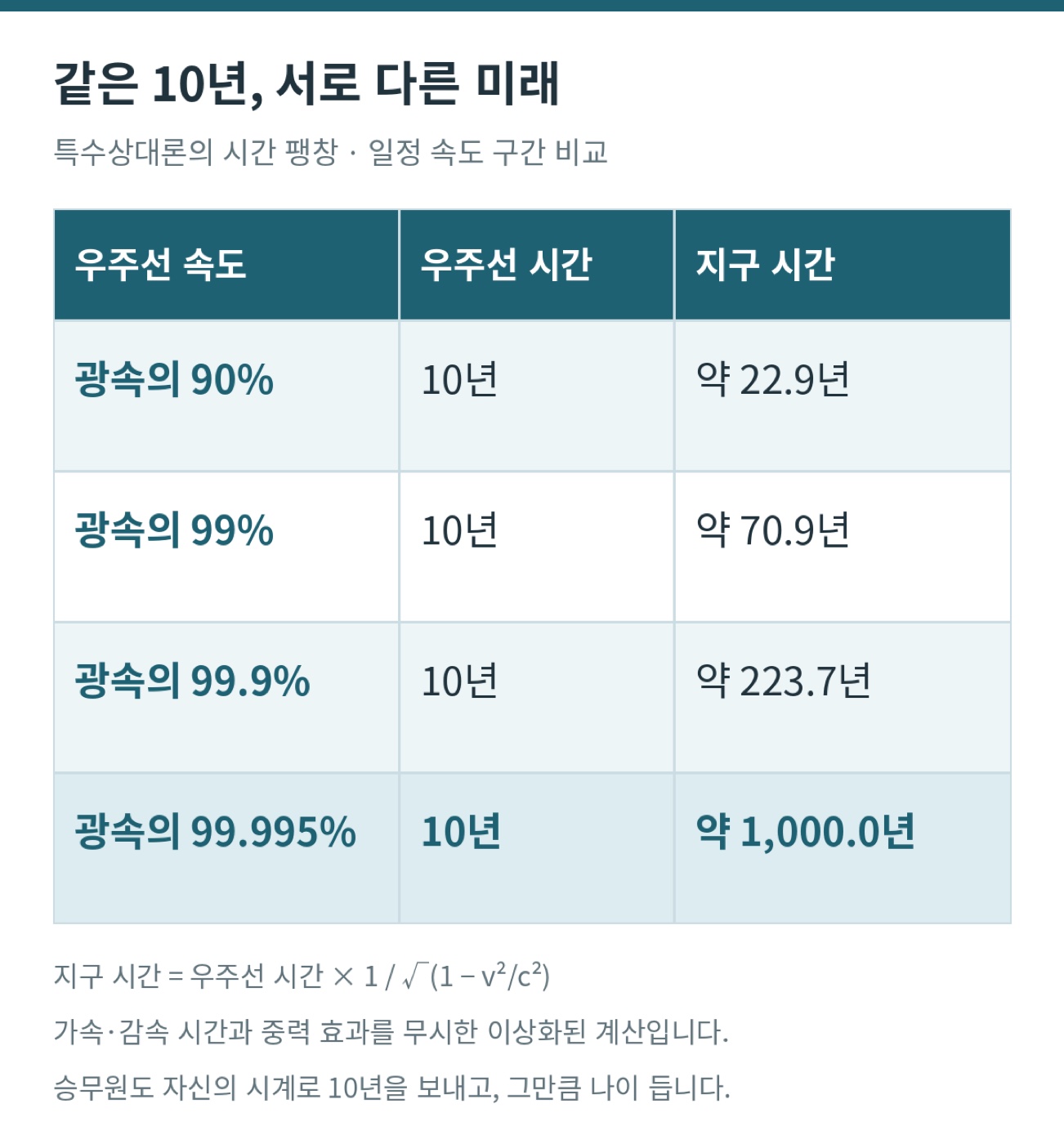
For the crew, it would be ten normal years of eating, sleeping and aging. The difference is getting to see much more distant medicine and civilization, not having more years to experience during the voyage. The energy needed to speed up and slow down, radiation and particle shielding, and the safe-orbit problem in a strong gravitational field around a black hole all remain formidable engineering challenges. The physics has been tested. A practical time machine people can ride is another matter.
9. Artificial memories and subjective time: Packing more experience into one life
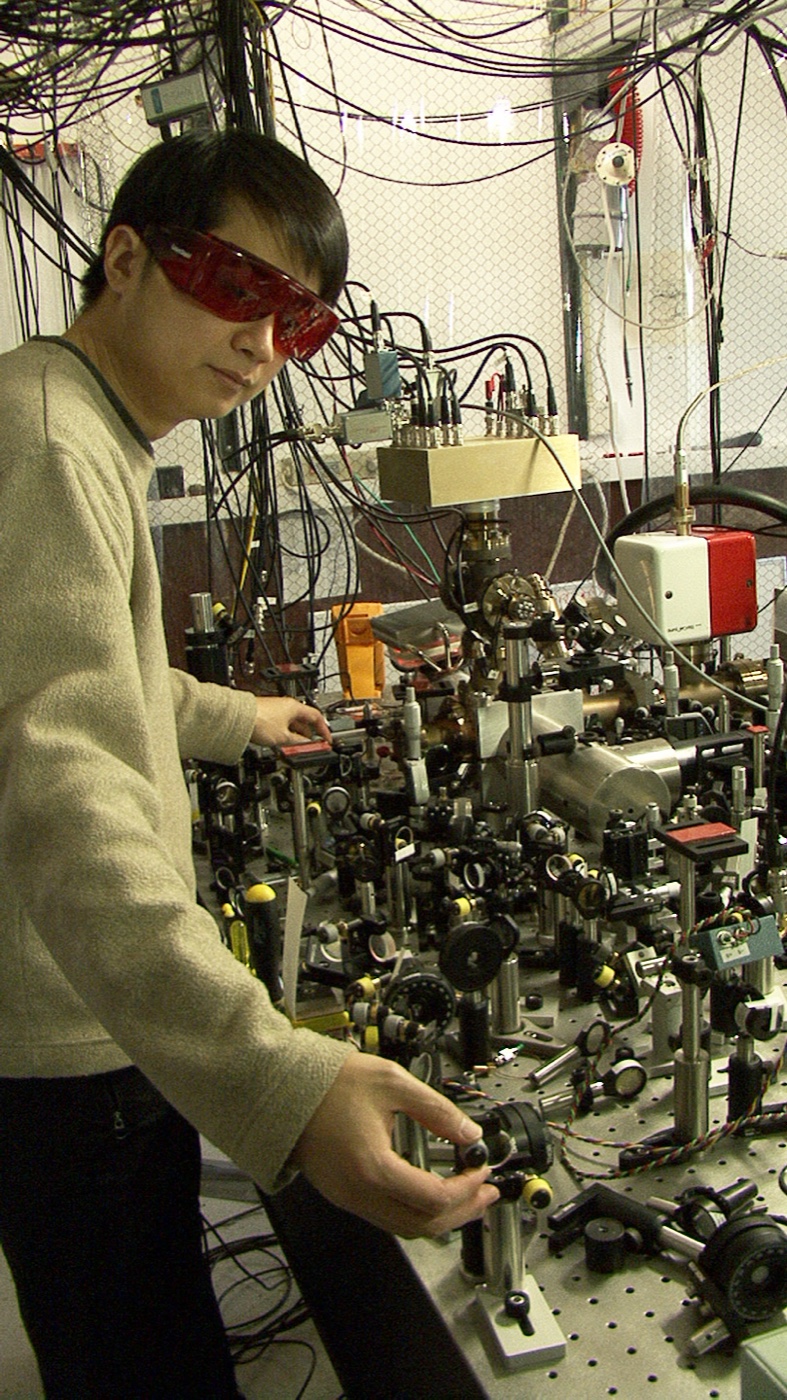
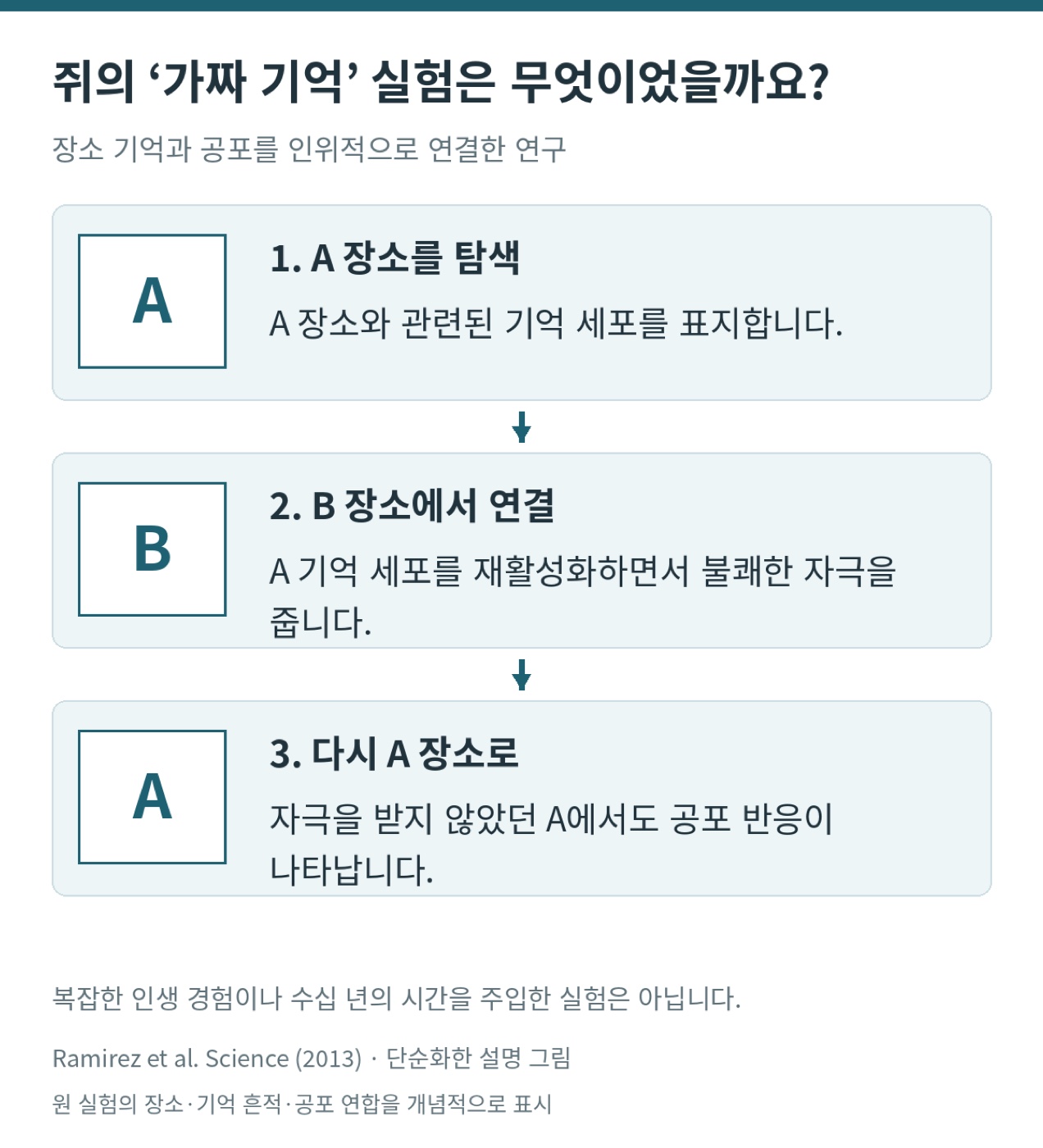
A routine few months may feel short in memory, while a few days of travel can feel rich. Could technology give us more memories, or even let us experience more subjective time? In 2013 Susumu Tonegawa’s team tagged a location-related set of hippocampal neurons in mice. They reactivated those cells with light while the mice received an unpleasant stimulus elsewhere. Later the mice showed fear in the original location where they had not received the stimulus. [20]
Imagine an 80-year life with memories for 300 years: study abroad, trips, and all the experiences in between. Having the memories and actually living those years are different propositions. But how could I prove I had a past if I had no memory of it? If I retained happy memories of many more years, even if they were not real, would that give me a longer life in an indirect sense?
A different fantasy, familiar from Inception, is speeding up continuous experience itself so that years or centuries might pass in a virtual world while only a few hours pass outside. It would require changes in sensory input, neural processing, learning, memory, energy supply and heat management. Nothing today expands human subjective time on that scale. Still, do we want to extend the number of years on the calendar, or the amount of life we experience?
A mouse. A laser beam. A manipulated memory. A talk by the researchers about optogenetics and tagging memory cells.
What I would ask of any technology that promises immortality
All nine scenarios aim to leave something behind, whether healthy cells, circuits that hold memories, or a record with which others can converse. I would ask first: what was preserved, and how does my own life continue in it?
Cell rejuvenation interests me because it seeks to keep the body and nervous system that already make me who I am in working order. Brain repair, rejuvenation and new interfaces may compete, or they may work together. Even if they do not deliver immortality, they address real problems: restoring function in injured optic nerves and brain tissue, studying drugs in the human brain, and understanding how memories form and change.
The wish to preserve the self forever could lead to ways to keep the body and brain healthier now. Which would you choose: younger cells, a new body or machine connection, or a leap into the distant future while still alive?
References and sources
- White RJ et al. Cephalic exchange transplantation in the monkey. Surgery (1971).
- Lebenstein-Gumovski M et al. Fusogen-induced recovery of spinal cord function and morphology after complete transection. PLOS One (2026).
- Vrselja Z et al. Restoration of brain circulation and cellular functions hours post-mortem. Nature (2019).
- Bexorg. ARPA-H grant for human brain perfusion research; up to two weeks (2026-10-07).
- ARPA-H. FRONT program team selection (2026-05-22).
- Ocampo A et al. In Vivo Amelioration of Age-Associated Hallmarks by Partial Reprogramming. Cell (2016).
- Lu Y et al. Reprogramming to recover youthful epigenetic information and restore vision. Nature (2020).
- ClinicalTrials.gov. ER-100 Phase 1 trial in optic neuropathies, NCT07290244.
- Life Biosciences. First-in-human ER-100 Phase 1 data (2026-10-08).
- Altos Labs. Research overview.
- Farr JN et al. Effects of intermittent senolytic therapy on bone metabolism in postmenopausal women: a phase 2 randomized controlled trial. Nature Medicine (2024).
- Multi-Omics Analysis Reveals Biomarkers That Contribute to Biological Age Rejuvenation in Response to Single-Blinded Randomized Placebo-Controlled Therapeutic Plasma Exchange. Aging Cell (2025).
- StoryFile. Interactive video interviews.
- Dorkenwald S et al. Neuronal wiring diagram of an adult brain. Nature (2024).
- Nectome. Brain and body preservation after death.
- Science Corporation. Biohybrid neural interface.
- Brown J et al. Optogenetic stimulation of a cortical biohybrid implant guides goal directed behavior. bioRxiv preprint (2024).
- Draper Associates. Eightsix Science research goals.
- Chou CW et al. Optical clocks and relativity. Science (2010).
- Ramirez S et al. Creating a false memory in the hippocampus. Science (2013).
#AgeReversal #CellReprogramming #BiologicalRejuvenation #Immortality #Identity #Neuroscience #MindUploading #BrainComputerInterface #TimeDilation #Memory #Longevity #HINClinic