We often hear that food is healthier if it tastes less salty. When I was a child, my mother saw a health program on television and made everything bland. The whole family struggled. About six months later, the seasoning quietly came back.
If your blood pressure is normal and your sodium intake is already moderate, I would not make a blander diet the first priority. Look at where your sodium comes from. If it mainly comes from lots of processed food or salty broth, there is good reason to cut back. Normal blood pressure is not permission to ignore excess sodium. I also pay close attention to what people eat regularly, and whether weight and waist circumference are rising.
How far can cutting sodium lower blood pressure?
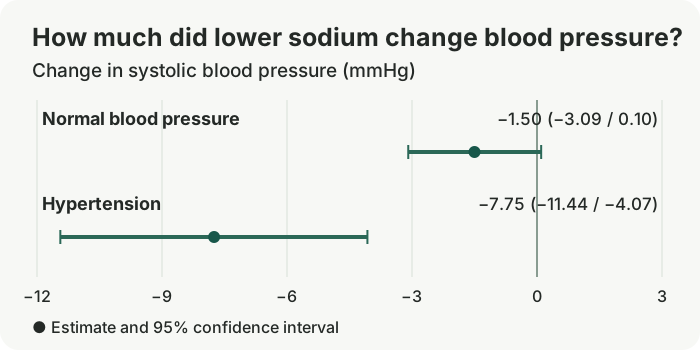
The answer depends on your starting blood pressure. In a 2020 Cochrane review, the lower-sodium diet reduced systolic blood pressure by 1.14 mmHg on average in White participants with normal blood pressure and by 5.71 mmHg in those with hypertension. [1]
In five trials with 950 Asian participants with normal blood pressure, the average difference was −1.50 mmHg (95% CI −3.09 to +0.10). In the Asian hypertension subgroup it was −7.75 mmHg. The average reduction was smaller near normal blood pressure, not necessarily absent in every person. [1]
When sodium intake falls, the body works to conserve sodium and fluid. The kidneys release renin, and aldosterone helps them reabsorb sodium. Both hormones rose in the pooled trials. That is a compensatory response, not proof that reducing sodium damages the kidneys. I ask what a further reduction would achieve in the context of someone’s current diet. WHO recommends less than 2,000 mg of sodium a day for adults (about 5 g of salt); follow individual advice if you have hypertension, kidney or heart disease, or another condition affecting sodium needs. [1, 7]
Even with normal blood pressure, think about your stomach
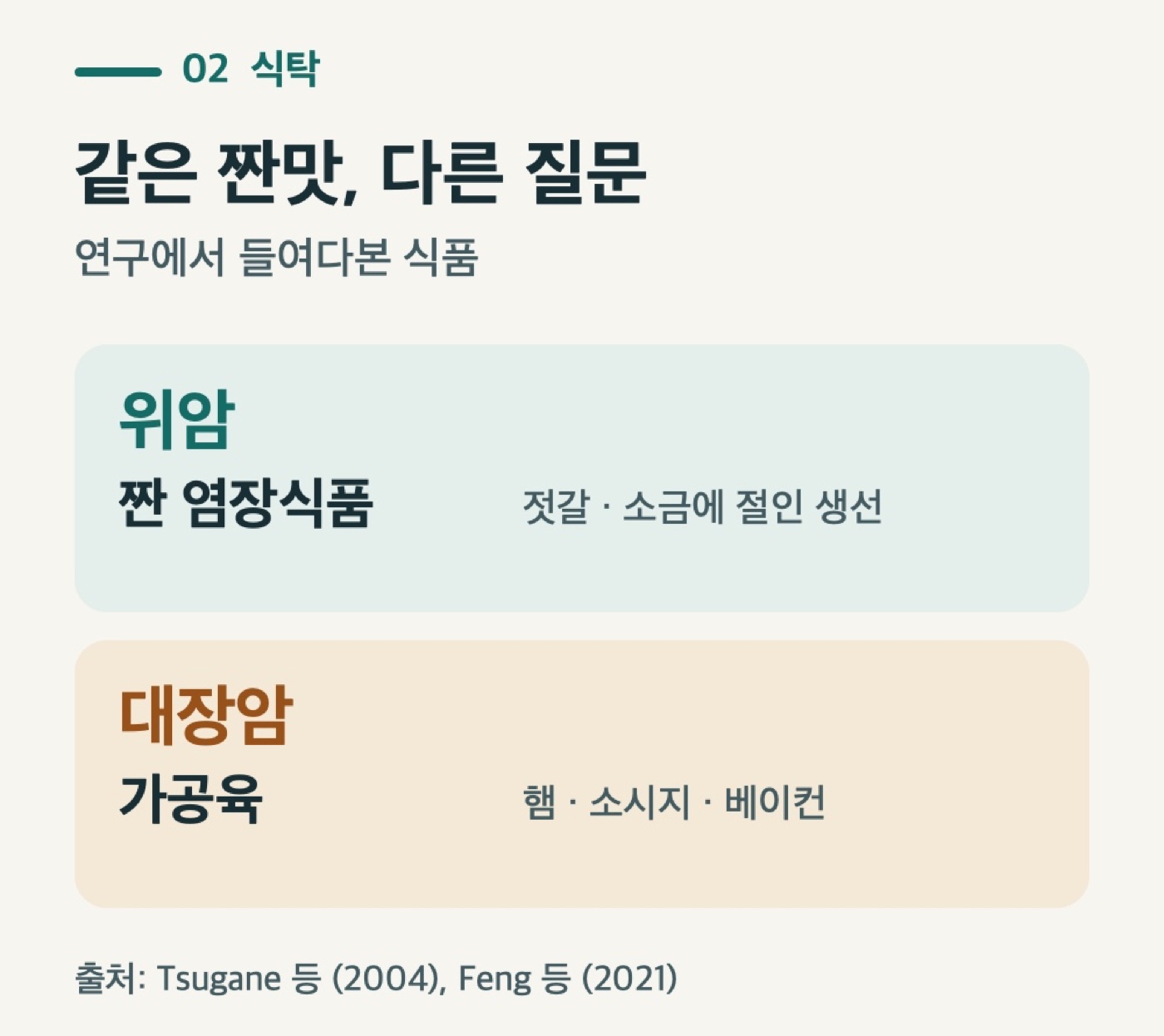
A Japanese cohort of roughly 39,000 middle-aged adults observed more stomach cancer among frequent consumers of certain salt-preserved foods, including salted fish and roe. In a UK cohort of around 470,000 people, those who always added salt at the table had a 41% higher relative risk than those who never or rarely did. These are observational associations. [3, 4]
For colorectal health, start with ham and sausages
An analysis of UK Biobank follow-up and genetic data linked colorectal cancer to processed meat. It did not identify an independent association with sodium itself. For someone who often eats ham or sausage, I would look first at how often they eat it rather than make other side dishes blander. Swapping ham for eggs or tofu is closer to the question this study asked. [5]
For your arteries, pay attention to weight and waist size
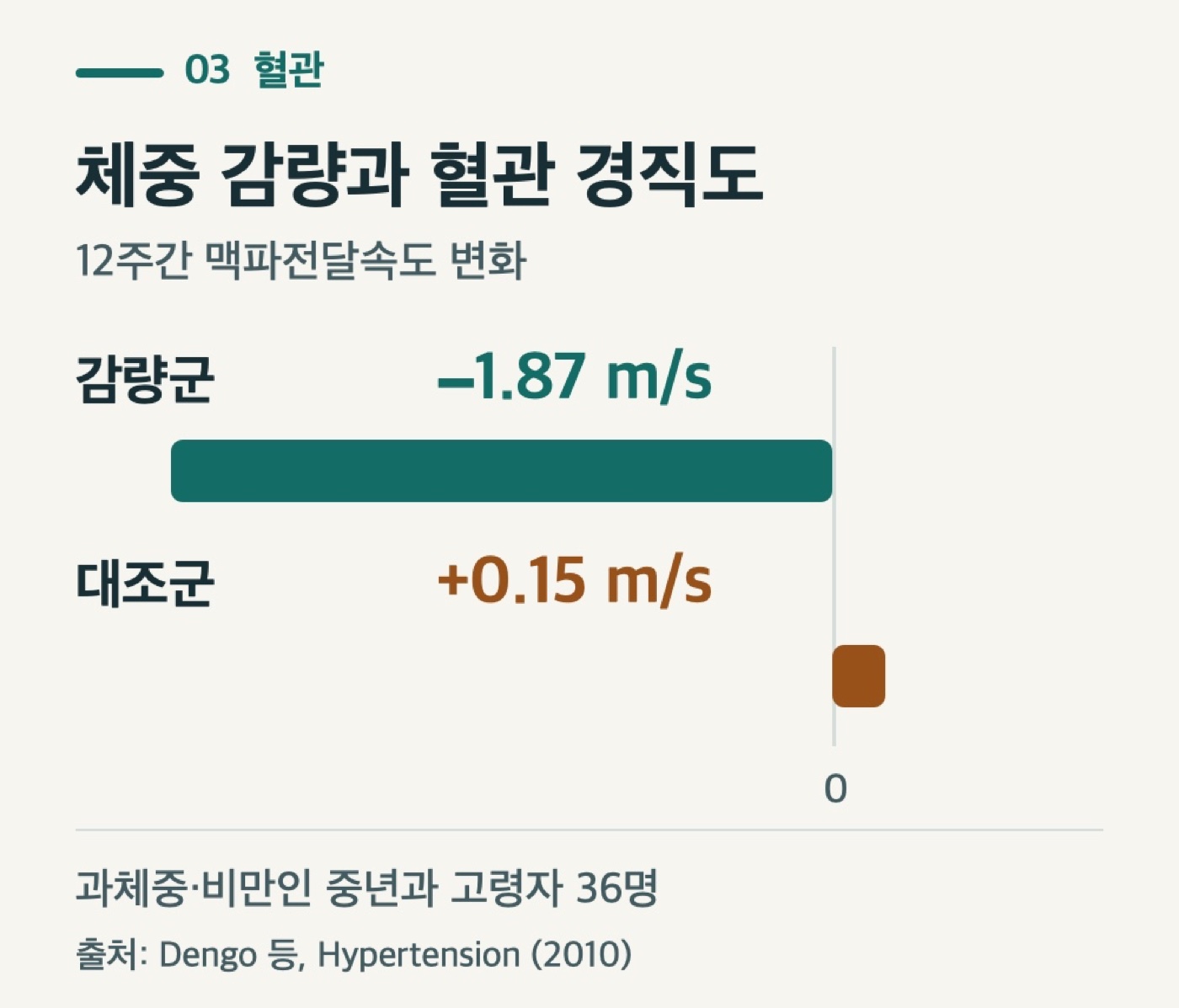
People with the same blood pressure can have very different arterial stiffness. A pulse wave generally travels faster along a stiffer aorta. In a 12-week randomized trial of 36 middle-aged and older adults with overweight or obesity, weight fell by 7.1 kg with the intervention versus 0.7 kg in controls. Carotid–femoral pulse-wave velocity fell by 1.87 m/s in the weight-loss group and rose by 0.15 m/s in controls. This measured stiffness, not heart attacks or strokes. [6]
For a person with normal blood pressure and kidney function who already eats a moderate amount of sodium, my first step is not to make everything blander. If your meals are often salty, look at where the salt comes from: salt-preserved foods for stomach health, and processed meat for colorectal health. If weight and waist circumference are rising, build in regular movement and work on weight management, too.
References
1. Graudal et al., Cochrane review of sodium and blood pressure, 2020 · 2. Sacks et al., DASH-Sodium trial, 2001 · 3. Tsugane et al., JPHC cohort, 2004
4. Kronsteiner-Gicevic et al., adding salt and gastric cancer, 2024 · 5. Feng et al., processed meat, sodium and colorectal cancer, 2021 · 6. Dengo et al., weight loss and arterial stiffness, 2010 · 7. WHO sodium recommendations