AI identifies an “oral longevity bacterium”
When anti-aging and microbes come up, most of us think first of gut bacteria.
Probiotics, dietary fiber, short-chain fatty acids, gut-microbial diversity…
But a rather interesting study has recently appeared.
This time, it is about bacteria in the mouth, not the gut.
AI-assisted image · Learn more
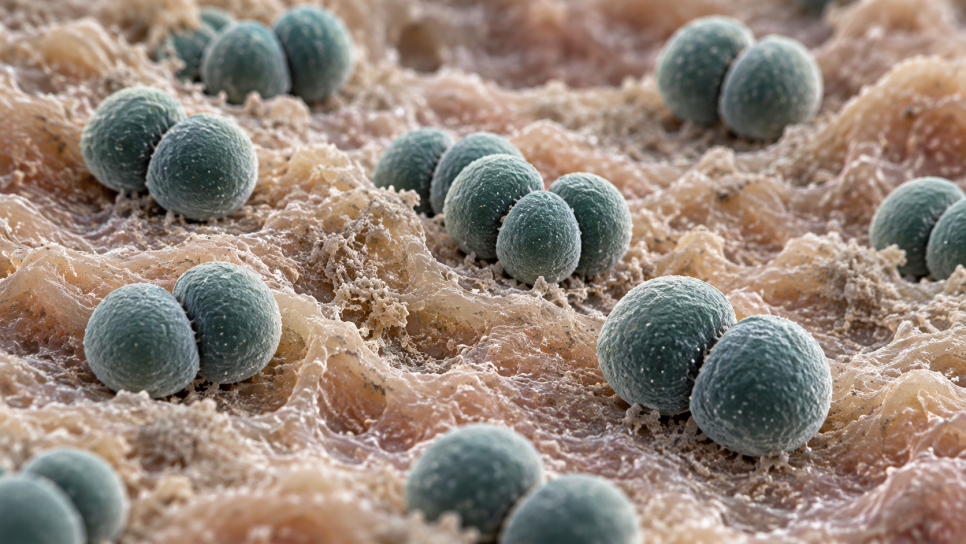
In a study published in Nature Aging in September 2026, researchers used AI to analyze the human oral microbiome together with multiple types of biological data. They found that a bacterium called Neisseria flavescens was relatively more abundant in people who were aging more slowly biologically.
The researchers did not stop there.
They actually isolated the bacteria and administered them to worms and mice.
The results are quite interesting.
AI found an aging-associated bacterium in the human mouth
The researchers developed an AI system called AURORA that analyzes multiple types of biological data together.
They then compared the composition of the human oral microbiome with measures of biological aging.
People with more N. flavescens showed a relatively slower-aging pattern.
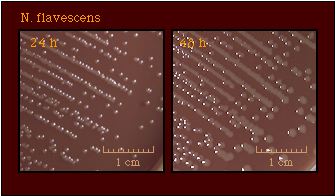
Photo: US CDC / Wikimedia Commons, public domain.
https://commons.wikimedia.org/wiki/File:Nflacols.jpg
Up to this point, it sounds like a familiar microbiome study.
“People who lived longer had more of a particular bacterium.”
The biggest problem with such studies is that they cannot establish causation.
Are people carrying more of the bacterium because they are healthy?
Are they healthy because of the bacterium?
Or does a third factor, such as diet or lifestyle, produce both?
We cannot tell. That is why the researchers began experiments with the actual bacteria.
Feeding it to worms extended their lifespan
The researchers isolated two strains of N. flavescens.
They administered live bacteria to C. elegans, the nematode worm frequently used in aging research.
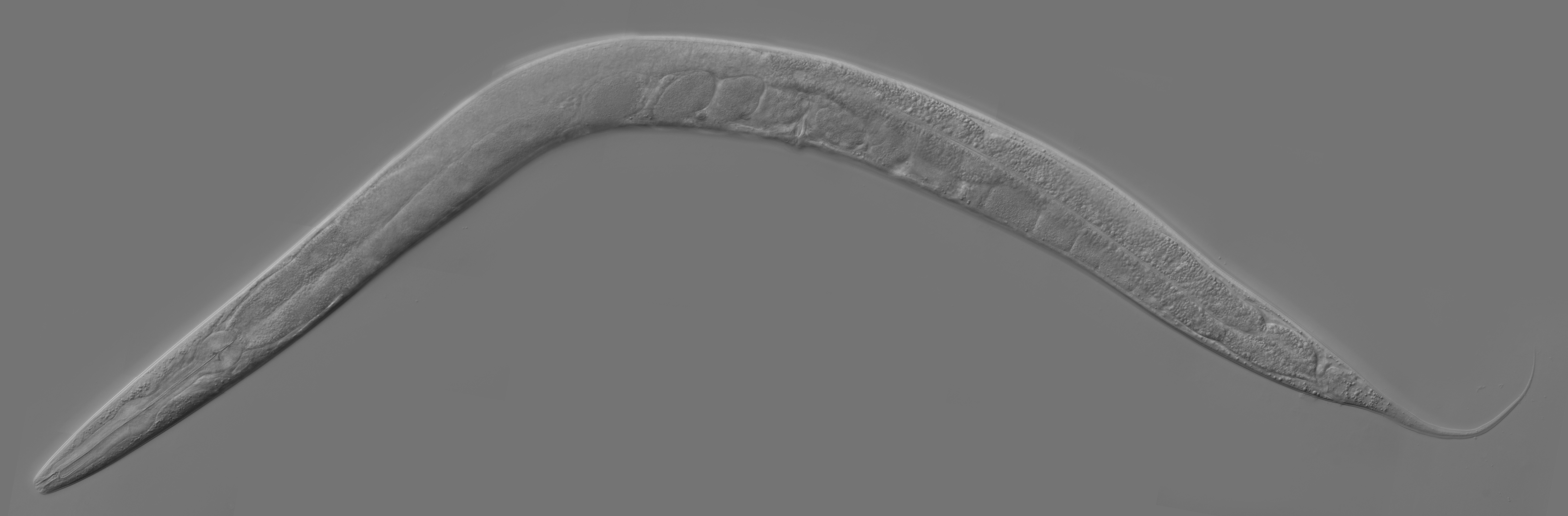
Photo: Zeynep F. Altun / WormAtlas / Wikimedia Commons. Original image unchanged.
CC BY-SA 2.5. https://creativecommons.org/licenses/by-sa/2.5/
https://commons.wikimedia.org/wiki/File:Adult_Caenorhabditis_elegans.jpg
The result was not simply an increase in average lifespan. The period of healthy movement, or healthspan, was also extended.
The effect was reproduced in independently repeated experiments. Nature
This takes the evidence a step beyond a simple correlation in humans.
But there is, of course, an enormous distance between humans and worms.
So the next step was mice.
In older mice, biological patterns shifted toward those of younger animals
Interestingly, older mice received not live N. flavescens, but bacteria killed by heat treatment.
As a result, blood metabolites, liver gene expression, and the composition of the gut microbiome shifted in part toward patterns observed in younger mice.
It is important here not to say that “the mice became younger.”
The experiment did not show that the older mice lived longer, became stronger, developed better cognitive function, or experienced less disease.
What changed were mainly biological patterns such as the metabolome, transcriptome, and microbiome.
For now, the accurate wording is along these lines:
Preclinical experiments identified the possibility that N. flavescens could shift the biological environment associated with aging in a favorable direction.
We do not yet know more than that.
Why might bacteria in the mouth relate to aging throughout the body?
When you think about it, the mouth is a rather unusual place.
Food and the outside environment enter it every day. Hundreds of microbial species live there, and just beneath them lies gum tissue rich in blood vessels.
That boundary is particularly disrupted when periodontitis develops.
Chronic inflammation arises in the periodontal tissues, and oral bacteria or bacterial components become more likely to enter the bloodstream.
Periodontal disease is indeed associated with several systemic diseases, including cardiovascular disease, diabetes, and some respiratory illnesses. However, the strength of the evidence differs by disease, and an association does not mean that a direct causal relationship has been established in every case.
The relationship between diabetes and periodontal disease is especially well known.
A two-way relationship has been observed: diabetes worsens periodontitis, while severe periodontitis can also adversely affect blood-glucose control. PubMed
In people with certain heart conditions, oral bacteria entering the bloodstream and causing infective endocarditis are also an important clinical concern. The American Heart Association emphasizes good oral hygiene and regular dental care as among the most important preventive measures for these high-risk groups. American Heart Association
The mouth is therefore not simply a place for chewing food.
It is also the entrance to a vast ecosystem where our bodies meet microbes.
Does that mean we should take N. flavescens?
Not yet.
If we look at this study and jump to “Let’s take longevity-promoting oral bacteria instead of longevity probiotics,” we repeat an error that frequently occurs in the anti-aging industry.
In humans, the evidence remains at the level of observing favorable aging patterns in people with more N. flavescens.
There was a lifespan-extending effect in worms and improvement in some molecular aging patterns in mice. But we do not know at all whether administering the bacterium to people would actually change healthspan or disease incidence.
There is another, more important issue.
The oral microbiome is not determined by one bacterial species.
Many microbes compete and cooperate to form an ecosystem.
For that reason, a more interesting possibility for future oral anti-aging strategies may be to maintain or restore the structure of a healthy oral microbiome, rather than simply add large quantities of one particular bacterium.
What should we do now?
We still need research to establish exactly which oral microbes are beneficial, which combinations form a healthy microbiome, and whether deliberately changing them alters aging in humans.
However, we already know quite a lot about reducing an unhealthy oral environment.
We do not need to wait for future anti-aging research before addressing plaque buildup, persistent gum inflammation, deepening periodontal pockets, or untreated cavities and infections at the tips of tooth roots.
Periodontitis is a disease in which a chronic inflammatory response to bacterial biofilm destroys periodontal tissues and the alveolar bone.
The strategy available now is therefore quite simple.
“Until we know how to increase beneficial bacteria, at least avoid creating the unhealthy conditions we already recognize.”
A few minutes of daily care matter more than we may think
The most basic step is toothbrushing.
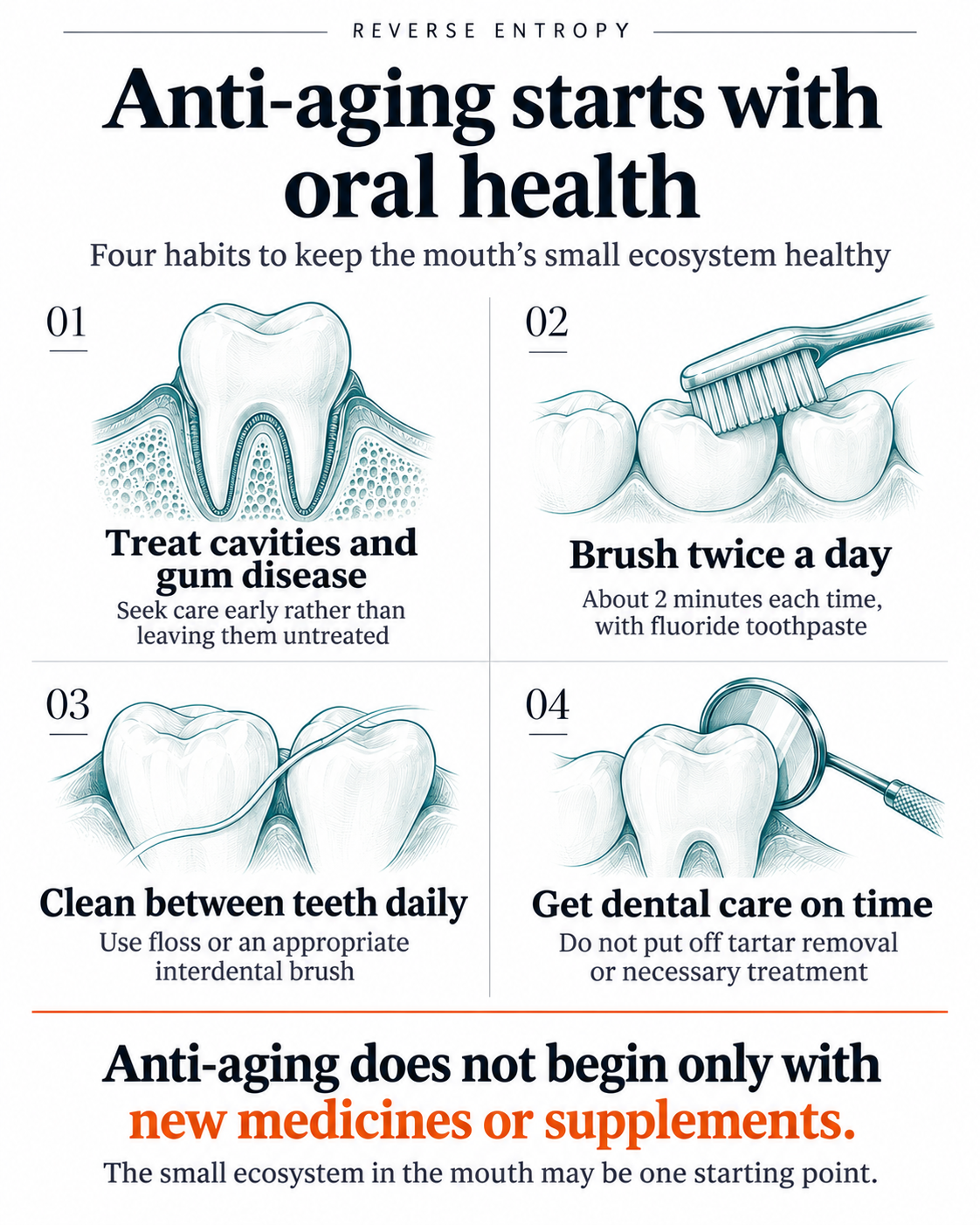
The American Dental Association (ADA) recommends brushing twice a day for about two minutes each time with fluoride toothpaste. There is evidence that twice-daily brushing reduces the risk of cavities and periodontal disease compared with brushing less often.
A toothbrush alone, however, has difficulty cleaning adequately between the teeth.
That is why cleaning between the teeth once a day with floss or an appropriate interdental-cleaning tool is also recommended.
The important point is not to “sterilize” the mouth.
As this study itself suggests, the mouth also contains commensal microbes that may benefit us.
The goal is not to eliminate every bacterium, but to prevent an environment dominated by pathogenic biofilm and persistent chronic inflammation.
Rather than continually using powerful antiseptics indiscriminately, basic care that maintains a healthy oral ecosystem should come first: brushing, cleaning between the teeth, removing tartar, appropriately treating cavities and periodontitis, and having regular dental checkups.
Perhaps anti-aging can begin in the mouth
This study did not establish N. flavescens as a human “longevity bacterium.”
But it revealed a new possibility.
The relationship between the microbiome and aging, which we have largely explored in the gut, may also begin in the mouth.
I think this is the more important point.
If we discover which microbes truly help humans, anti-aging strategies that directly modify the oral microbiome may eventually emerge.
But that does not mean there is nothing we can do until then.
If we do not yet know exactly which bacteria are beneficial, we can at least begin by reducing the unhealthy conditions we already know about.
Do not leave cavities and periodontitis untreated. Brush properly twice a day. Floss or clean between the teeth once a day. Do not postpone necessary dental treatment.
These may sound like very ordinary steps, but anti-aging does not always begin with a new drug or supplement.
Perhaps the small ecosystem in the mouth that we care for every day can be one of its starting points.
AI-assisted image · Learn more
Reference
Chen J, Ren Y, Zhou Y, et al. Multi-modality profiling identifies Neisseria flavescens as a central geroprotective oral commensal in humans. Nature Aging. Published September 24, 2026. Nature