Could a Blood Test and AI Measure the Burden of Senescent Cells in My Body?
Anti-aging research has a surprisingly large problem.
It comes even before developing new drugs.
We still do not have a quick, accurate way to measure how much a person has actually aged.
Suppose we have developed a new anti-aging treatment.
The most reliable way to check whether people taking it really age more slowly would be to see whether cancer, cardiovascular disease, and dementia decrease, whether muscle strength and cognitive function are maintained for longer, and ultimately whether healthspan increases.
The problem is that confirming the results could take years or decades.
Don’t Biological-Age Tests Already Exist?
They do.
A prominent example is the epigenetic clock, which uses DNA methylation.
DNA carries chemical marks that gradually change with age. Analyzing this pattern can estimate a person’s chronological age quite accurately.
But this creates an important problem.
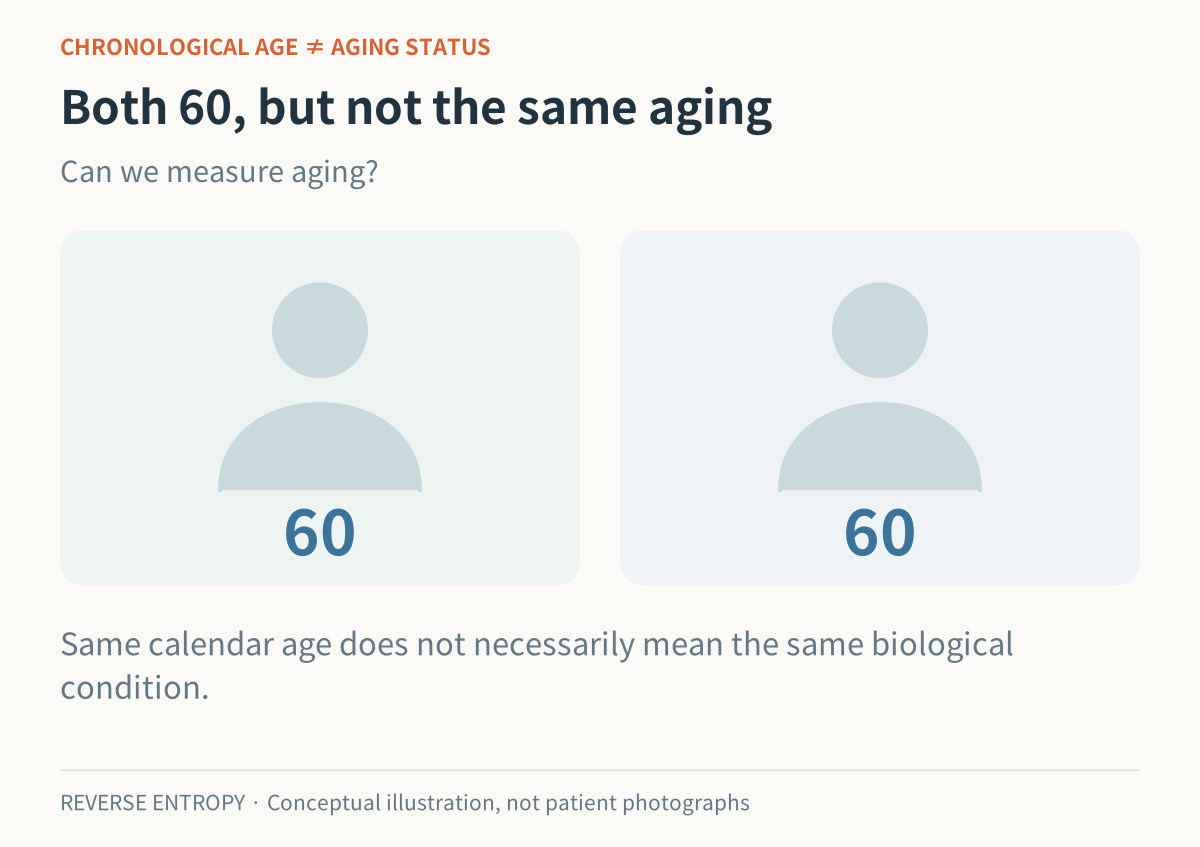
Imagine two people who are both 60.
One has healthy blood vessels, good muscle mass, and good exercise capacity.
The other is also 60 but already has progressing diabetes, atherosclerosis, and muscle loss.
Their calendar ages are the same, but it is difficult to say that they have aged to the same extent.
AI-assisted image · Learn more
What if a test accurately estimated their ages as 59.8 and 60.1 years?
It would have succeeded at estimating age but failed to distinguish the difference in their aging.
Put simply,
A “clock” that estimates calendar age and a “speedometer” that measures how quickly the body is aging address different questions.
That is why recent aging research is moving a step beyond simply estimating how old someone is.
There are already some fairly good approaches that attempt to measure the pace of aging.
DunedinPACE is a leading example.
This method followed people of the same age for 20 years, measured how quickly multiple organ functions actually declined, and then estimates that pace from a single blood DNA methylation test.
But it also has a limitation.
It can tell us that someone is aging quickly, but not very well why they are aging quickly.
This makes the recently published SASP Score interesting.
Rather than trying to measure the overall pace of aging again, it focuses on cellular senescence, one candidate for an important cause of aging.
If this score really reflects the burden of senescent cells in the body, a single blood test might eventually let us track, after a treatment such as a senolytic,
“Did the drug actually reduce senescent cells?”
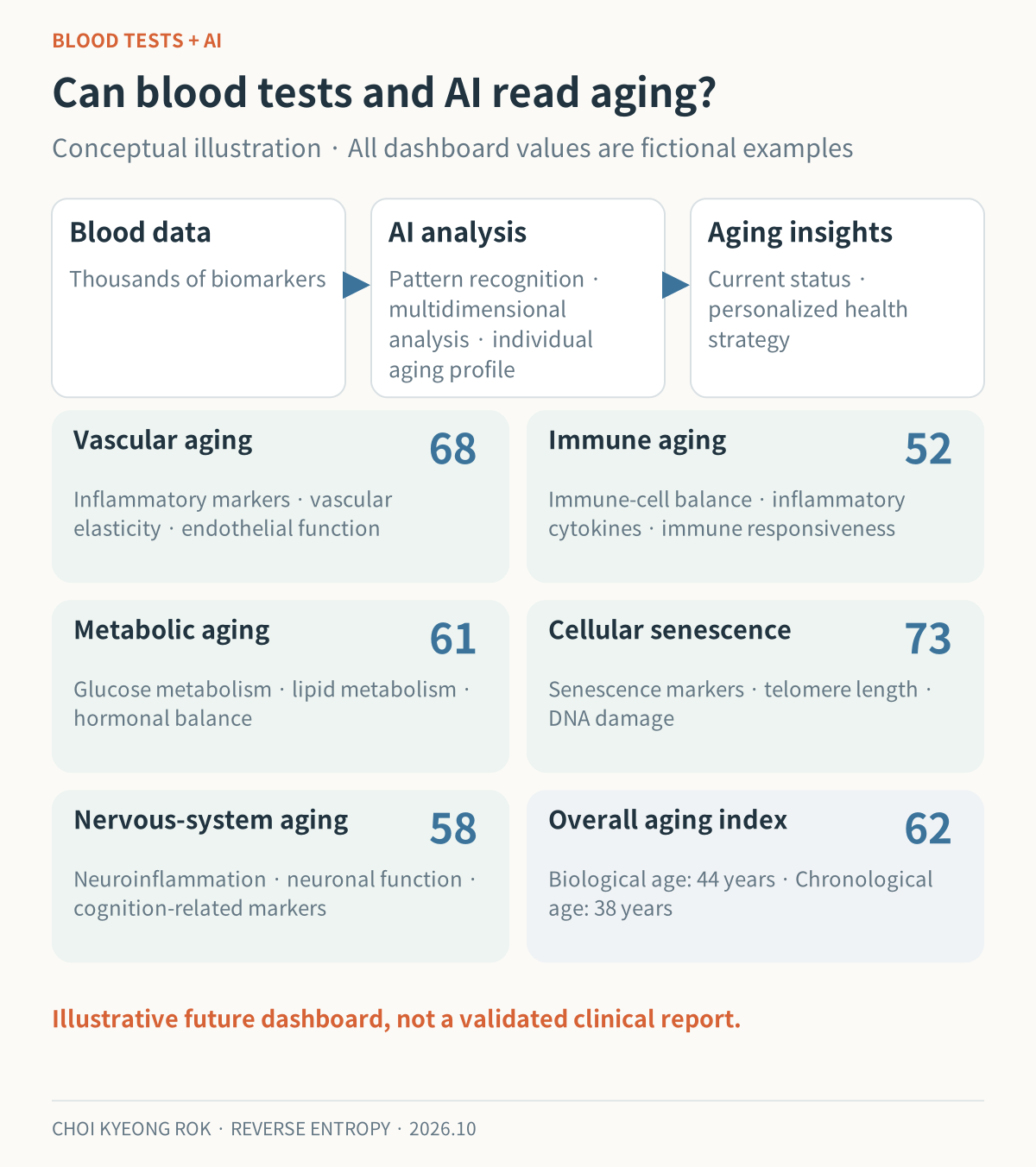
I Currently Have the Highest Hopes for “Blood Tests + AI”
Aging is not a single phenomenon.
The immune system changes, blood vessels change, metabolism changes, and muscles and the brain change at different rates.
We therefore need to measure and analyze multiple biological signals at the same time.
Blood is relatively easy to collect repeatedly.
It contains information from throughout the body about inflammation, immunity, metabolism, organ function, hormones, proteins, and more.
It is difficult for a person to interpret the complex relationships among dozens or hundreds of measures directly, but AI is well suited to finding such multidimensional patterns in large datasets.
If blood tests before and after treatment could reliably establish that
“This person’s pace of aging has actually slowed,”
some anti-aging research that currently requires decades could progress much faster.
Reading Signals Released by “Zombie Cells” in the Blood
In September 2026, a new measure called the SASP Score was published in Aging Cell.
What the researchers sought to measure was not simply age, but systemic cellular senescence burden. Wiley Online Library
Senescent cells no longer divide normally, yet remain in tissues instead of dying and disappearing.
That is why they are often called “zombie cells.”
These cells are not inactive. They release various substances into their surroundings.
This collection of secretions is called the senescence-associated secretory phenotype, or SASP. Wiley Online Library
By combining CellAge, SenNet, the SASP Atlas, and previous research, the researchers selected 38 plasma proteins that repeatedly change across multiple types of senescent cells, and analyzed proteomics data from 50,997 UK Biobank participants.
AI Compressed 38 Blood Proteins into One Score
The researchers did not simply add up the levels of the 38 proteins.
They used a deep-learning model called the Guided AutoEncoder with Transformer, or GAET, to analyze complex relationships between proteins and express them as one number: the SASP Score.
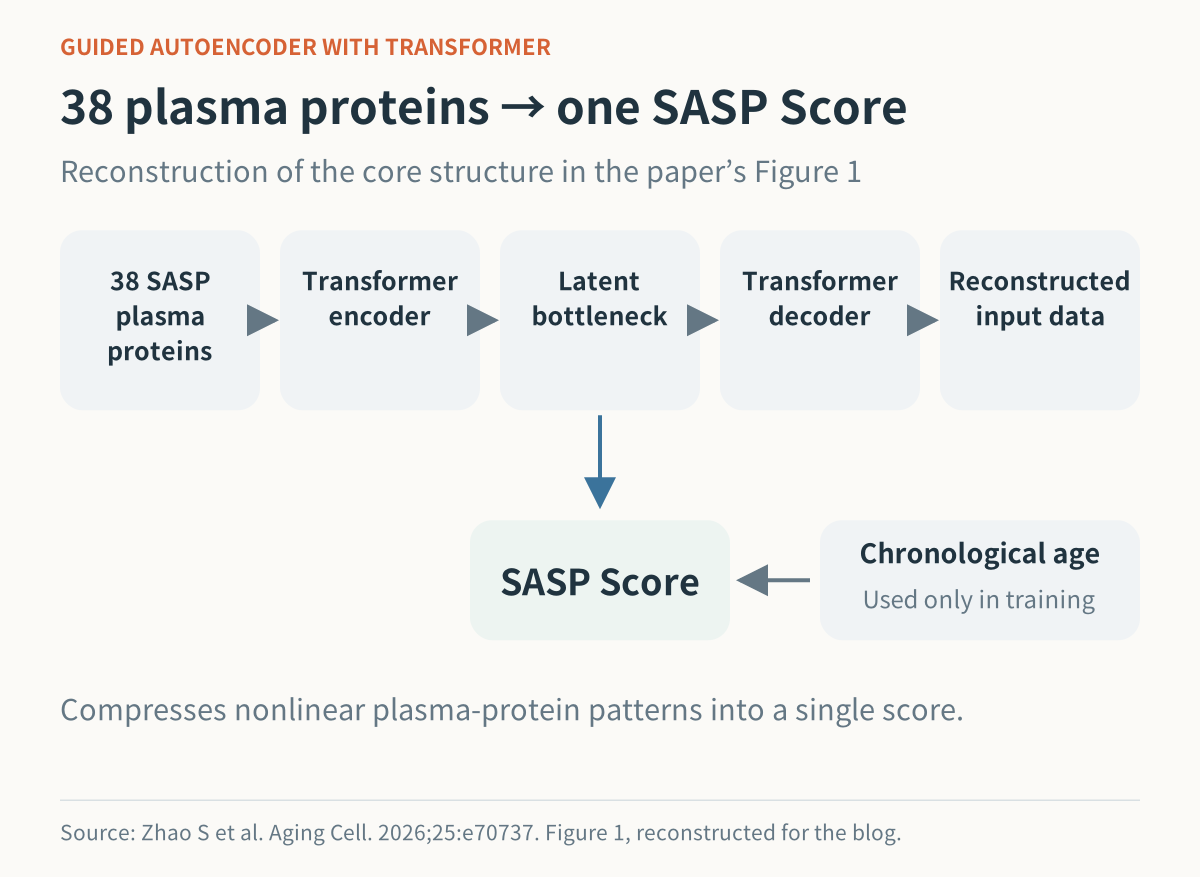
Of the 50,997 participants, 43,358 were used for model training and 7,639 for separate validation.
Interesting Results Emerged 13 Years Later
The researchers followed the validation group for an average of 13.3 years.
They found that a one-standard-deviation higher SASP Score was associated with an approximately 41% higher hazard of death from any cause.
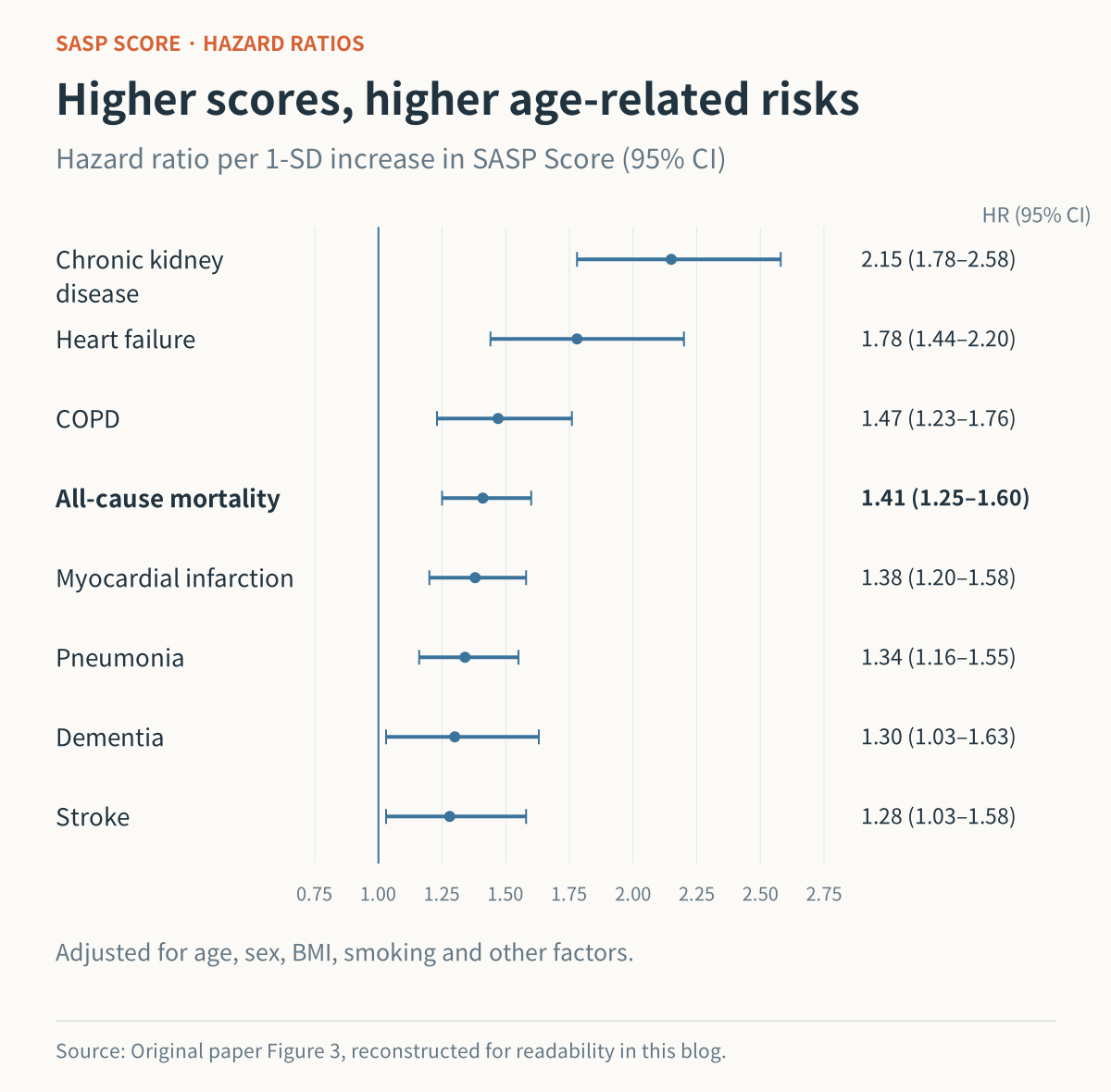
A higher SASP Score was also associated with future risk of multiple age-related diseases, including chronic kidney disease, heart failure, COPD, lung cancer, and dementia.
For lung cancer, the association did not meet the study’s statistical significance threshold after false-discovery-rate correction for multiple comparisons (FDR-adjusted p = 0.053). Original study, Figure 3.
This is quite interesting.
It suggests that the score may be doing more than simply
“identifying older people.”
Has a “Zombie-Cell Blood Test” Finally Arrived?
Not yet.
For example, proteins included in this model, such as GDF15, CXCL9, and CCL2, are associated with aging, but are not produced only by senescent cells.
They can also change in cancer, cardiovascular disease, inflammation, tissue injury, mitochondrial stress, and other situations.
It is therefore not yet fully clear whether the SASP Score is actually reading
the quantity of senescent cells, or
a combined state of aging + inflammation + chronic disease + tissue stress.
Nor did this study directly count senescent cells in multiple human tissues and compare those counts with the SASP Score.
At this stage, therefore, saying
“One blood draw can tell me how many zombie cells are in my body.”
would be an exaggeration.
I Am Even More Excited About the Next Step
The SASP Score is not interesting because it is a finished test of aging.
It is interesting because it closely resembles the direction we ultimately need to take.
The most important test is still ahead.
Suppose an effective senolytic or another anti-aging treatment leads to:
fewer senescent cells in tissues
↓
a lower blood SASP Score
↓
improvements in actual function, such as muscle strength or cognition
↓
and, over the long term, improvements in disease incidence and healthspan.
Then the meaning of this test would change completely.
It could become more than a number that predicts future risk:
a measure for tracking whether an anti-aging treatment has actually affected biological aging.
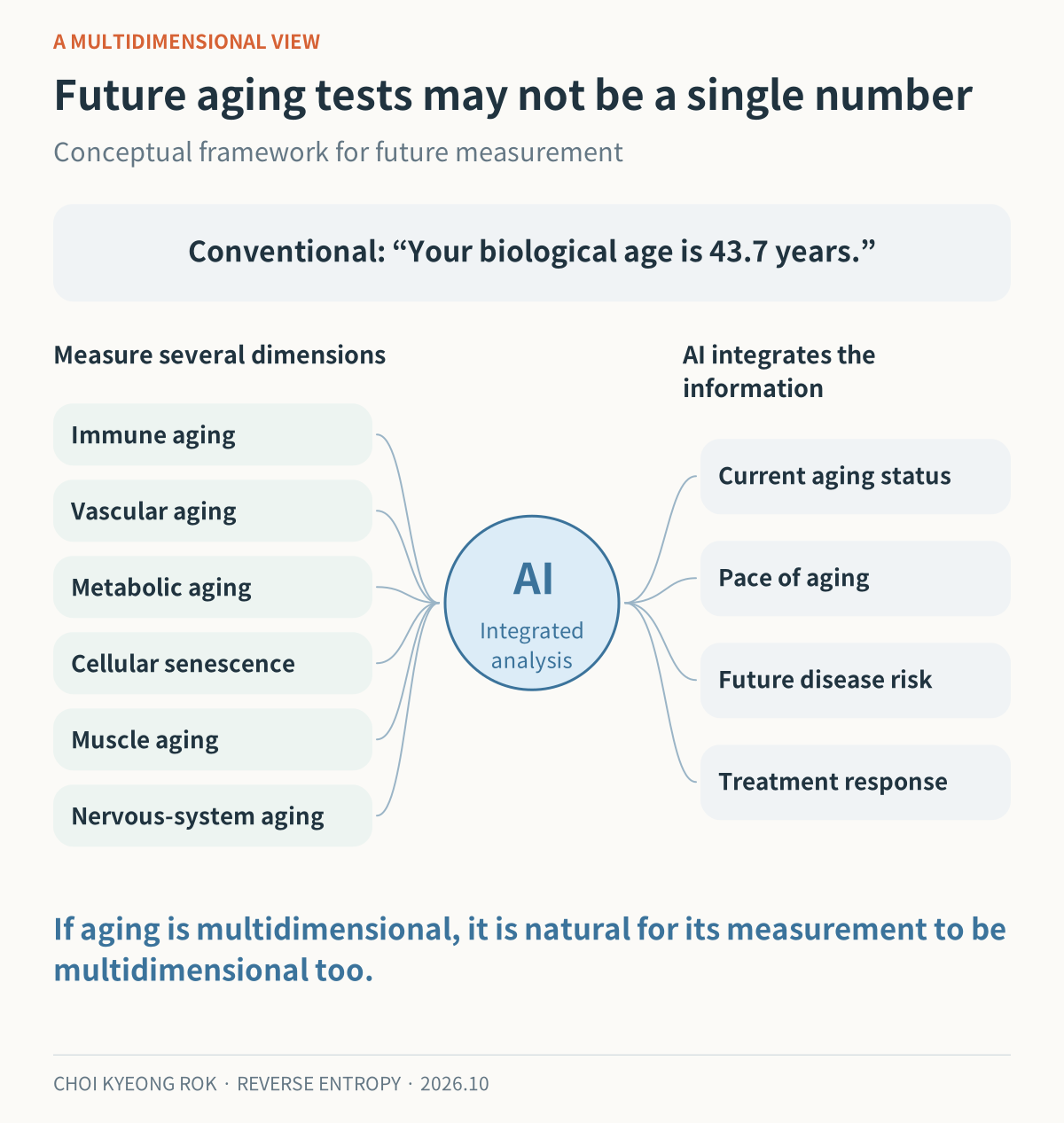
Future Aging Tests May Not Be a Single Number
I do not think future anti-aging tests necessarily have to end with a single number such as
“Your biological age is 43.7 years.”
Instead, it may be more realistic to measure multiple dimensions separately:
immune aging,
vascular aging,
metabolic aging,
cellular senescence,
muscle aging,
and nervous-system aging,
then have AI integrate them to track
current aging status + pace of aging + future disease risk + treatment response.
If aging is multidimensional,
it is natural for the way we measure it to be multidimensional too.
The First Breakthrough in Anti-Aging Research May Come from Measurement, Not a New Drug
We already have numerous anti-aging candidates:
exercise, rapamycin, metformin, senolytics, immune-system modulation, and even partial cellular reprogramming.
The problem is that it is very difficult to determine quickly which of these actually slow human aging.
That is why I believe one of the most valuable technologies in the anti-aging field will be
a way to measure the extent and pace of aging with a simple blood test.
It is too early to regard the SASP Score as the answer.
But I have considerable hope for a direction that combines:
blood, a repeatedly collectable sample,
dozens or hundreds of biological signals,
large-scale, long-term clinical data,
and AI that interprets them together.
Someday, we may be able to measure not
“How old is this person?”
but
“How much has this person aged, and how quickly are they aging now?”
And when that day comes,
the pace of anti-aging research will be completely different from today.
References
Zhao S, Kuo CL, Lenze EJ, et al.
A Deep-Learning Based Biomarker of Systemic Cellular Senescence Burden to Predict Mortality and Health Outcomes.
Aging Cell. 2026;25:e70737.
DOI: 10.1111/acel.70737. Wiley Online Library
Belsky DW, Caspi A, Corcoran DL, et al.
DunedinPACE, a DNA methylation biomarker of the pace of aging.
eLife. 2022;11:e73420.
DOI: 10.7554/eLife.73420. eLife
#AntiAging #AgingResearch #BiologicalAge #MeasuringAging #BloodTest #AI #ArtificialIntelligence #SenescentCells #ZombieCells #SASP #EpigeneticClock #DunedinPACE #Senolytics #Healthspan #ReverseEntropy