“I barely go out. Why do I keep catching colds?”
Homebodies may find themselves wondering this after that first winter cold. You might expect people who see more people to encounter more viruses. Yet some of them seem to stay healthy.
Researchers tested this in an unusual way: they exposed volunteers to a common cold virus under controlled conditions and checked who developed a cold.
Some studies found fewer colds among people with more varied social ties or higher sociability.
As if homebodies needed another blow. But don’t let it get you down.
Nobody has proved that making more friends prevents colds. We have to look separately at the kinds of relationships people have, their disposition, infection, and symptoms.
1. Researchers checked who actually developed a cold after exposure
A 1997 study in JAMA included 276 healthy volunteers aged 18–55. The researchers surveyed their social ties and observed participants for five days after controlled exposure to one of two rhinoviruses while in isolation. [1]
They used viral cultures or antibody changes to confirm infection and measured the weight of nasal secretions and how well the nose cleared mucus. A cold required both infection and objective signs, so the diagnosis did not rest on self-report alone. [1]
What mattered was the variety of ties. The researchers counted how many of 12 social roles each participant had contact with in person or by phone at least once every two weeks: spouse, parents, children, friends, coworkers, neighbors, groups, and so on. [1]
People with one to three types of ties had an adjusted odds ratio of 4.2 for a cold compared with the group with six or more types. Simply put, higher odds go with a higher probability.
But 4.2 does not mean they were 4.2 times as likely to get a cold. A ratio of odds and a ratio of probabilities are different numbers.
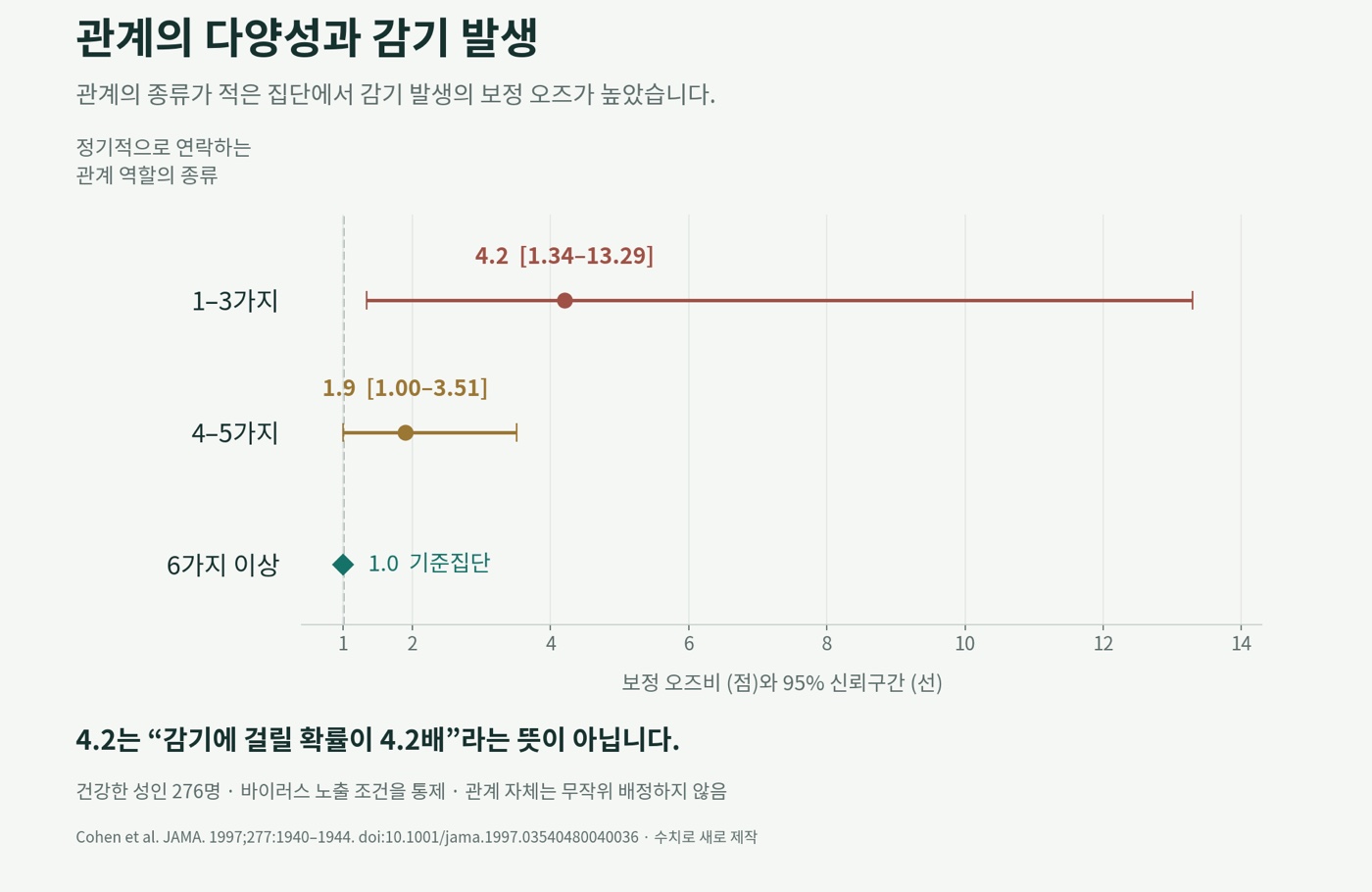
2. “Social butterfly” covers four different things
Here is the distinction that matters most. In ordinary conversation we lump these together as “good social relationships.” Researchers ask different questions about each. [1] [2] [3] [4]
Network structure. How many people are in touch with you and how many parts of life those ties span: family, friends, work, groups. The number of people and the number of roles are separate measures.
Sociability. How much you enjoy spending time with other people and how warmly you relate to them.
Loneliness. Feeling a gap between the relationships you want and the ones you have. You can be lonely in a crowd.
Social support. Feeling there is someone to understand or help you when things get difficult.
3. Other studies fill in the picture
Looking across follow-up studies, “good relationships make you resistant to colds” is too neat. Results differed according to what researchers measured.
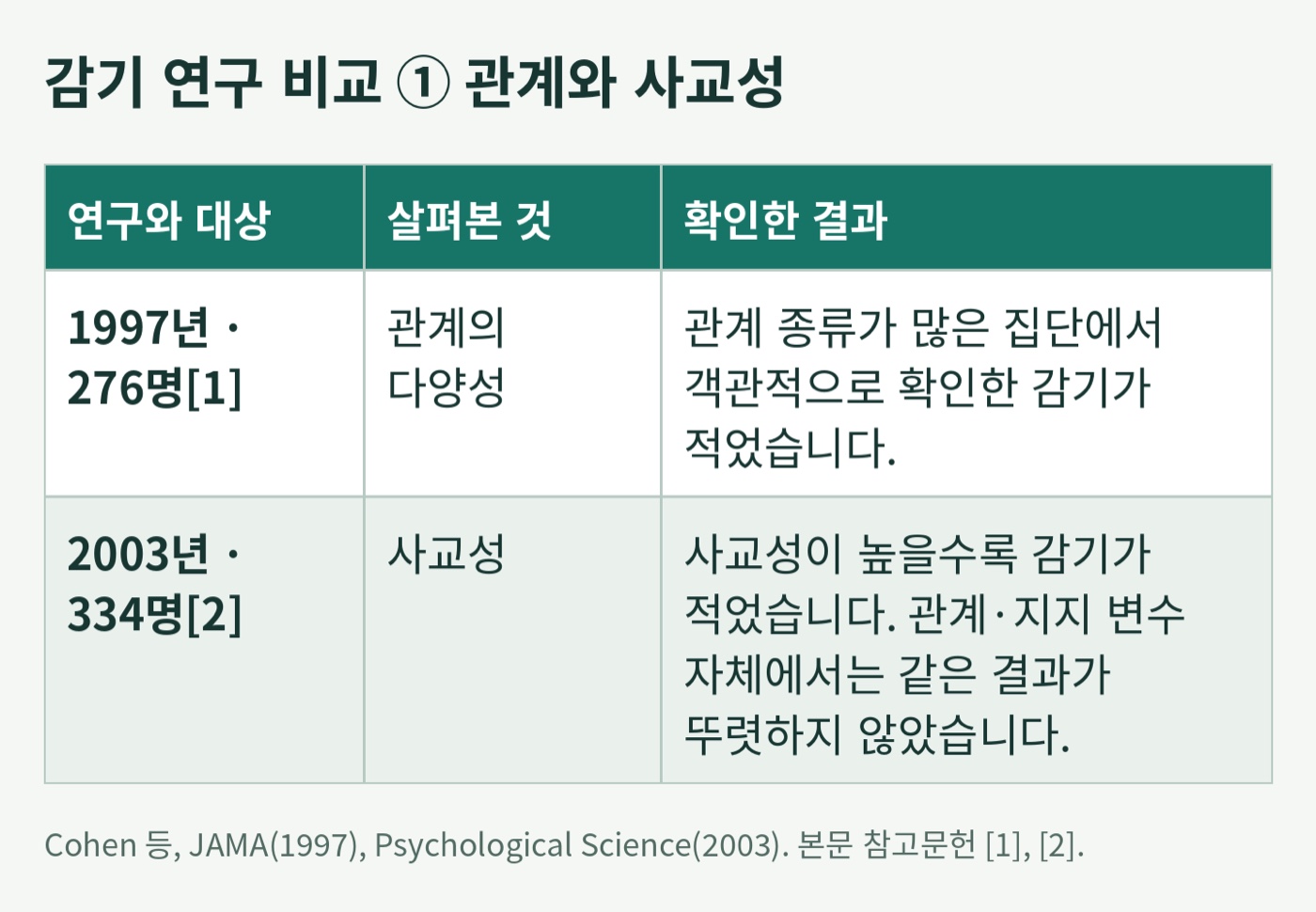
The 2003 study got closer to the idea of a “social butterfly.” In a new group exposed to the virus, the least sociable 20% had 2.9 times the adjusted odds of an objectively verified cold compared with the most sociable 20%. The 95% confidence interval was wide: 1.12–7.37. Sociability and the variety of social ties are different measures, so this was not a direct replication. [2]
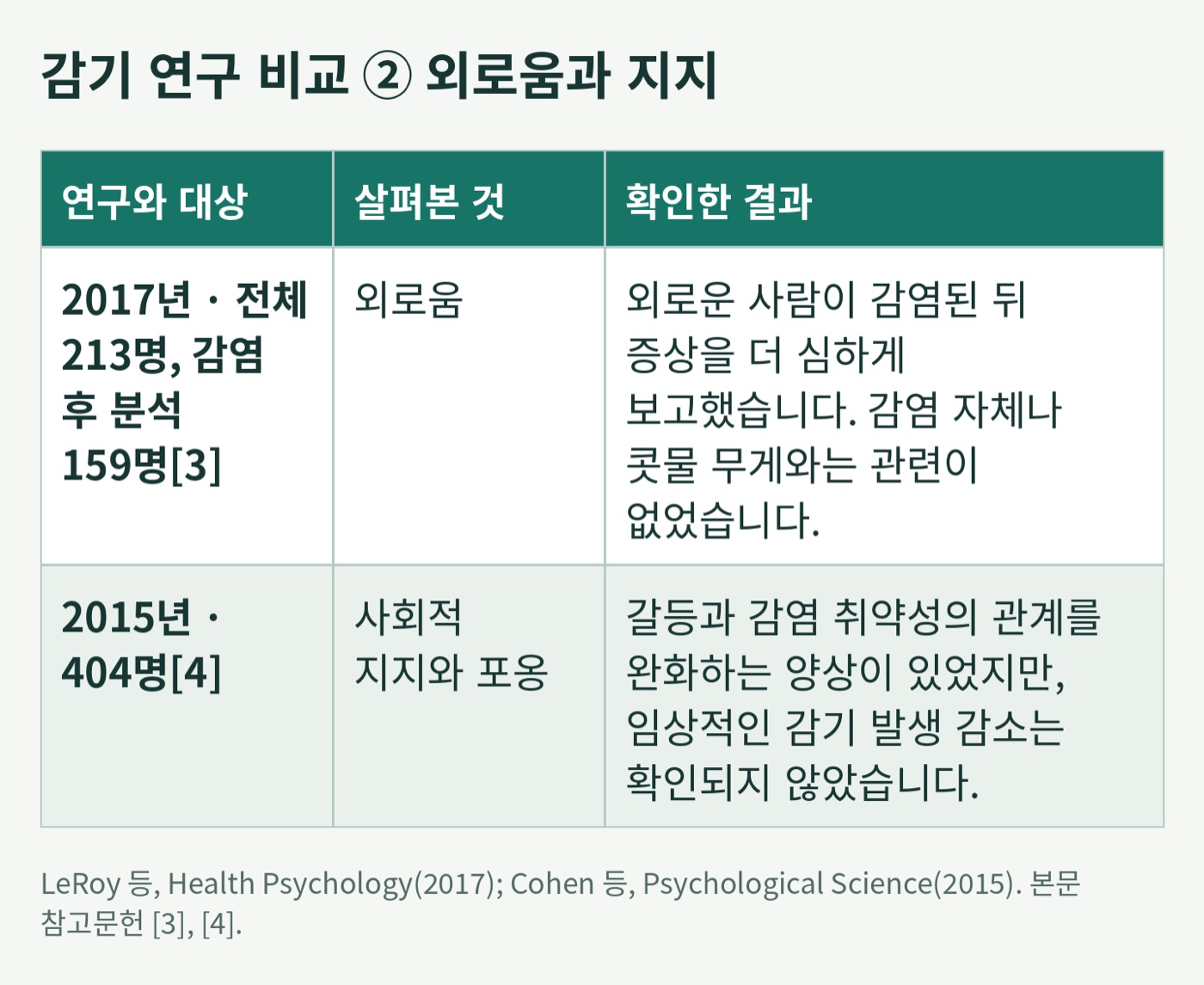
The 2017 loneliness study showed why getting infected and feeling worse after infection need to be separated. Lonelier participants reported more severe symptoms, but were not more likely to get infected and did not produce more nasal secretions. That doesn’t make their discomfort an exaggeration. No single objective measurement captures everything a person feels. [3]
The hugging study is no reason to prescribe hugs to prevent colds. The associations observed for infection and some objective measures did not translate into fewer colds. Since some participants also provided data for the loneliness study, these four papers are not four independent replications. [3] [4]
4. We still do not know exactly what drove the difference
There are plausible explanations. Feeling connected to someone could help you cope with stress, or it could go hand in hand with regular routines and better sleep. Another question worth studying is whether the body’s stress and immune responses differ. [2] [4]
Unmeasured health or living conditions might have affected both social ties and cold susceptibility. Passing a health check at the start of a study doesn’t make everyone the same.
“Stronger immunity” is a bigger claim than these studies support. They looked at infection, colds, and symptoms after exposure to specific viruses. They cannot tell us how well someone fights every infectious disease or how fast that person is aging.
5. Think about how you like to stay connected
There is no need to read this and think, “I’m an introvert, so I’m worse off.” These studies did not compare the E and I of the MBTI. They do not tell you how wide your circle needs to be or how many people to meet to stay healthy.
Is there an easy, comfortable way for me to connect with people? That could be checking in with family, getting in touch with an old friend, or making time to share an interest. Your answer can suit your temperament.
Some people enjoy a group gathering. Others feel more at home in a quiet conversation with someone close. Rather than counting people, think about which relationships leave you feeling comfortable and supported.
Original studies
- Cohen S, et al. Social Ties and Susceptibility to the Common Cold. JAMA. 1997;277:1940–1944. DOI: 10.1001/jama.1997.03540480040036.
- Cohen S, et al. Sociability and Susceptibility to the Common Cold. Psychological Science. 2003;14:389–395. DOI: 10.1111/1467-9280.01452.
- LeRoy AS, et al. Loneliness Predicts Self-Reported Cold Symptoms After a Viral Challenge. Health Psychology. 2017;36:512–520. DOI: 10.1037/hea0000467. See also the 2025 correction to the statistical tables.
- Cohen S, et al. Does Hugging Provide Stress-Buffering Social Support? A Study of Susceptibility to Upper Respiratory Infection and Illness. Psychological Science. 2015;26:135–147. DOI: 10.1177/0956797614559284.
#ReverseEntropy #HINClinic #HealthyAging #CommonCold #SocialTies #Loneliness #Sociability #MedicalResearch