You put on lip balm several times a day, but by evening your lips are flaking again. Before buying a better balm, check whether the one you use suits you.
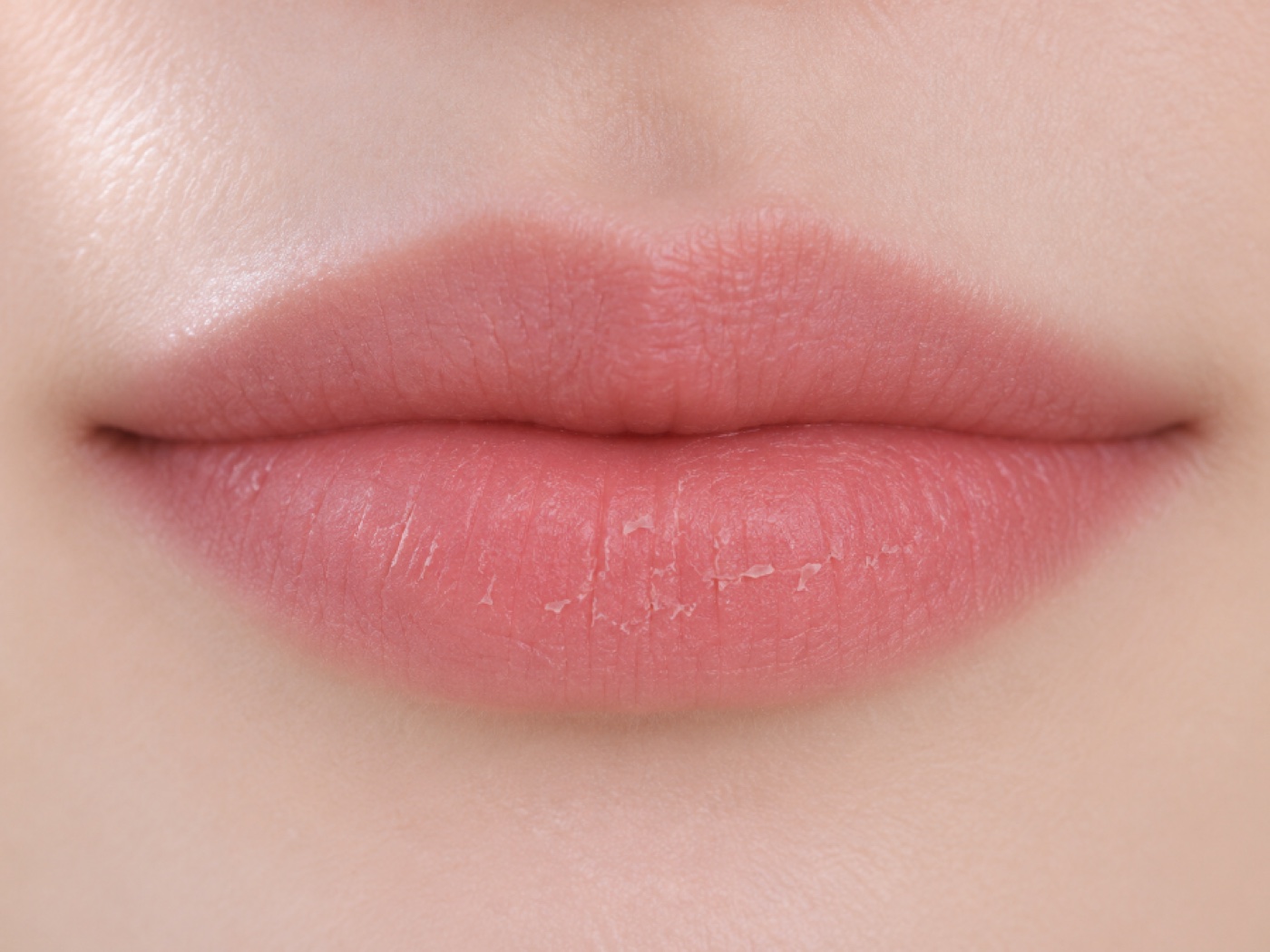
If you choose just one, start without fragrance or flavor
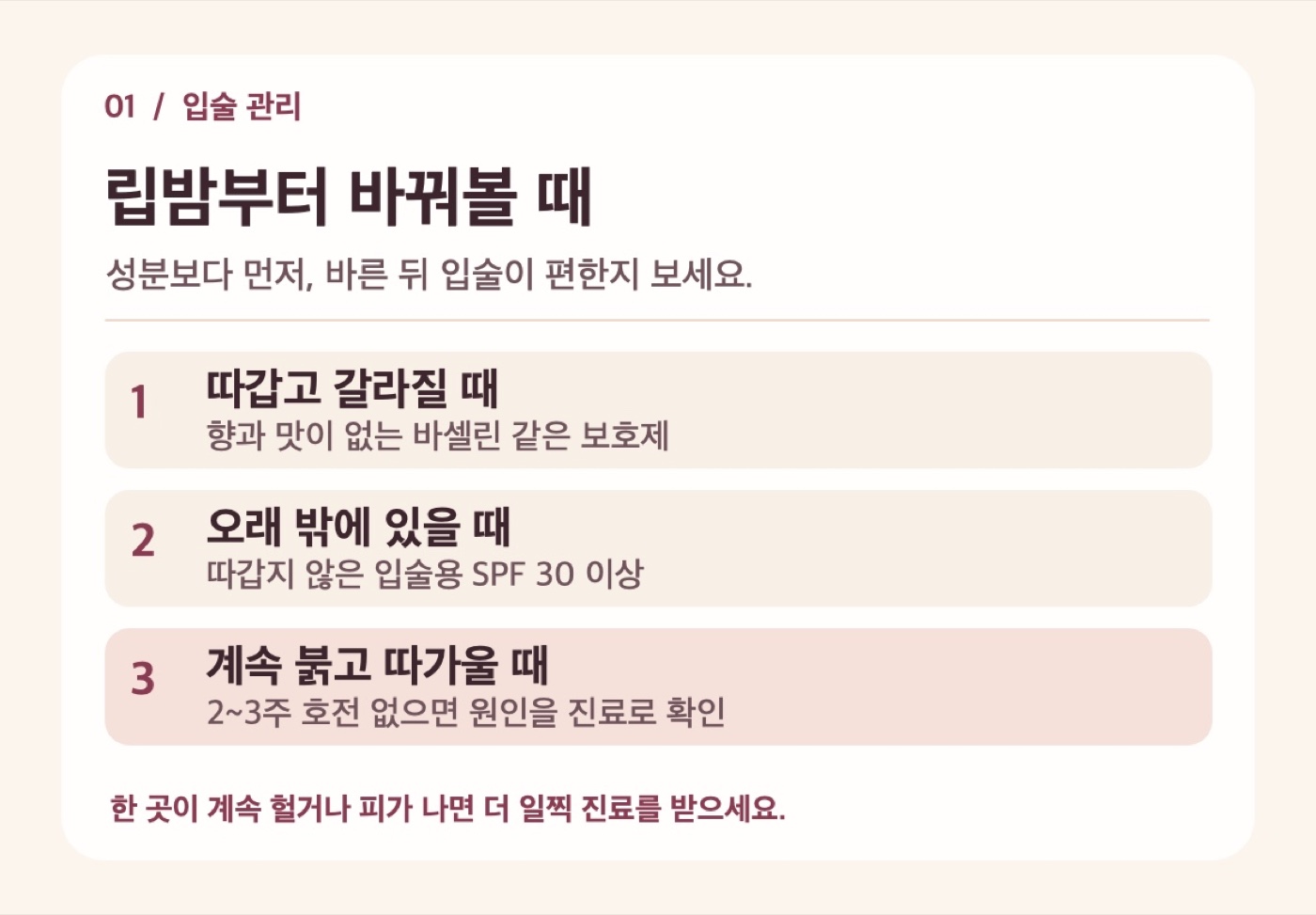
For sore, cracked lips, start with a simple ointment such as white petrolatum. It coats the lips and reduces water loss. An unscented balm can be easier to wear by day; a longer-lasting ointment may be useful at bedtime.
I first look for menthol, camphor, fragrance, and mint or citrus flavorings. They are not a problem for everyone, but check for them if your lips sting or turn red each time you apply the product. If you spend a long time outdoors, use a non-irritating lip sunscreen of SPF 30 or higher.
Do not lick your lips or pull off flakes. Saliva feels soothing for a moment, but repeated wetting and drying can irritate the lips. Let the flakes come away on their own while you protect the surface.
If the balm does not help, look for cheilitis
If the irritation does not improve after two or three weeks of avoiding irritating products and moisturizing, or if itching and redness keep returning, get it checked. Contact reactions to lip products or toothpaste, lip-licking dermatitis, and angular cheilitis can look similar but need different care.
For eczematous inflammation, a clinician may advise removing the trigger and briefly using a mild topical steroid. Suspected allergy may warrant reviewing your usual products and toothpaste, and sometimes patch testing. Yeast and bacterial problems require treatment directed at the cause. The wrong ointment can make symptoms worse.
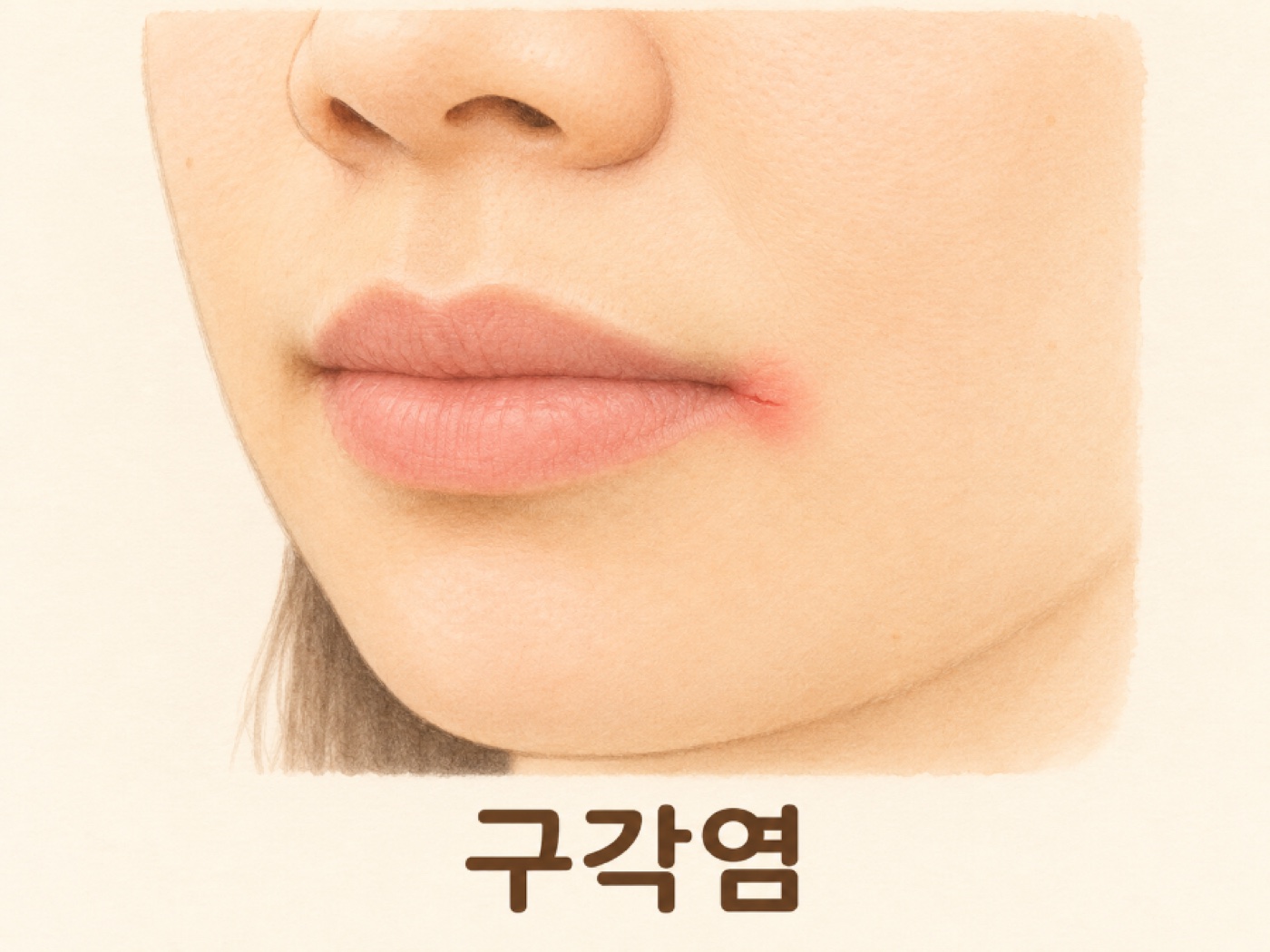
Cracks that keep returning at the same corner of the mouth may be angular cheilitis. In a 40-patient culture study, Candida was detected in 16 patients, or 40% of all participants and 48.4% of the 33 with positive cultures. Finding Candida does not make it the cause of every cracked lip.
If a patch on the lower lip stays rough, a sore will not heal, or one spot keeps bleeding, do not rely on balm alone. Have the cause evaluated.
What if the inflammation settles but texture still bothers you?
Age-related changes can affect lip texture independently of dryness. A 2020 tissue study compared upper-lip vermilion from 15 female donors aged 27–78. Older donors had smaller areas occupied by dermal hyaluronic acid and collagen fibers and by some lip-muscle fibers. Once inflammation has resolved, options such as polynucleotide (PN) or hyaluronic acid (HA) injections may be worth discussing with a clinician.

Do PN and hyaluronic acid injections help?
A prospective Korean study using Rejuran enrolled 30 people with dry, chapped lips; 27 completed it. At week nine, photo-rated fine-line and roughness scores both fell from a median of 3 to 1.
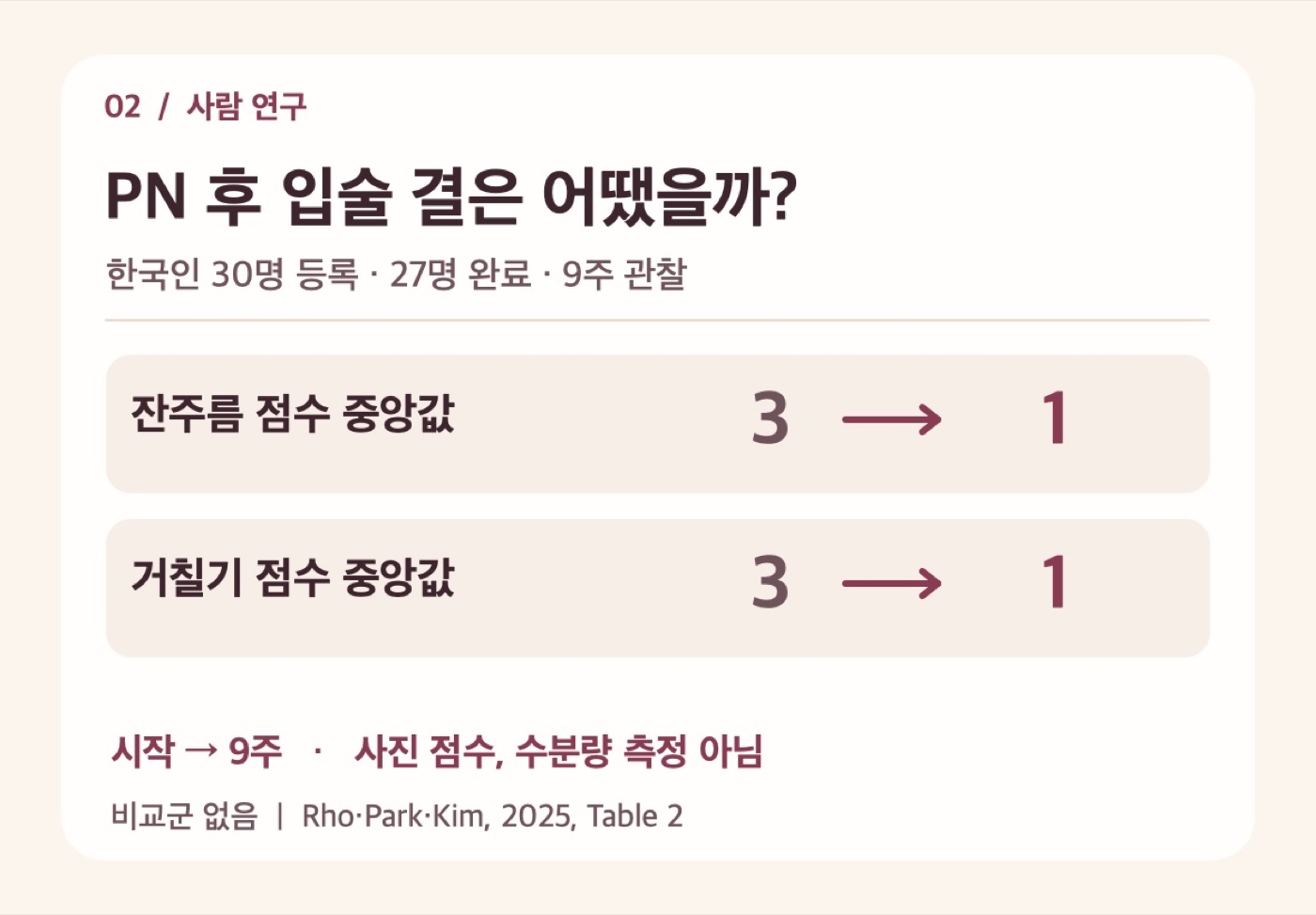
The study did not measure moisture directly or use a balm or placebo control. Thirty minutes after the first treatment, all 27 had swelling and 24 experienced pain.
Human HA lip-filler studies are more numerous, but generally focus on volume, contour, or lines around the mouth. Some report texture improvements alongside volume changes; that does not establish hydration benefit. In my clinic, I use products such as Rejuran, my D-ALL formulation, or longer-lasting HA-based boosters such as Skinvive, selected for the individual’s concerns. Suitability, risks and applicable indications need an individual assessment.
One change to make today
Start with one simple protectant that does not sting. Finding a basic product you tolerate matters more than buying one with a long ingredient list.
References
American Academy of Dermatology: dry, chapped lips · DermNet: eczematous cheilitis · Allergic contact cheilitis · Actinic cheilitis
Gomi et al., 2020 · Rho, Park and Kim, 2025 · HA lip injection, Dermatologic Surgery, 2021 · U.S. FDA: dermal filler safety · Korean MFDS device information