When I think about anti-aging, I start with a somewhat extreme question.
“What abilities would the body need for a human being to keep living without dying?”
Simply reducing the damage to our cells would not be enough.
We would also need to find damage that has already occurred, repair it, remove what needs to be removed, and replace it with new tissue.
No matter how well a building is maintained, it will not last forever.
Pipes need replacing, cracks need repairing, and buildings at risk of collapse eventually need to be demolished.
This is also how I look at the body.
The ability to regenerate what we need, and the ability to remove what we do not.
I believe that maintaining both functions together gives us a better chance of living longer.
Yet research on some antioxidants has found that they can actually help cancer grow.
The central question about antioxidants is what they protect
Antioxidants are often described this way:
“They protect cells from oxidative damage.”
But an important question is missing.
Do they protect only normal cells? Could they also protect cells that have already become abnormal?
A study published in Nature in 2015 brings this question into sharp focus.
The researchers transplanted human melanoma cells into immunodeficient mice to study metastasis. As cancer cells traveled through the bloodstream and established themselves in other organs, oxidative stress acted as a barrier to their survival. Giving antioxidants, however, made metastasis more likely.
Oxidative stress and cancer metastasis: Piskounova et al., Nature, 2015
For cancer cells too, experiencing less oxidative damage was an advantage for survival.
On the other side of antioxidant protection is the body's surveillance system.
In another mouse study, T cells and macrophages worked together to remove liver cells that could progress to cancer. When this surveillance and clearance function was impaired, liver cancer developed.
Immune surveillance of abnormal liver cells: Kang et al., Nature, 2011
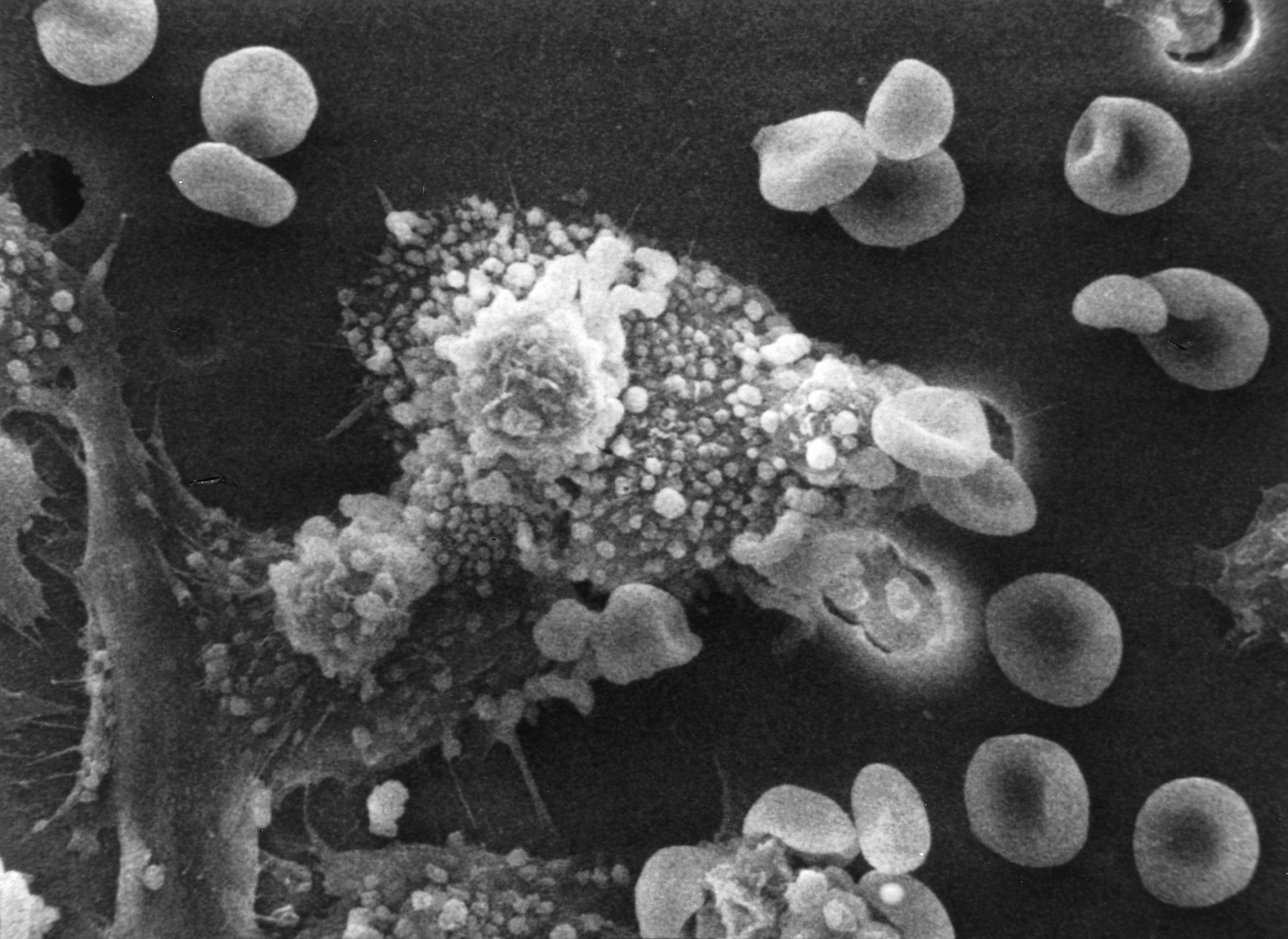
Source: Susan Arnold / National Cancer Institute, material supplied by Dr. Raowf Guirguis, 1988. Original hosted on Wikimedia Commons.
Taken together, these two studies help explain why I think about regeneration and removal at the same time.
Preventing dangerous cells from continuing to survive is just as important as protecting normal tissue.
Our goal is not to keep every cell alive for as long as possible, no matter what. It is for the person to live a long, healthy life.
The cancer risks of some high-dose antioxidant supplements have already been demonstrated in humans
This is not just a story from animal experiments.
Large randomized trials have found that long-term, high-dose supplementation with certain fat-soluble vitamins and their precursors actually increased cancer incidence.
ATBC, 1994: an 18% relative increase in lung cancer incidence
The study included 29,133 male smokers. Those who received 20 mg of beta-carotene daily had an 18% higher incidence of lung cancer, in relative terms, than those who did not.
CARET, 1996: a 28% relative increase in lung cancer incidence
The study included 18,314 people at high risk, including smokers, former smokers, and workers exposed to asbestos. The group receiving 30 mg of beta-carotene plus 25,000 IU of vitamin A daily had a 28% higher incidence of lung cancer, in relative terms, than the placebo group.
SELECT, 2011: a 17% increase in prostate cancer risk
The main analysis included 34,887 men. The group taking vitamin E alone at 400 IU daily had a 17% higher relative risk of prostate cancer than the placebo group.
ATBC and CARET began with the hope of preventing lung cancer. SELECT also tested cancer prevention, in this case prostate cancer, but the result went in the opposite direction.
For example, prostate cancer incidence in SELECT was 9.3 cases per 1,000 person-years in the placebo group and 10.9 in the vitamin E group. The absolute difference was 1.6 cases in the same units. One thousand person-years represents an amount of observation equivalent to following 1,000 people for one year.
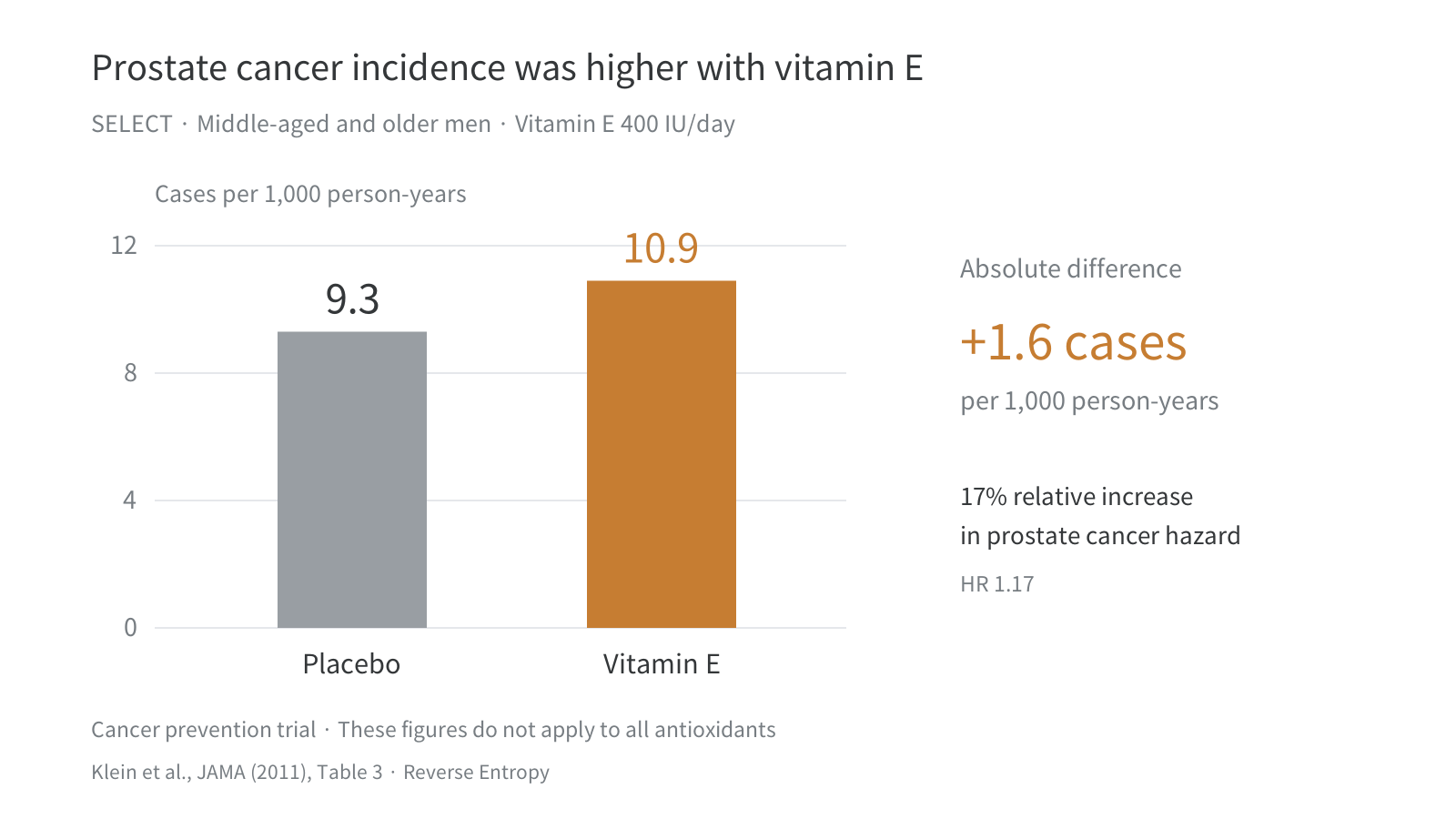
Source: Klein EA et al., JAMA. 2011;306:1549–1556, Table 3. Chart redrawn by Reverse Entropy.
My concern is not with all vitamins in food. It is with long-term supplementation at specific doses of specific ingredients for which harm has been demonstrated.
In these cases, “it seems good for me” is a weak reason to keep taking them.
Strong antioxidant activity is no guarantee of an anti-aging benefit.
What about vitamin C?
The results for vitamin C are mixed and depend on the formulation and conditions.
For example, in a randomized trial involving 14,641 male physicians, 500 mg of vitamin C daily did not significantly increase or decrease total cancer incidence. Over an average follow-up of 10.3 years, including observation after supplementation ended, the hazard ratio for total cancer was 1.02.
Long-term follow-up of vitamin C: Wang et al., AJCN, 2014
I do not take these results to mean that we should give up on water-soluble vitamin C.
At the same time, I do not use it in the belief that it reliably prevents cancer.
What interests me is the range of biological roles vitamin C plays.
Vitamin C does more than can be captured by calling it a simple scavenger of reactive oxygen species.
A 2017 Nature study found that vitamin C is present at high levels in hematopoietic stem cells and supports the function of TET2, an enzyme involved in gene regulation.
In mice, vitamin C deficiency combined with certain mutations accelerated the development of leukemia. Restoring vitamin C attenuated these changes.
Vitamin C, hematopoietic stem cells, and TET2: Agathocleous et al., Nature, 2017
Put simply, vitamin C was not merely acting as a protective shield around cells. It was also participating in processes that help cells maintain normal function.
This is why I actively use vitamin C.
I avoid high-dose supplementation with established harms, but I do not intend to abandon ingredients that may still have a useful role.
And rather than placing all my hopes in antioxidants, I also consider the body's other repair and surveillance functions.
Good cellular housekeeping helps stem cells last longer
An important study supports this connection between preservation and repair.
In a 2016 Nature study, declining autophagy in aging muscle stem cells allowed damaged proteins and organelles to accumulate. Mitochondrial function deteriorated, and stem cell function declined as well.
Reactivating autophagy in aged mouse stem cells restored their regenerative capacity.
García-Prat et al., Nature, 2016
Keeping stem cells functional over time requires more than repeatedly telling them to grow. Their internal maintenance and repair systems must remain active too.
In October 2026, a study extended this principle to immune cells.
When chaperone-mediated autophagy, or CMA, a selective intracellular protein degradation system, weakened, macrophages became less able to clear senescent cells. Conversely, activating CMA with a drug reduced the senescent cell burden in old mice.
CMA and senescent cell clearance: Sereda et al., Nature Aging, 2026
For the cleaners to do their job well, the cleaners themselves had to be properly maintained.
These findings make me reluctant to treat antioxidants, autophagy, immunity, and stem cells as separate buzzwords.
I see them as connected parts of one maintenance and repair system.
Exercise is the best example of why preservation and repair belong together
Exercise is central to my anti-aging strategy.
I do not see exercise merely as a way to burn calories or make muscles bigger.
I see it as a process that helps the body adapt to challenges and maintain its own function.
A 2012 mouse study in Nature found that exercise-induced autophagy was necessary for some of exercise's metabolic benefits.
Mice engineered to have an impaired autophagic response to exercise had less favorable outcomes, including reduced improvements in glucose metabolism.
Exercise-induced autophagy: He et al., Nature, 2012
There is even more compelling evidence when we look at actual disease outcomes in humans.
The CHALLENGE trial, published in NEJM in 2025, randomized 889 patients with colon cancer who had completed surgery and adjuvant chemotherapy.
One group received a structured exercise program for three years; the other received health education materials.
Estimated five-year disease-free survival, meaning the probability of remaining free from recurrence, a new cancer, or death, was 80.3% in the exercise group and 73.9% in the control group. The absolute difference was 6.4 percentage points. Across the full follow-up period, the hazard of this composite outcome was 28% lower in the exercise group.
Exercise and outcomes after colon cancer treatment: Courneya et al., NEJM, 2025
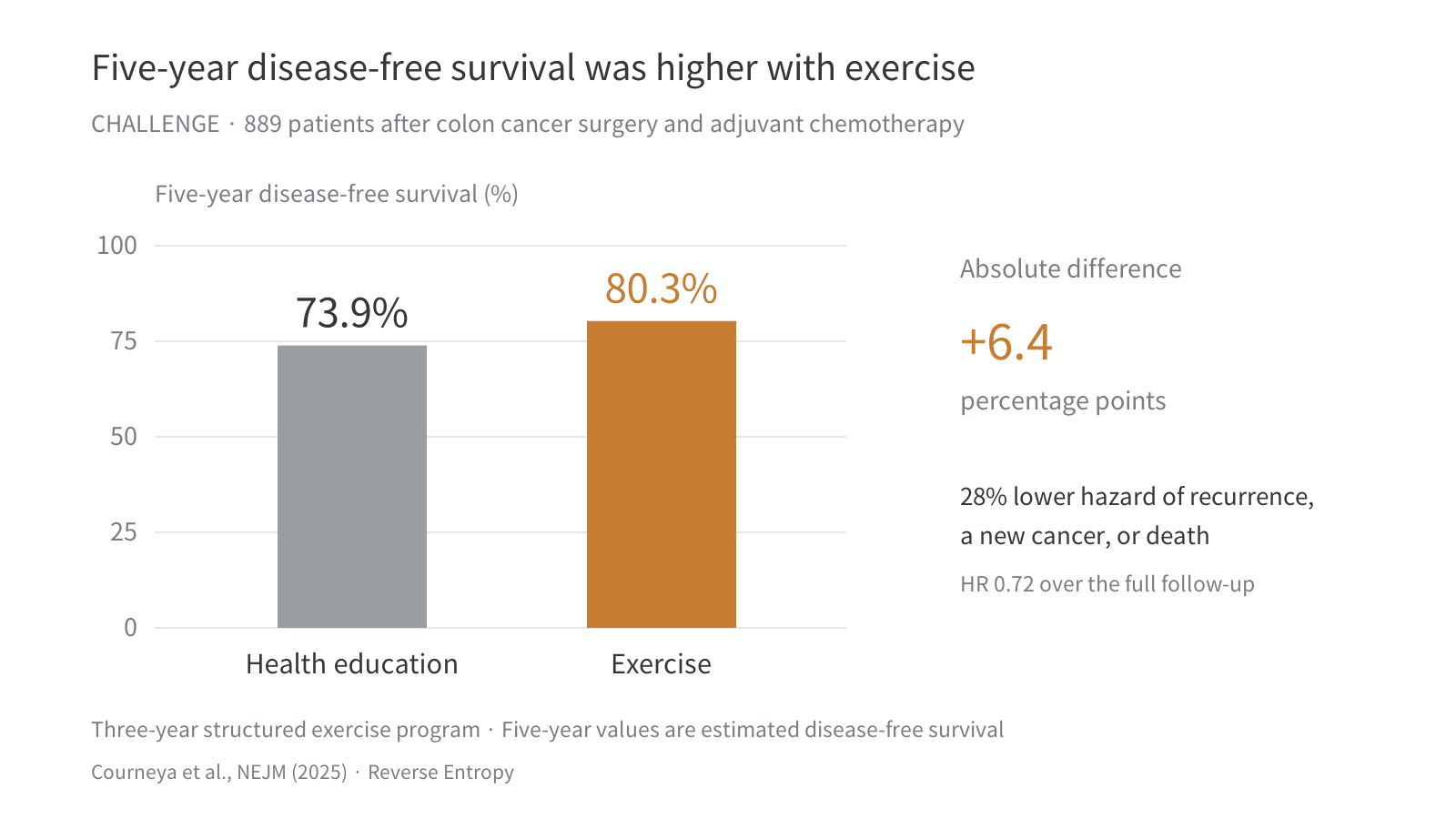
Source: Courneya KS et al., NEJM. 2025;393:13–25. Chart redrawn by Reverse Entropy.
This trial did not establish which mechanism, such as changes in autophagy or immunity, produced the results.
But it does show why the value of exercise need not be confined to antioxidant markers or changes in body weight.
Exercise is an intervention that can change the course of actual disease.
That is why I care more about whether regular exercise is truly part of my life than about how well I choose supplements.
I apply these principles to my own anti-aging protocol
I do not consider antioxidants in isolation.
My aim is to protect normal tissue while also maintaining the body's ability to handle damage and recover.
With this goal in mind, I have brought nutritional supplementation, exercise, metabolic management, and immunomodulation into a single plan.
Today I will briefly introduce what I am currently doing.
I plan to discuss the details properly in a future article.
Daily nutritional and antioxidant supplements
I take vitamin C, liposomal glutathione, and zinc.
Injections and infusions
I use vitamin B and C, glutathione, and placental extract injections once a week.
Vitamin D management
I check my blood tests and supplement by injection if levels are insufficient, aiming for a level near the lower boundary of the laboratory's normal range.
Strength training
I do pull-ups and push-ups every day, gradually increasing the repetitions as I adapt.
Aerobic exercise
I use a treadmill, swim, or do similar activities two or three times a week.
Metabolic management
I use Wegovy at 0.25 mg per week and metformin at 250 mg per day.
An immunomodulatory approach
I use one ampoule of thymosin alpha 1 by injection per week.
I am sharing my personal use, not a prescription schedule for readers to copy.
The sections below explain why I chose each component.
The anti-aging effects and long-term safety of this entire combination, at these doses and frequencies, have not been validated in clinical trials. Please treat it as a personal account for reference only.
I actively use antioxidants, but they are not my entire approach
My purpose in using vitamin C, glutathione, and similar ingredients is to reduce unnecessary oxidative damage and support normal cellular function.
But my goal is not to eliminate as many oxidative signals in the body as possible.
I do not want protection that also shuts down the processes of exercise adaptation and damage clearance. I place antioxidants as one component of the body's maintenance and repair plan.
The way I approach vitamin D follows the same philosophy.
In my case, I review my blood tests and supplement toward a level near the lower boundary of the normal range. Rather than thinking, “If it is good, I should push the level as high as possible,” I have personally chosen to prevent deficiency without becoming fixated on unnecessarily high levels.
In other words, actively using antioxidants does not mean using every ingredient at the highest dose.
It means assigning each a role I consider necessary, while checking whether that role fits the goals for the body as a whole.
Exercise is the center of my protocol
I do pull-ups and push-ups daily, gradually adding repetitions as I adapt. I also do aerobic exercise, such as treadmill workouts and swimming, two or three times a week.
What I hope to gain from exercise goes beyond bigger muscles or weight loss.
It is about training the body to encounter a challenge, recover, and respond better the next time.
As the studies discussed earlier suggest, exercise's benefits involve not just energy expenditure but also maintenance and repair processes within cells.
I use strength training to preserve muscle and function, and aerobic exercise to build a life in which I regularly move my whole body.
What matters is not exhausting myself completely every single day.
It is providing a stimulus that I can repeat, recover from, and improve with over time.
For me, exercise is not an optional addition beside antioxidants. It is the central activity that brings preservation and repair together.
I look to metformin for metabolic management and regulation of growth signaling
I use 250 mg of metformin daily.
Much larger doses are generally used to treat diabetes, but I use a small dose.
My interest extends beyond blood glucose. I am interested in how cells use their nutrient and energy status to regulate when to build and when to maintain and repair.
mTOR is an important signaling system involved in this process.
Metformin's inhibition of mTORC1 signaling has been observed in studies of mouse liver and cultured liver cells, with the pathways involved differing according to dose and experimental conditions.
Metformin and hepatic mTORC1 signaling: Howell et al., Cell Metabolism, 2017
I chose metformin by considering these mechanisms alongside my goal of metabolic management.
The aim is not to suppress growth indiscriminately. At the same time, I do strength training to maintain and build muscle.
Build the tissue I need, while reducing unnecessary, persistent growth signaling and metabolic burden.
That is why I consider these two approaches together.
I look to thymosin alpha 1 to support the immune system's ability to respond
I use one ampoule of thymosin alpha 1 once a week.
My interest is not in a vague idea of making immunity “stronger.”
It is in maintaining a state in which the body can recognize the right targets and respond appropriately.
Thymosin alpha 1 is a peptide studied for its modulation of dendritic cell and T-cell responses. A 2004 preclinical study in Blood found that it promoted dendritic cell maturation and T-cell responses and improved defenses against fungal infection in immunocompromised mice.
Research on thymosin alpha 1 immunomodulation: Romani et al., Blood, 2004
This potential for immunomodulation is why I include it in my protocol.
To use a city analogy, I am considering not just how to make buildings sturdy, but also the staff who identify and respond to problems.
I use a low dose of a GLP-1 receptor agonist to manage the body's metabolic burden
I use Wegovy at 0.25 mg per week.
The role I assign to it is managing appetite, body weight, and metabolic burden.
My goal is not to lose as much weight as possible or to keep cutting food intake without limit. (I am in good physical shape.)
In the human SELECT trial, 17,604 adults with overweight or obesity and cardiovascular disease received semaglutide with a target dose of 2.4 mg per week, and major cardiovascular events were reduced. Over an average follow-up of about 40 months, events occurred in 8.0% of the placebo group and 6.5% of the treatment group.
Semaglutide and cardiovascular events: Lincoff et al., NEJM, 2023
This is a separate SELECT trial that shares its name with the vitamin E study discussed earlier.
The evidence does not come from conditions identical to my own low-dose use, but it shows why this medication deserves study as more than a weight-loss tool.
In my strategy, I focus on its role in managing the metabolic burden that accumulates in the body while maintaining exercise and nutrition.
Along with preserving the capacity to repair, I want to reduce the burden that needs repairing in the first place.
If we strengthen preservation and removal together, do they cancel each other out?
I find this question easier to understand through the analogy of managing a city.
Imagine that a city has a construction team.
The team builds new homes, lays roads, and expands the facilities the city needs. But what happens if it keeps adding new things without the ability to inspect and maintain aging infrastructure?
Some neighborhoods would grow old and be neglected. Pipes and roads would become a tangled network, and troubled areas would become increasingly difficult to address.
Run-down areas would appear throughout the city.
Now imagine the opposite: only the demolition team becomes stronger.
Dangerous buildings might be removed faster, but without the ability to build homes and infrastructure to replace them, people would eventually have nowhere to live.
We cannot simply keep building, and we cannot simply keep tearing things down.
Yet the fact that construction teams and demolition-and-repair teams do different jobs does not mean we have to weaken one of them.
It would be wasteful if both teams blindly built and demolished the same building at the same time.
But what if one maintained healthy areas and built needed facilities, while the other identified dangerous structures and repaired or demolished them?
That would not be cancellation. It would be an increase in the city's overall capacity to look after itself.
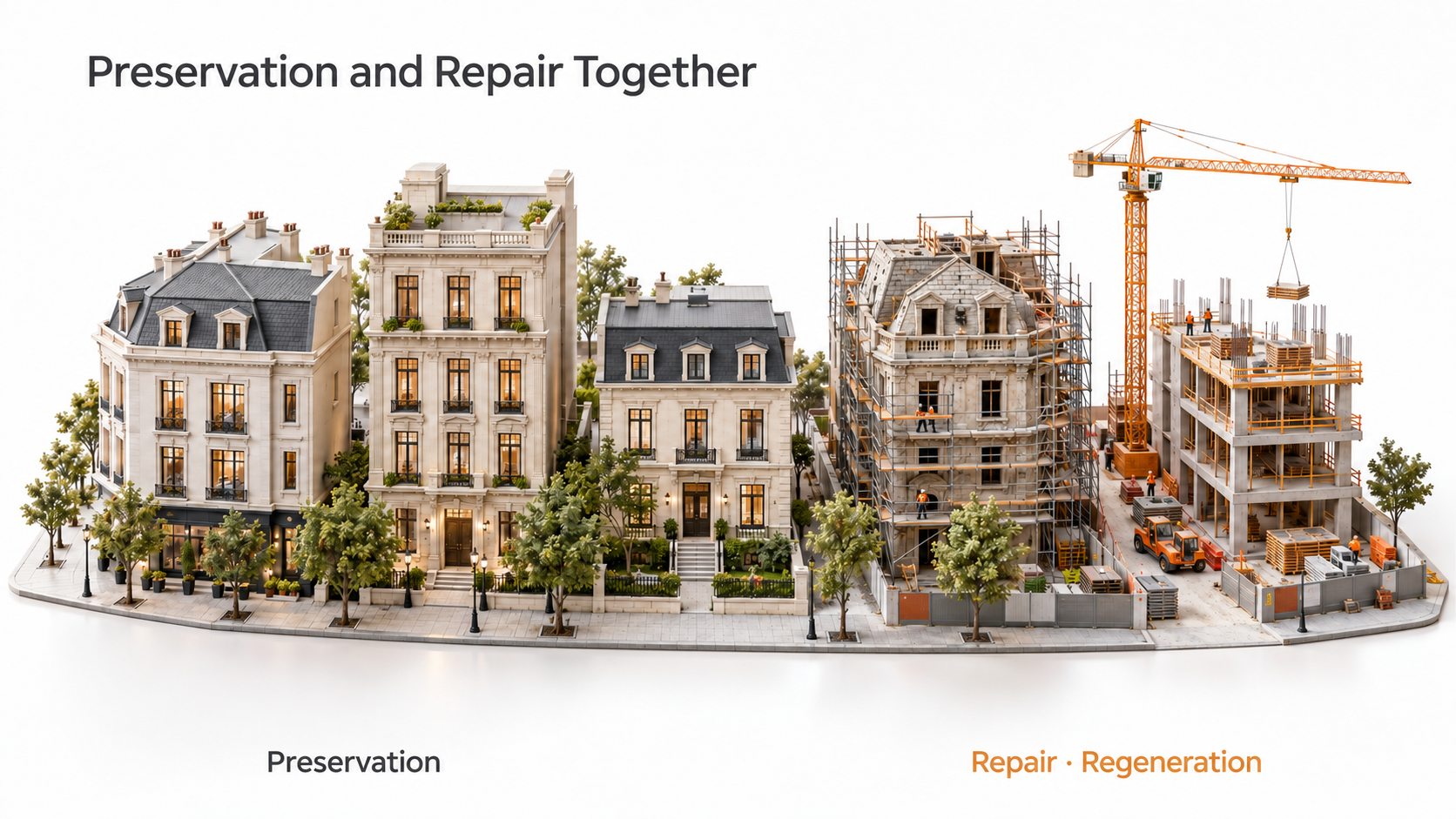
Source: Original illustration by Reverse Entropy. AI-generated explanatory illustration with separately edited text; labels localized for this edition.
What I want to increase is capacity, not simply the strength of a response
My goal for the body is the same.
Rather than making only the construction team or only the repair team bigger, I want both to have enough capacity to care for the body as a whole.
Normal cells should be protected from unnecessary damage, and needed tissues should be able to regenerate.
At the same time, damaged components should be cleared, dangerous cells should be addressed, and tissues with problems should be restored.
The balance I mean is not a compromise in which both functions are weakened until they meet in the middle.
It is a state in which different abilities coexist, each able to do enough of what is needed, where it is needed.
Antioxidant defenses and immune function can support each other
A 2017 study in Immunity disabled glutathione synthesis in the T cells of mice.
This disrupted the metabolic transition required for T-cell activation and weakened the response to viruses.
For immune cells to do their job, they needed their own antioxidant defenses as well.
Glutathione and the metabolic transition of T cells: Mak et al., Immunity, 2017
This was not a clinical trial showing that glutathione supplements or injections produce the same effect. But it does illustrate an important principle.
Protection and defense do not necessarily stand on opposite sides. Cells that need protection must remain healthy in order to do their own work.
Giving cleaners protective equipment does not stop the cleaning. On the contrary, they need to protect themselves to keep working.
This is also why I think about antioxidants alongside immunity, autophagy, and exercise.
This is why precision matters
Increasing a city's overall maintenance capacity is different from indiscriminately sending workers to every site.
Someone must decide which buildings to preserve, where repairs are needed, what to demolish, and how to fill the space afterward.
The same is true in the body.
We need to consider not just the name of an ingredient, but also its dose, route, interval, current nutritional and metabolic status, and the state of exercise and recovery.
By precision, I do not mean the skill of adding more and more medications.
I mean assigning a role to each component, checking for unnecessary burden or overlap, and adjusting in response to the results.
A low dose is not automatically safe, and the fact that I use a combination does not mean it suits someone else.
But pursuing preservation and repair together is not contradictory merely because they act in different directions.
First reduce known, unnecessary risks. Then build the functions we need on that foundation.
If you want to live forever, you cannot keep every cell alive forever
It sounds like a paradox, but this is the core of how I think about anti-aging.
A body that is well preserved and can also repair itself.
A body that maintains normal tissue for a long time without leaving damage and danger unattended.
What I am pursuing is a life that keeps going, with that cycle intact.
References
García-Prat L et al. Autophagy maintains stemness by preventing senescence. Nature. 2016;529:37–42. Original article
Piskounova E et al. Oxidative stress inhibits distant metastasis by human melanoma cells. Nature. 2015;527:186–191. Original article
Kang TW et al. Senescence surveillance of pre-malignant hepatocytes limits liver cancer development. Nature. 2011;479:547–551. Original article
ATBC Cancer Prevention Study Group. The Effect of Vitamin E and Beta Carotene on the Incidence of Lung Cancer and Other Cancers in Male Smokers. NEJM. 1994;330:1029–1035. Original article
Omenn GS et al. Effects of a Combination of Beta Carotene and Vitamin A on Lung Cancer and Cardiovascular Disease. NEJM. 1996;334:1150–1155. Original article
Klein EA et al. Vitamin E and the Risk of Prostate Cancer: The Selenium and Vitamin E Cancer Prevention Trial (SELECT). JAMA. 2011;306:1549–1556. Original article
Wang L et al. Vitamin E and C supplementation and risk of cancer in men: posttrial follow-up in the Physicians’ Health Study II randomized trial. AJCN. 2014;100:915–923. Article details
Agathocleous M et al. Ascorbate regulates haematopoietic stem cell function and leukaemogenesis. Nature. 2017;549:476–481. Original article
Sereda R et al. Decline of chaperone-mediated autophagy in aging impairs macrophage clearance of senescent cells. Nature Aging. October 5, 2026. Original article
He C et al. Exercise-induced BCL2-regulated autophagy is required for muscle glucose homeostasis. Nature. 2012;481:511–515. Original article
Courneya KS et al. Structured Exercise after Adjuvant Chemotherapy for Colon Cancer. NEJM. 2025;393:13–25. Original article
Howell JJ et al. Metformin Inhibits Hepatic mTORC1 Signaling via Dose-Dependent Mechanisms Involving AMPK and the TSC Complex. Cell Metabolism. 2017;25:463–471. Article details
Romani L et al. Thymosin alpha1 activates dendritic cells for antifungal Th1 resistance through toll-like receptor signaling. Blood. 2004;103:4232–4239. Article details
Lincoff AM et al. Semaglutide and Cardiovascular Outcomes in Obesity without Diabetes. NEJM. 2023;389:2221–2232. Original article
Mak TW et al. Glutathione Primes T Cell Metabolism for Inflammation. Immunity. 2017;46:675–689. Article details
#AntiAging #Antioxidants #Autophagy #Immunosenescence #StemCells #Glutathione #Metformin #ThymosinAlpha1 #Exercise #GLP1 #Healthspan #ReverseEntropy