AI-assisted explanatory diagram · Learn more
When asked why people lose weight, we tend to think first of appearance, blood glucose, and blood pressure.
But could weight loss also be connected with cancer risk?
A study published in JAMA in 2022 compared cancer occurrence in more than 30,000 people who did or did not undergo metabolic and bariatric surgery.
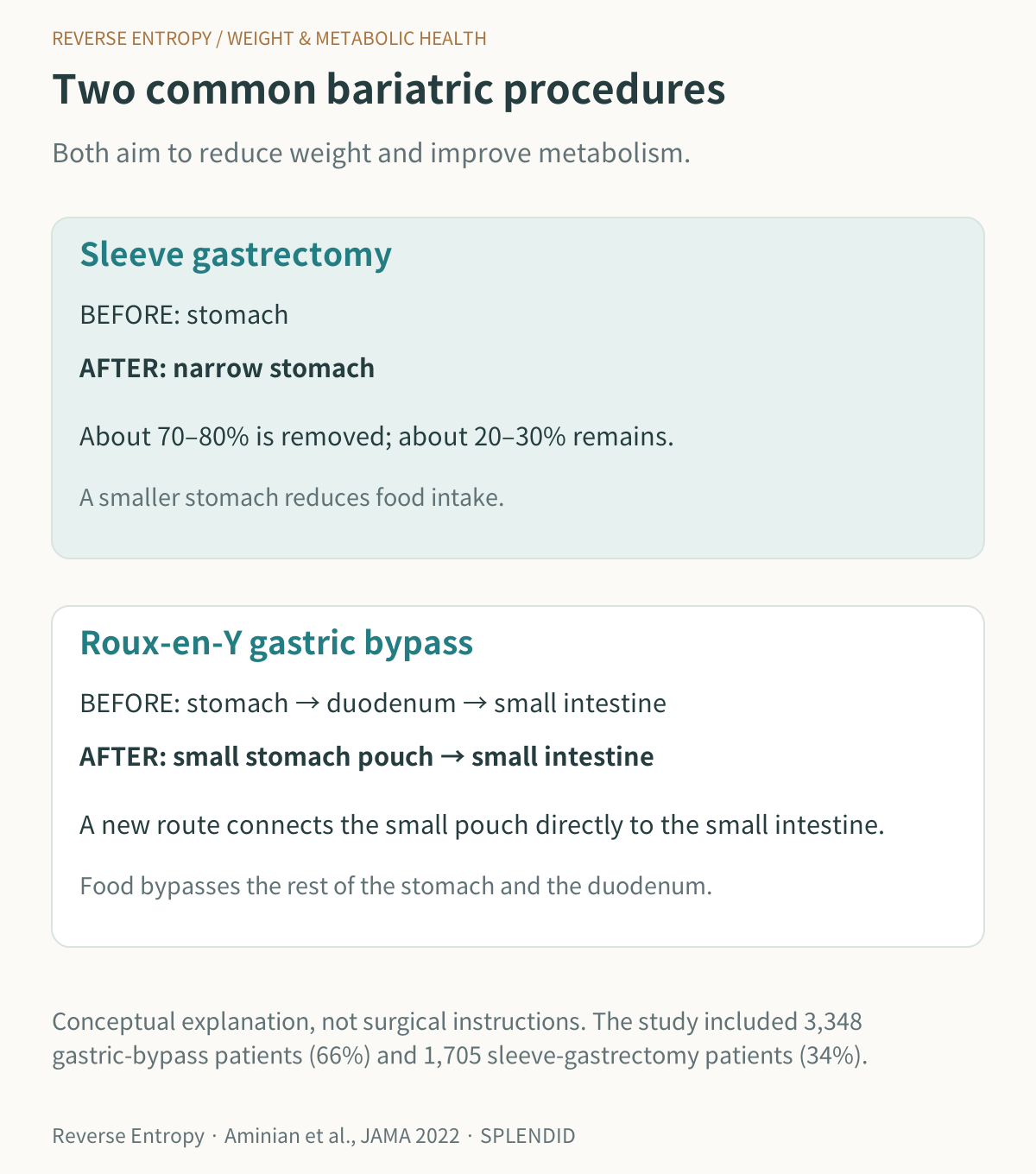
The two types of surgery included in the study
1. Roux-en-Y gastric bypass
• 3,348 people (66%)
• A small pouch is created from the upper part of the stomach and connected directly to the small intestine.
• This reduces food intake and changes the route of nutrient absorption and the release of gut hormones.
2. Sleeve gastrectomy
• 1,705 people (34%)
• About 70–80% of the stomach is removed, leaving a narrow, banana-shaped stomach.
• Weight is reduced through smaller food intake and changes in appetite-related hormones such as ghrelin.
Results
Of 30,318 participants in total, 5,053 in the surgery group were compared with 25,265 in the nonsurgical group.
The group that underwent surgery had fewer obesity-associated cancers and fewer cancer-related deaths.
The SPLENDID study included 30,318 adults with a body mass index, or BMI, of at least 35.
It is important to note that the median BMI was 45. These patients had substantial obesity, not just a little extra weight.
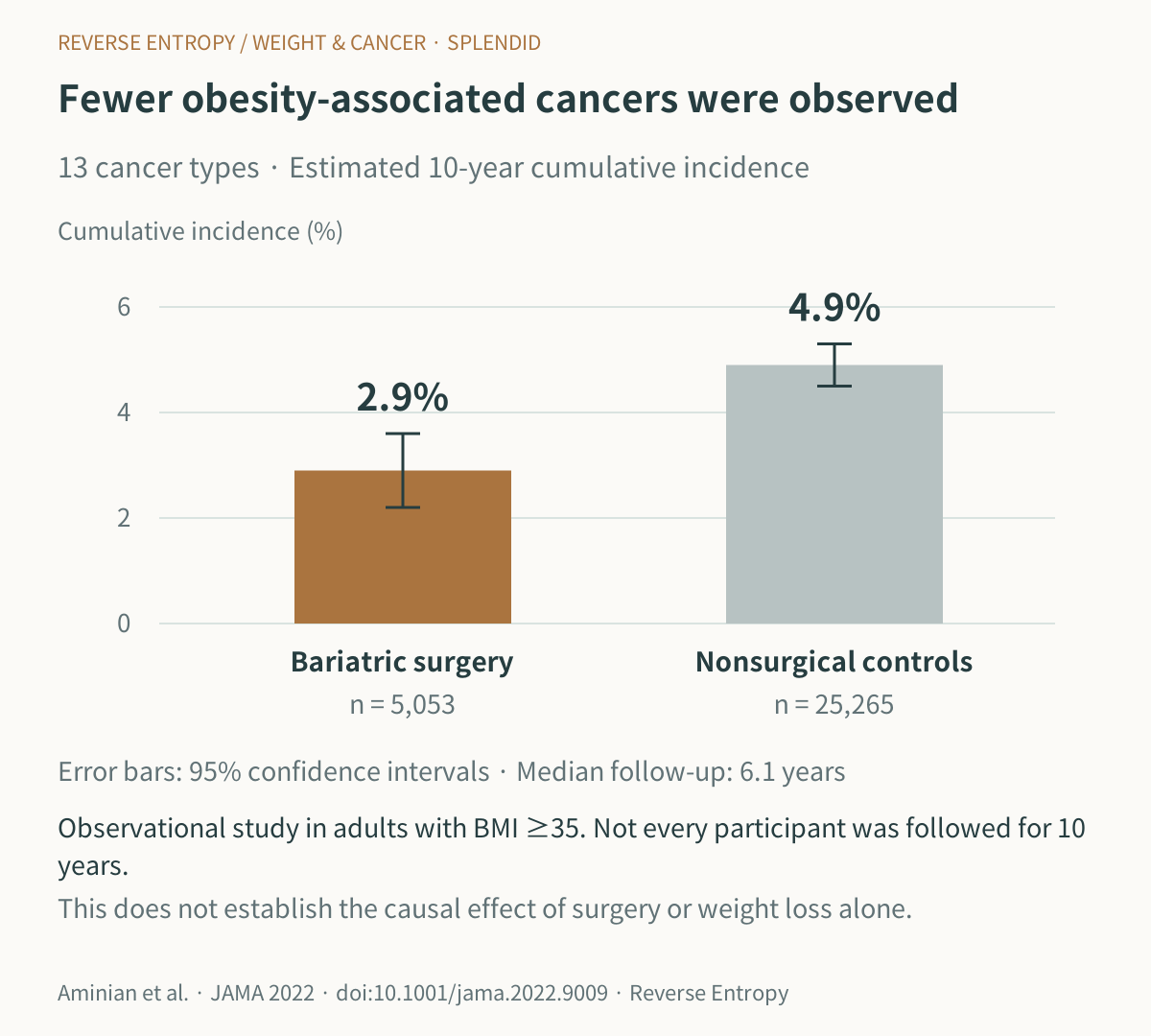
Obesity-associated cancer incidence was 2.9% versus 4.9%
The researchers examined the first occurrence of a combined group of 13 cancer types associated with obesity.
The estimated 10-year cumulative incidence was 2.9% in the surgery group and 4.9% in the nonsurgical group, a difference of 2.0 percentage points.
Source: Aminian A et al., JAMA, 2022, SPLENDID. Graph redrawn by Reverse Entropy.
In an analysis adjusted for several factors, the relative risk of developing cancer was 32% lower.
Cancer-related deaths were also fewer
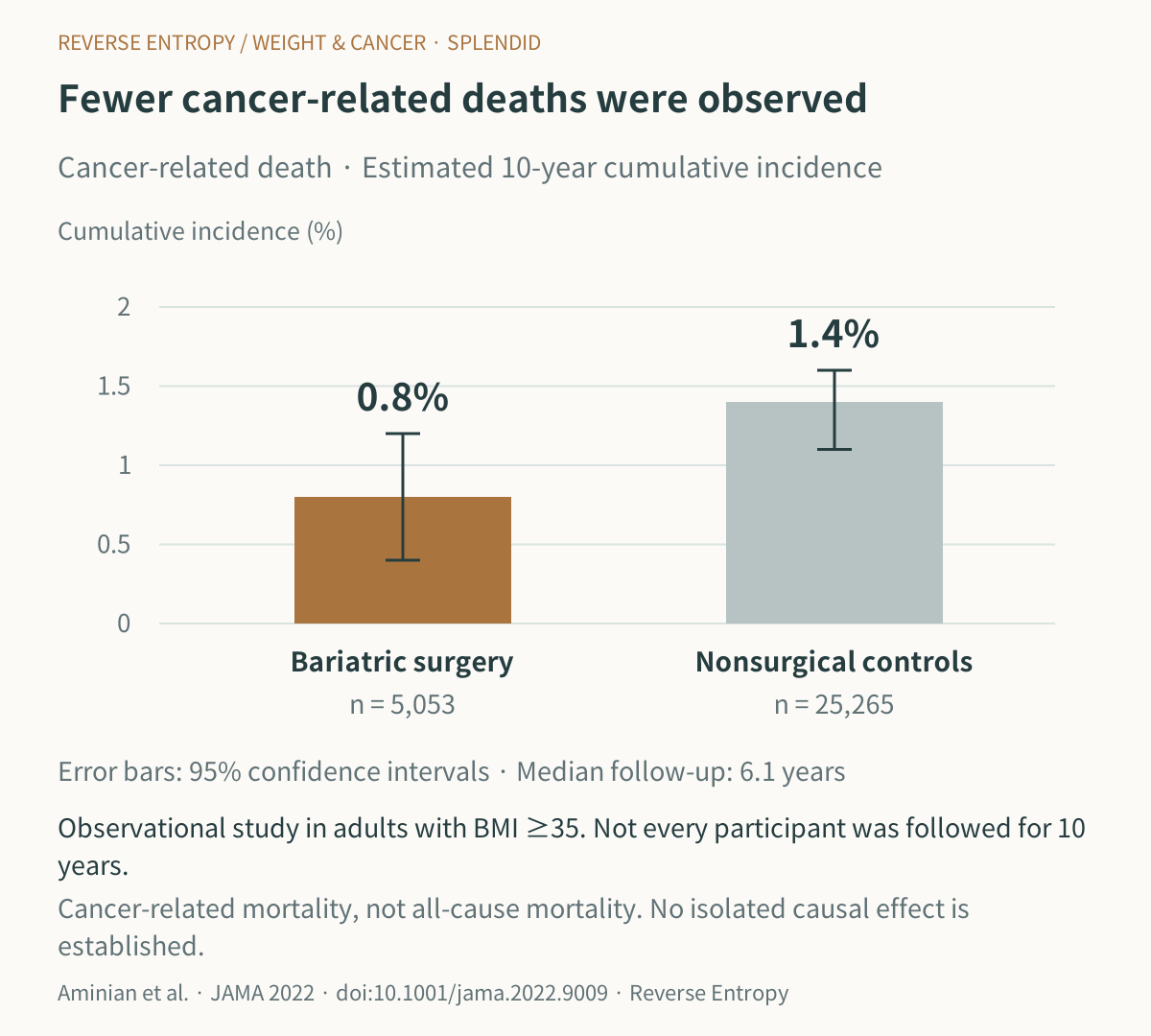
The estimated 10-year cumulative incidence of cancer-related death was 0.8% in the surgery group and 1.4% in the nonsurgical group.
Source: Aminian A et al., JAMA, 2022, SPLENDID. Graph redrawn by Reverse Entropy.
What stands out to me is that the findings went beyond changes in body weight or blood-test values. The study examined actual cancer occurrence and deaths.
Original study: Aminian et al., JAMA, 2022
The internal environment may change as weight decreases
After bariatric surgery, diet, hormones, and metabolic state change alongside body weight. How much each change contributed to the lower cancer risk needs to be examined separately.
Apart from surgery, another study illustrates the relationship between weight management and inflammation.
This was a one-year randomized trial in which 439 postmenopausal women with overweight or obesity were assigned to dietary intervention, exercise, both, or a control group.
Inflammatory markers such as CRP and IL-6 decreased in the diet-only and combined diet-and-exercise groups.
The trial did not show a reduction in cancer occurrence. It does, however, suggest that weight management can change the body's inflammatory environment.
Related study: Imayama et al., Cancer Research, 2012
Does that mean Wegovy also reduces cancer by 32%?
We cannot tell from this paper. It was a study of bariatric surgery, not a study establishing cancer prevention with Wegovy or low doses of GLP-1 medications.
I also include exercise, weight management, and metabolic health in my own anti-aging strategy. But I will not transfer the numbers from a surgical study to the effects of a medication I use.
What I take from this research is a sense of priority in how we view weight management.
Weight is not only about appearance. We also need to consider the metabolic burden the body carries over time and the associated risks of disease.
The goal is not to be as thin as a celebrity
Concern about cancer does not mean everyone needs surgery. Treatment should be chosen by considering the degree of obesity, coexisting conditions, expected benefits, and risks.
A practical starting point is to maintain a consistent diet and exercise routine while monitoring changes in weight, waist circumference, blood pressure, and blood glucose. Medication or surgery can help when appropriate.
During that process, we should also check that muscle and the ability to be active are not being lost.
My goal is not thinness at any cost. It is a body that retains the functions it needs while reducing unnecessary burdens.
Detecting cancer early is important. Alongside that, we should also pay attention to caring for the body over the years before cancer develops.
References
1. Aminian A, et al. Association of Bariatric Surgery With Cancer Risk and Mortality in Adults With Obesity. JAMA. 2022;327:2423–2433. Full text
2. Imayama I, et al. Effects of a caloric restriction weight loss diet and exercise on inflammatory biomarkers in overweight/obese postmenopausal women: a randomized controlled trial. Cancer Research. 2012;72:2314–2326. Article information