In 14 years of treating patients, I have never personally encountered someone whose botulinum toxin treatment stopped working because of true resistance.
That does not mean resistance does not exist. What I want people to understand is that it is very uncommon in cosmetic practice.
When a patient worries about it, I often ask, “Have you ever been struck by lightning?” I use that question to put the fear of an exceptional event in perspective.
Yet the explanations patients encounter can make resistance sound quite common. They may worry that repeated treatment will inevitably stop working, and that they need to choose a “resistance-free” product from the outset.
I do not agree with using this anxiety to steer product choices. If we recommend that a patient spend money, we should explain how it will help that person now. We should not magnify a rare problem and imply that one particular product offers an escape from it.
Let us look at how much resistance matters in practice, and what “resistance-free Botox” is supposed to mean.

Antibodies were uncommon—and losing the clinical effect was even less common
A meta-analysis published in Toxins in 2023 pooled 33 clinical trials of onabotulinumtoxinA, the formulation used in BOTOX, with 5,876 participants whose antibody status could be evaluated. It included both cosmetic treatment and treatment of medical conditions.
Neutralizing antibodies were detected after treatment in 27 people, or approximately 0.5%. Five initially responded and later lost their response; all five were being treated for medical conditions. Fifteen were classified as retaining a clinical response after antibodies were detected. Jankovic et al., 2023
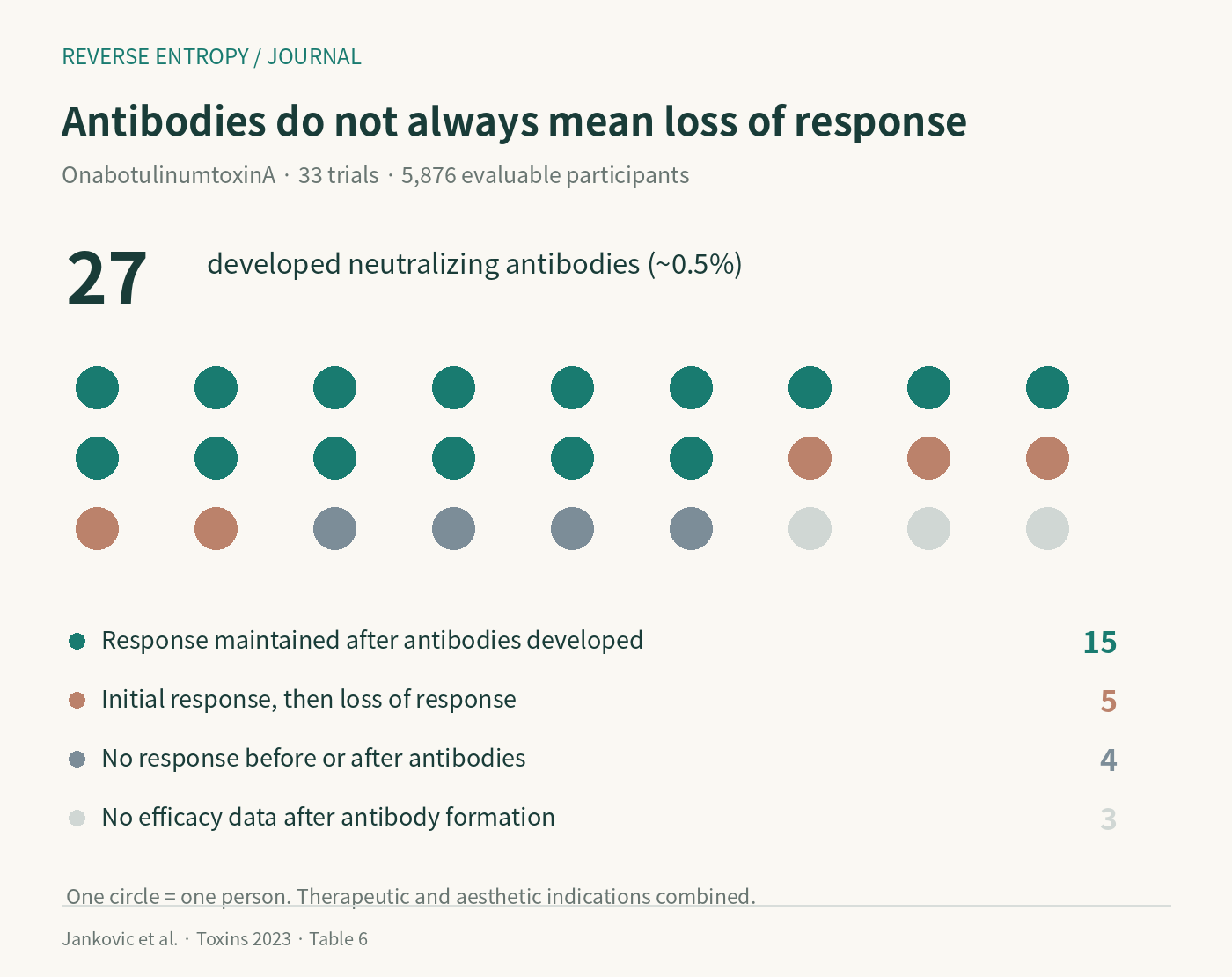
A laboratory result showing antibodies and a clinical result showing loss of effect are different things. That distinction should be the starting point when we explain resistance to a patient.
This analysis covered a wide range of doses: 10–44 U in the included facial-wrinkle studies, and substantially higher doses in several therapeutic indications, with mean doses around 180–300 U in some neurological and rehabilitation settings.
Across the whole evaluable population, five secondary nonresponders represented less than 0.1%. No antibody-associated secondary nonresponse was observed in the included aesthetic trials. This is a finding within those trials, rather than a guarantee of zero risk with lifelong treatment. Tables 2, 3 and 6
I consider these findings together with my own clinical experience. Patients seeking cosmetic treatment do not need to begin their product choice from a position of fear. If the effect feels different from before, the first step is to examine where the difference comes from.
“Pure toxin” does not come with an exemption from immunogenicity
XEOMIN and CORETOX are botulinum toxin formulations from which complexing proteins have been removed. They still contain the active 150 kDa neurotoxin protein. This is stated in the XEOMIN prescribing information and in the CORETOX manufacturer’s description of its formulation. XEOMIN label · CORETOX official information
The word “pure” can make it sound as though the toxin itself, or the possibility of an antibody response, has been removed. What is removed is the surrounding complexing proteins. The active component that acts on muscle remains—and it has to remain for the treatment to work.
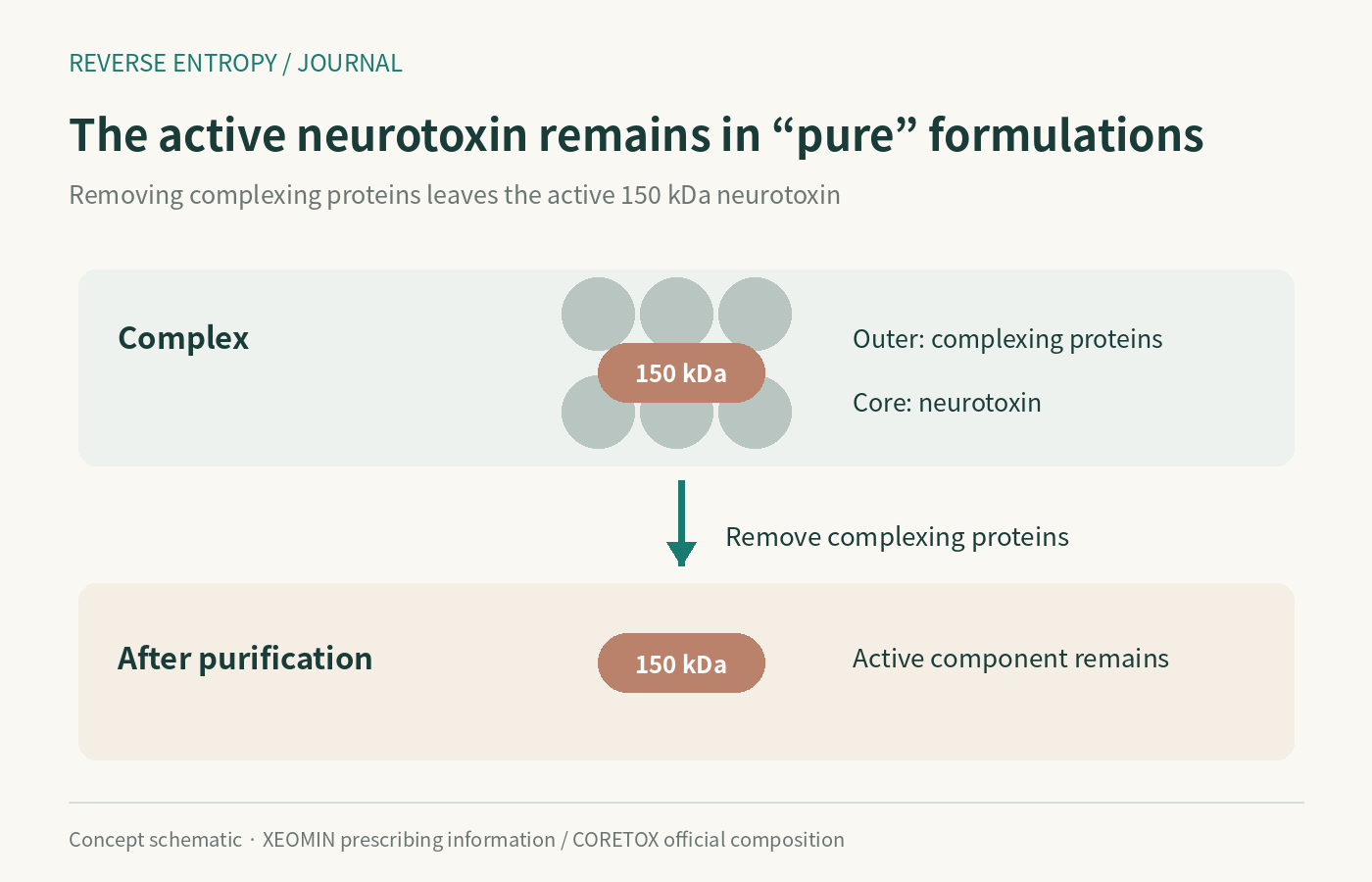
There is even more direct information. XEOMIN’s official label acknowledges the potential for an immune response. The manufacturer’s information for healthcare professionals also explains that immunogenicity is possible with any botulinum toxin formulation. We cannot go beyond what those official documents say and guarantee a “resistance-free product.” XEOMIN professional information
If we first make patients fear a rare problem and then present a product as the answer to that fear, their choice becomes driven by marketing language rather than what their face actually needs.
When the effect seems weaker, what should we examine first?
Botulinum toxin reduces the contraction signal transmitted from nerve endings to muscle. Expression lines soften because the force folding the skin is reduced. BOTOX Cosmetic prescribing information
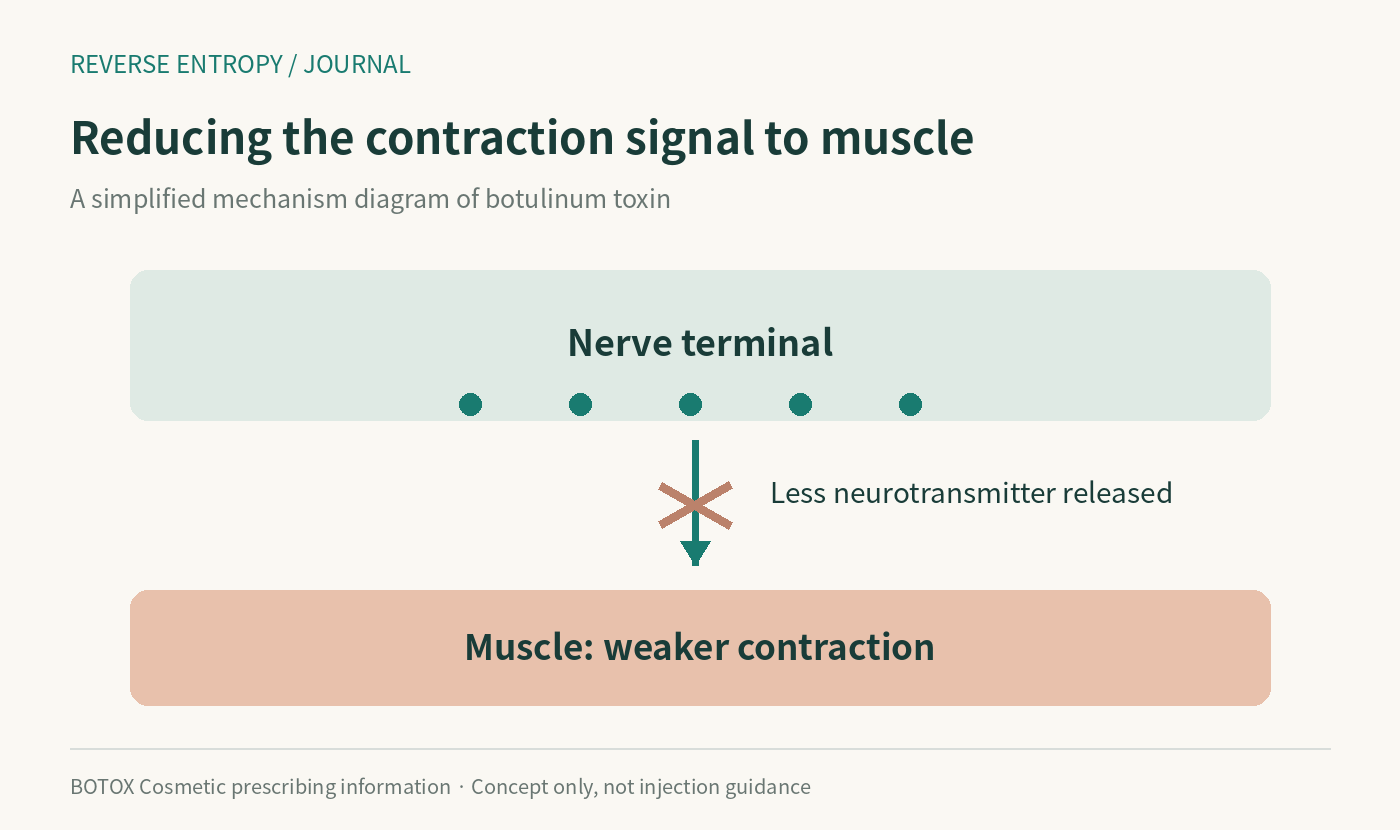
To assess the result, we should examine both the lines remaining in the skin and how much the muscle moves during an expression. When a patient tells me that “it is not working,” I break that impression down as follows.
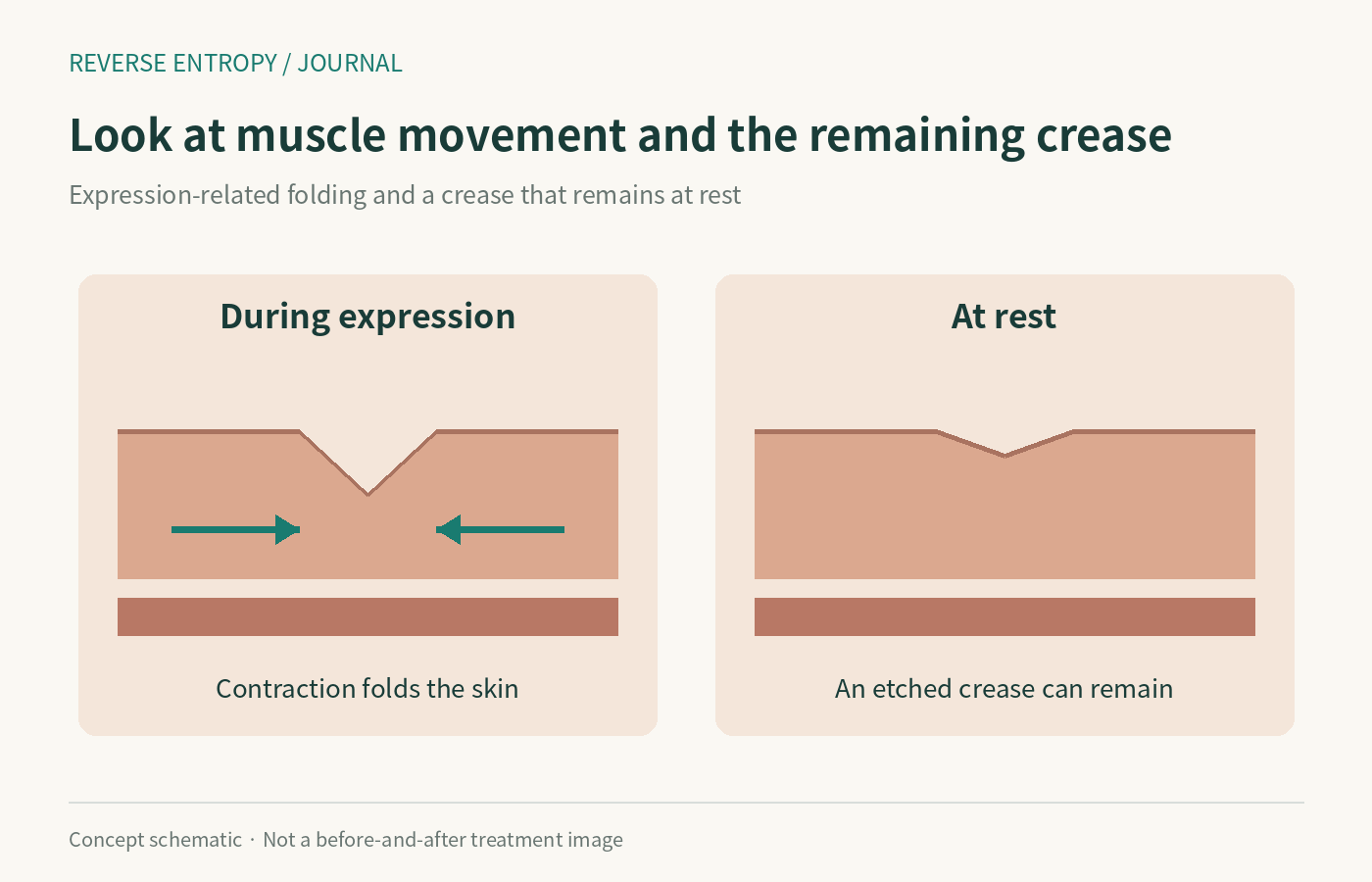
The muscle has relaxed, but a crease remains in the skin
The force of frowning may have decreased sufficiently while a line remains visible even at rest. In my experience, a deeply etched wrinkle that has become scar-like responds very little to botulinum toxin alone.
If we judge resistance by the remaining groove alone, we can take treatment in the wrong direction. When the muscle is already relaxed, we should separately examine skin thickness, elasticity, hollowing, and other conditions contributing to that crease.
The muscle is already weaker than it was before the first treatment
The first treatment can feel dramatic because it reduces the force of a previously strong muscle. With subsequent treatments, an earlier treatment may still be having an effect, or the muscle may have become smaller. Treating the same area again can therefore produce a smaller additional change.
Changes in muscle condition with repeated treatment have also been observed in a randomized trial of the masseter muscle. de Souza Nobre et al., 2024
In this situation, there is no need to rush another injection simply to recreate the dramatic feeling of the first one. The next treatment’s timing and dose can be matched to the muscle strength that remains.
The target muscle still contracts strongly
Here, I review the previous product and dose, injection location and depth, and movement of nearby muscles. I also check whether the result was assessed after enough time for the effect to develop.
Muscle thickness and contraction patterns differ from face to face. Even procedures with the same name can produce different results if these conditions are not reflected in the plan. Before changing products, we need to check whether the treatment was designed for the muscle as it is now.
I explain the reason for treatment before the product name
If a patient says this time feels different, I start with when and how much was injected, which areas were treated, and what changed. Comparing photographs with the same facial expression makes the difference between a residual skin line and muscle movement easier to see.
When injecting, I choose depth and dose according to the muscle’s thickness and location, while considering which expressions should remain.
If the muscle is already sufficiently weakened, I postpone the next treatment. If a strong contraction remains, I adjust the plan. If movement has decreased but a deep crease or hollow persists, I separately consider whether scar-remodeling treatment or volume restoration is appropriate.
This allows me to explain why the change may not seem as dramatic as the first time and what to do next. That explanation belongs in the consultation before vague warnings about resistance.
I do not want patients choosing a product out of fear
I do not want patients to receive treatment while carrying the fear that “if I keep doing this, Botox will inevitably stop working.” The phrase “resistance-free product” does not guarantee a better result either.
The physician recommending treatment should be able to explain which muscles will be relaxed and by how much, which remaining wrinkles botulinum toxin can address, and what change the patient can reasonably expect for the cost.
References
1. Jankovic J, et al. Neutralizing Antibody Formation with OnabotulinumtoxinA Treatment from Global Registration Studies across Multiple Indications: A Meta-Analysis. Toxins. 2023;15:342.
2. XEOMIN US prescribing information. Section 11, composition; section 12.6, immunogenicity. DailyMed.
3. Merz. Official XEOMIN information for healthcare professionals. Formulation and immunogenicity.
4. Medytox. CORETOX formulation information. February 24, 2025. Korean-language source.
5. BOTOX Cosmetic US prescribing information. Mechanism of action and anatomical assessment.
6. de Souza Nobre BB, et al. Exploring botulinum toxin’s impact on masseter hypertrophy: a randomized, triple-blinded clinical trial. Scientific Reports. 2024;14:14522.