When the weather turns cold, we find fewer reasons to go outside. It is already dark when work ends, and on weekends we would rather stay in a warm home. After a few days, both body and mind can start to feel a little flat.
For anyone looking for a new winter hobby, there is an activity I would recommend: indoor climbing, especially bouldering.
It may look like a simple matter of grabbing holds and climbing a wall, but there is a surprising amount to think about. Which foot should move first? Which way should you turn your body? How can you get past the section where you just fell off? You keep making decisions.
What appeals to me is that moving your body gives you a problem to focus on and small successes you can create for yourself. I actually started recently and found it more enjoyable—and more of a workout—than I expected. I am thinking of doing it more regularly this winter. Then I came across an interesting finding: bouldering has been studied for depression.
Randomized trials found that a program combining bouldering with psychotherapy improved depressive symptoms. Let us first look at the different climbing styles, and then at what the research found. [1]
1. There is more than one kind of climbing
Climbing broadly means using your hands and feet to ascend a wall or rock. These are useful styles for a beginner to know. [6]
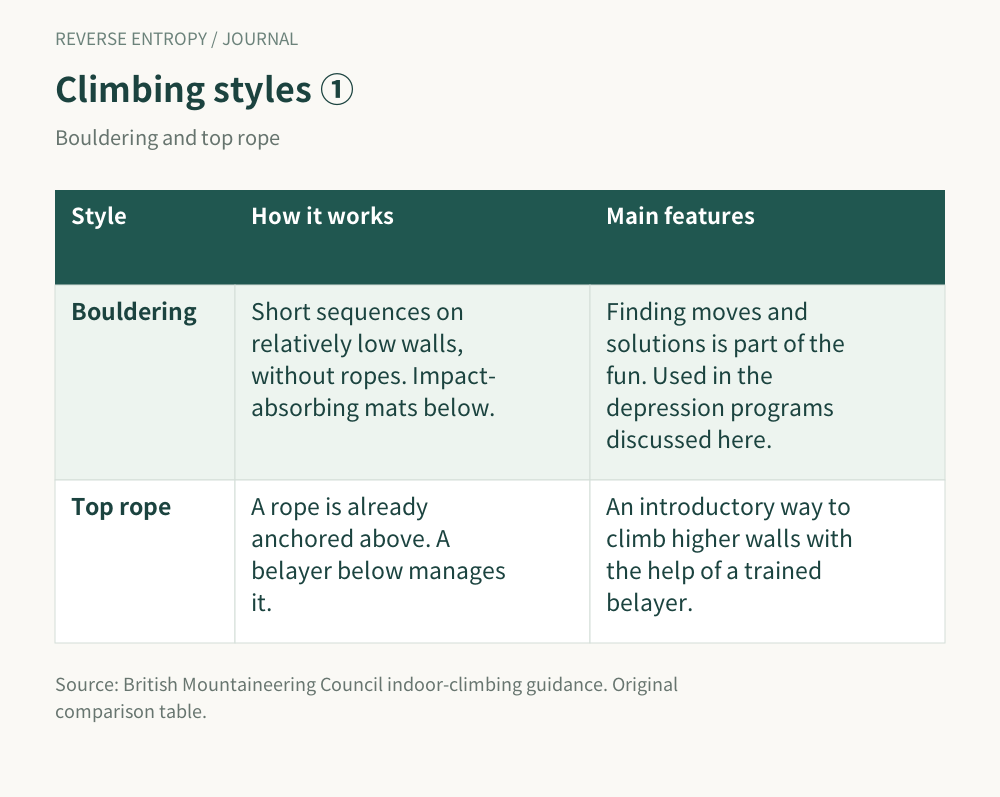
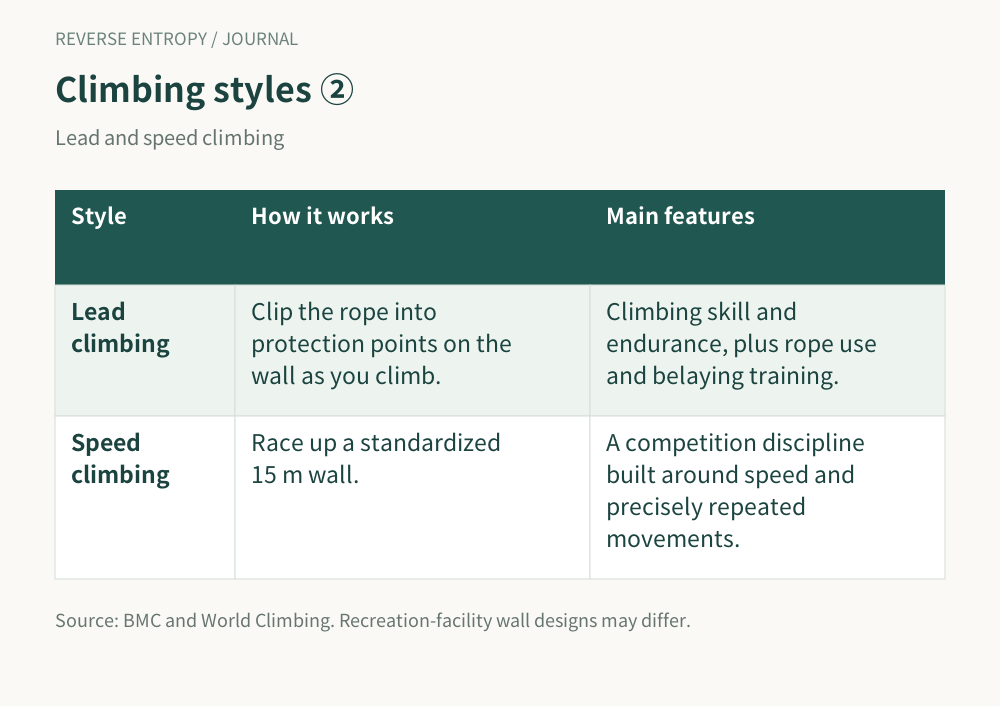
Top rope describes how the rope is rigged and managed. Boulder, lead, and speed are major sport-climbing competition disciplines. Wall heights and layouts at recreational facilities can vary. [6] [7]
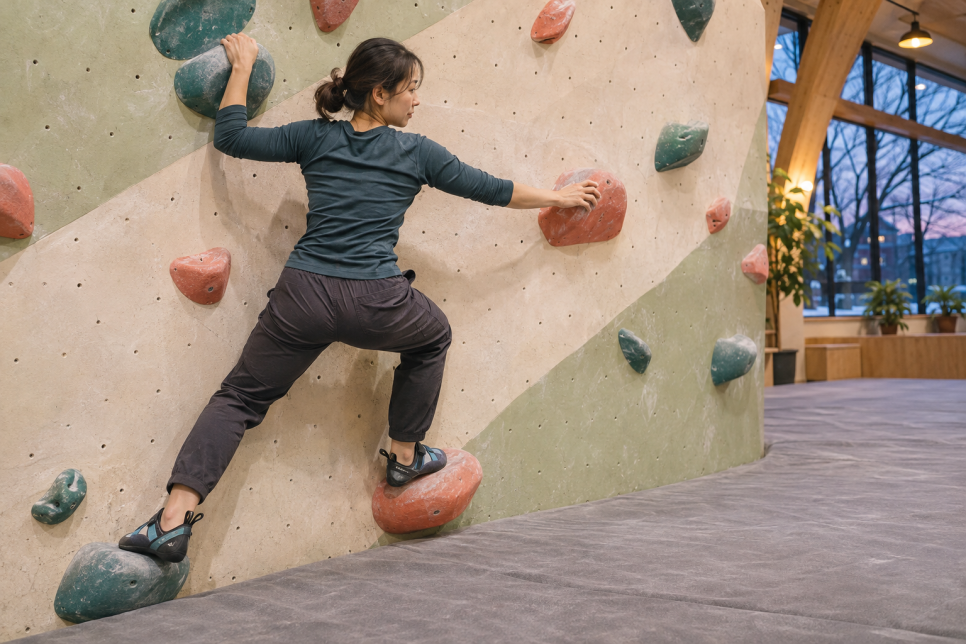
In bouldering, you usually connect designated handholds and footholds on a wall a few meters high to reach a finishing point. The route is often called a “problem”—an apt name for something that feels like solving a puzzle with your body. [7]
You can begin by renting climbing shoes and taking an introductory lesson. You do not necessarily need a partner to manage a rope, which makes starting relatively simple. Safety instruction must still be part of the first visit. [8] [9]
2. Studies found reductions in depressive symptoms
The program studied is called bouldering psychotherapy (BPT). In small groups led by professionals, it combines bouldering with psychotherapy involving mindfulness, handling emotions, and solving problems. [1]
Depression scores fell more after 10 weeks
A study published in BMC Psychiatry in 2020 compared bouldering psychotherapy with a home exercise program. A total of 156 people were randomized to these two groups. The figures below are from the main analysis of 133 people who met the planned participation criteria.
Bouldering psychotherapy ran for two hours once a week for 10 weeks. Depressive symptoms were assessed with the clinician-rated MADRS scale, on which a lower score means milder symptoms.
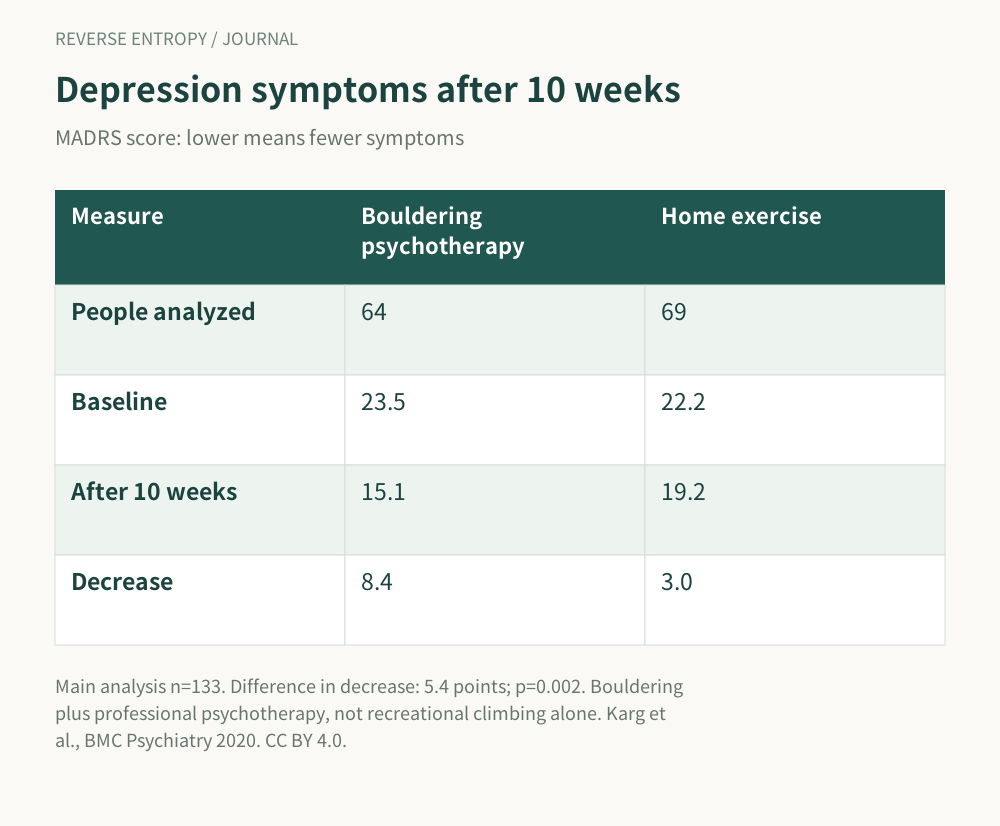
The reduction was 5.4 points greater in the bouldering psychotherapy group, a statistically significant difference (p=0.002). This was the effect of a program combining bouldering, professional psychotherapy, and group activity. I see it as evidence for actively using movement in mental-health care. [1]
There were meaningful results against group cognitive behavioral therapy, too
The same research project also published a comparison of 156 people receiving bouldering psychotherapy or group cognitive behavioral therapy. After 10 weeks, MADRS scores had fallen by an average of 8.06 and 5.99 points, respectively.
Using its prespecified non-inferiority criterion, the study found that bouldering psychotherapy was not inferior to group cognitive behavioral therapy. In everyday terms, the program performed comparably under the study’s definition. [2]
A 2026 trial added a new group of participants
A separate randomized trial published in BMC Medicine in May 2026 divided 128 adults into three groups, including 40 assigned to bouldering psychotherapy and 44 to treatment as usual.
At the end of the 10-week treatment period, adjusted MADRS scores in the bouldering psychotherapy group were 4.2 points lower than in the usual-care group (95% confidence interval, −8.2 to −0.3). Participants could continue medication or other existing treatment. The findings support considering the program alongside clinical care. [3]
The treatment effects were demonstrated in professionally led programs. When I recommend bouldering as a hobby, what interests me is the focus, challenge, achievement, and interaction these programs put to use. Those elements can also be part of everyday exercise.
3. Why I recommend it: something to focus on, and small successes
From the worries in your head to the next movement
Hanging on the wall gives you an immediate problem to solve. “Should I move my left foot first?” “Do I need to turn a little before reaching with my right hand?”
Focusing on a movement can give you a chance to step back from your worries, even briefly. I think that can appeal to people whose work is mentally demanding and whose thoughts keep running after they go home. The study programs deliberately used attention and mindfulness. [1]
“I did it” becomes something tangible
A hold you could not reach suddenly becomes reachable after moving a foot. Trying harder is not always the answer. Some problems yield when you change position, rest, or try a different approach.
That experience gives you a sense that your actions can change an outcome. Psychologists call it self-efficacy. A 2021 analysis of the same StudyKuS data found that self-efficacy scores increased by an average of 3.04 points with bouldering psychotherapy versus 1.26 with home exercise. This does not establish that self-efficacy caused the improvement in depression, but it is interesting that the sense of “I can do this” improved too. [4]
A shared problem can start a conversation
Even if meeting new people feels uncomfortable, looking at the same problem can make talking easier. “What if you tried that foothold?” is a conversation about something you are both already seeing.
You can quietly try on your own or exchange ideas in a class or small group. I would choose a setting that respects a beginner’s pace and enjoys small successes together, rather than a competitive group from the outset.
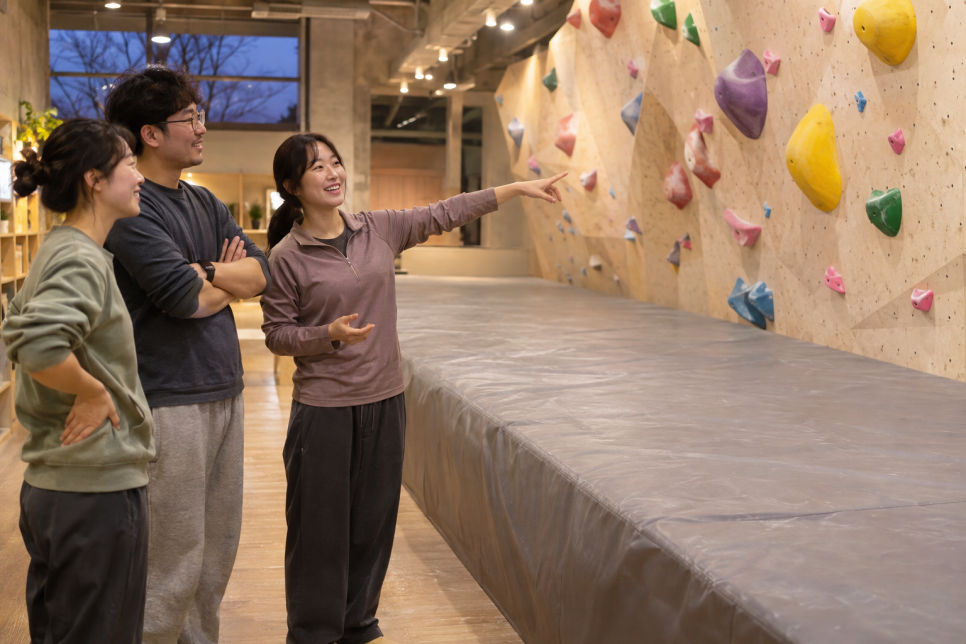
4. Why winter is a good time to start
It is easier to keep an exercise appointment despite the weather
Indoor bouldering is relatively unaffected by cold, snow, rain, or the time the sun sets. If there is a gym near home or work, it can fit into an after-work routine. [9]
When choosing winter exercise, I care as much about “Will I actually go again next week?” as “How impressive a workout is it?” An activity with a manageable journey and simple booking and preparation is easier to bring into daily life.
You can try, rest, and learn at your own pace
After trying a problem, you rest and think about the next move. Beginners can combine easy problems with plenty of breaks. Even brief movements can place substantial loads on the body, so the initial focus should be learning movement rather than chasing a difficult grade. [5] [8]
Above all, the exercise leaves you with something you want to try next. A problem unfinished today can become a small goal for the next visit. That can help people who find repetitive exercise boring.
It gives you a reason to leave home, move, and meet people
A prebooked class on a winter evening adds rhythm to your life: time each week to move, focus, and work on the same problem as someone else.
Clear, recurring low mood each winter deserves separate assessment for seasonal affective disorder. The trials above were not specifically studies of that condition. Alongside indoor activity, make room for daytime outdoor activity; if symptoms recur or substantially disrupt daily life, seek clinical assessment to decide on treatment. [10]
5. Who might enjoy an introductory lesson?
If your activity drops sharply when it gets cold, you find repetitive gym exercise boring, you want a physical hobby that engages a busy mind, or you want to start a low-pressure shared activity, bouldering is worth experiencing.
You do not need to stay a long time or climb a difficult wall on day one. This is how I would suggest beginning. It is an example for starting a hobby, not a prescription replacing a clinical-trial treatment program.
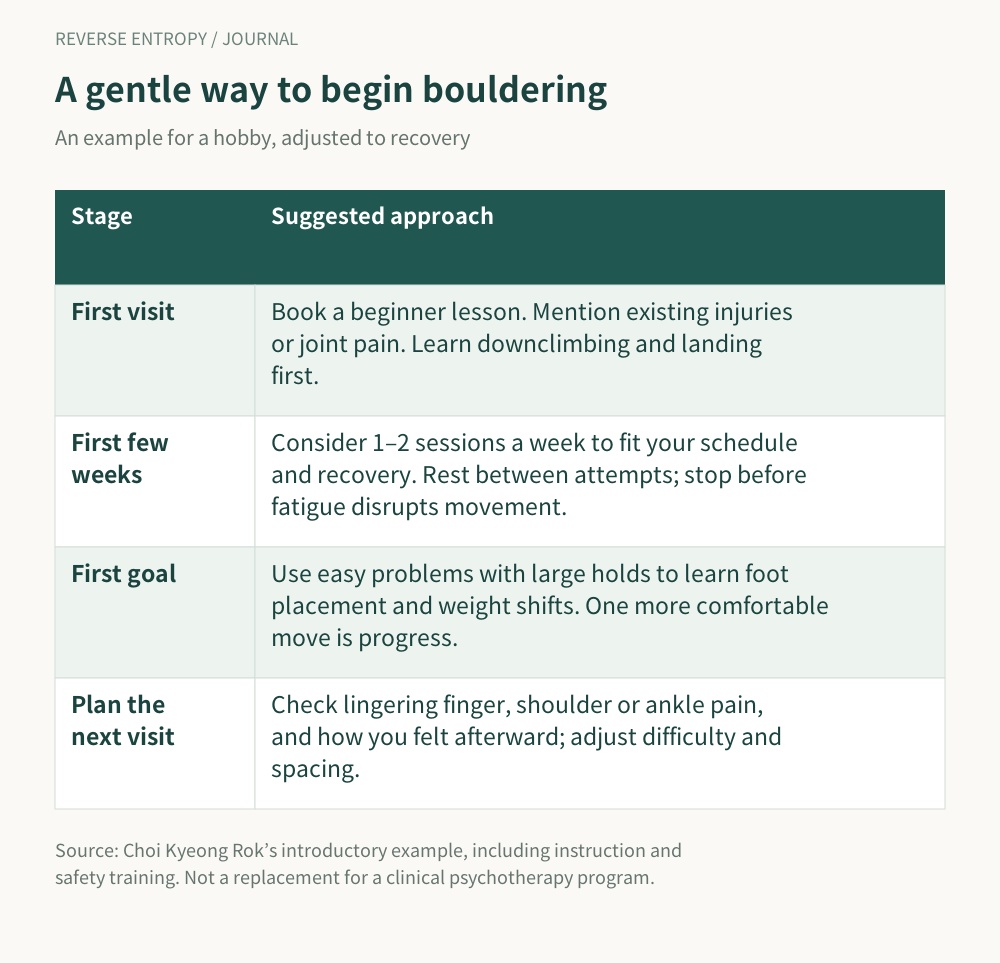
When choosing a gym, I would look first at the quality of beginner instruction, the range of easy problems, management of landing zones, and the distance from home—not the most spectacular difficult walls.
6. Five things that help you enjoy it for longer
Bouldering repeatedly loads the fingers and shoulders, while landings affect the ankles and knees. A study following 507 indoor boulderers for 12 months found many upper-limb injuries; lower-limb injuries were associated with falls or jumping down and tended to be more severe. [5]
① Learn to descend as well as climb
Avoid making a habit of jumping from the top every time you finish. Use the holds to climb down when possible. Learn landing technique from an instructor at a low height, and manage how high you go. Mats reduce impact, but they do not eliminate injury risk. [9]
② Keep other people’s landing zones clear
Do not walk under someone climbing or sit on the mats to rest. Keep bottles, phones, and bags out of landing areas. Remove rings and jewelry that could catch, and follow the gym’s safety rules. [9]
③ Do not start a difficult problem with a cold body
Warm up with whole-body movement, gently mobilize your fingers, shoulders, and ankles, then start with easy problems. Put on a layer if you cool down between attempts. There is no reason to make the first problem an all-out effort. [6]
④ Do not keep saying “one more try” when your fingers hurt
At first, concentrate on large holds and basic movements. Do not rush to copy strenuous fingertip hangs on small holds or dynamic jumps to distant holds. You do not need to add high-intensity finger-training equipment such as hangboards or campus boards straight away. In particular, feet-off campus-board training is something experienced climbers need to understand and approach appropriately. [11]
If your fingers, elbows, or shoulders hurt, reduce the load or rest; seek assessment if pain persists. Taping is not a reason to push through repeated painful movements.
⑤ Adapt your introduction to your body
If you have knee or ankle pain, shoulder instability, poor balance, or difficulty supporting your body weight, do not start with high walls and repeated falls.
I would first discuss low traverses, larger holds, and easier wall angles with an instructor. Top rope managed by a trained belayer can be another option when appropriate. Adapting the activity to your condition is the starting point for enjoying it over time.
This winter, find an activity you want to return to
I recommend bouldering because it brings movement together with focus, enjoyment, and small achievements. An indoor setting that is easier to keep using through winter is another advantage.
If you are being treated for depression, continue your current treatment and discuss adding exercise with your clinician. If you are simply looking for a hobby, the first step is easier: try a beginner lesson at a gym near home or work.
On your first day, learning to descend safely, practicing one easy movement, and going home thinking “I would like to try that again” is enough.
Give yourself a small problem to solve with your body this winter. The time you spend solving it may become an enjoyable appointment in your week.
References and resources
- Karg N, et al. Bouldering psychotherapy is more effective in the treatment of depression than physical exercise alone: results of a multicentre randomised controlled intervention study. BMC Psychiatry. 2020;20:116. March 12, 2020. [1]
- Luttenberger K, et al. Bouldering psychotherapy is not inferior to cognitive behavioural therapy in the group treatment of depression: A randomized controlled trial. Br J Clin Psychol. 2022;61:465–493. First online November 17, 2021. [2]
- Kornhuber J, et al. WISE-Therapy (What’s Important: Schedule and Engage) and bouldering psychotherapy for depression: A randomized clinical trial. BMC Medicine. 2026;24:332. May 27, 2026. [3]
- Kratzer A, et al. Bouldering psychotherapy is effective in enhancing perceived self-efficacy in people with depression: results from a multicenter randomized controlled trial. BMC Psychology. 2021;9:126. August 26, 2021. [4]
- Auer J, et al. Indoor Bouldering—A Prospective Injury Evaluation. Wilderness Environ Med. 2021;32:160–167. [5]
- British Mountaineering Council. The basics: climbing indoors. [6]
- World Climbing. Boulder; Speed. [7]
- British Mountaineering Council. All you need to know about starting indoor bouldering. [8]
- Korea Consumer Agency. Indoor artificial climbing gyms need more specific safety standards. Consumer Era, December 2023. [9]
- National Institute of Mental Health. Seasonal Affective Disorder. [10]
- British Mountaineering Council. Campus boards: guidance on use. UIAA Medical Commission-approved guidance. [11]