We use oil to fry an egg or sauté vegetables. Yet choosing a cooking oil can become surprisingly confusing.
We hear that olive oil should never be heated. Lard used to be called unhealthy, but now some people argue that it is actually good for us. Avocado and coconut oils are sometimes sold at high prices on the strength of their health image.
I want to focus on three things:
- Is it suitable and stable when heated?
- How does it affect health?
- Is it practical to use and store?
Compared on those terms, my conclusion is quite simple: extra-virgin olive oil for everyday use, and refined olive oil when you want less aroma.
Let me explain, step by step, why I make that choice.
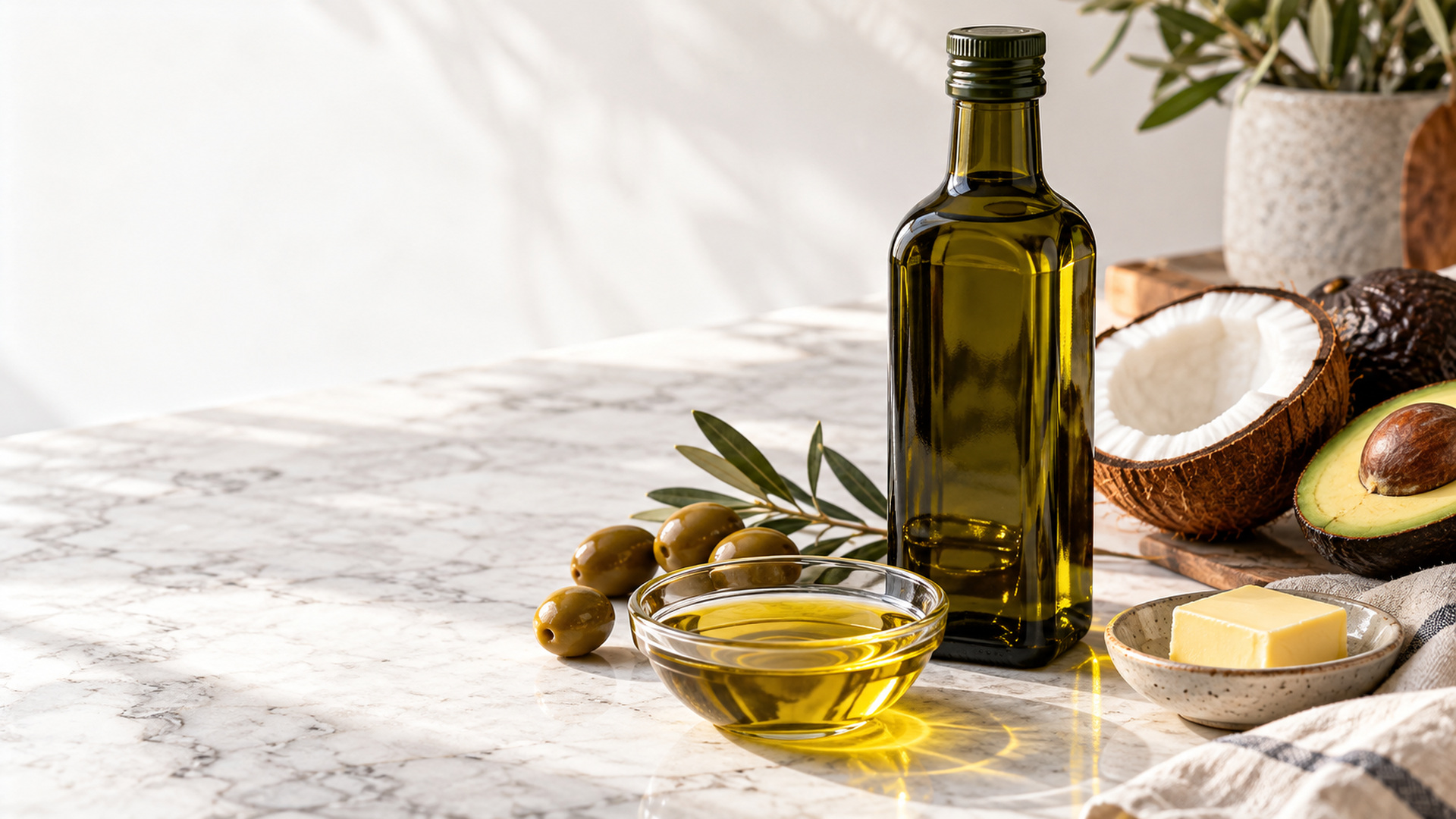
Is an oil that tolerates heat also a healthy oil?
It is not quite that simple.
Fatty acids fall broadly into three groups: saturated, monounsaturated, and polyunsaturated. The difference is the number of double bonds between carbon atoms.
Saturated fatty acids have none, monounsaturated fatty acids have one, and polyunsaturated fatty acids have two or more.
In general, more double bonds mean greater susceptibility to oxidation. Saturated fats are therefore relatively resistant to oxidation, while unsaturated fats are more susceptible.
But that is not the whole picture. Antioxidants in the oil, freshness, cooking temperature, and heating time also matter.
To decide whether an oil is genuinely suitable for cooking, we need to consider all of these factors.
Butter is a good example. It is rich in saturated fat, but ordinary butter burns easily because its milk solids, including milk proteins, scorch.
Let's start with olive oil
Olive oil is rich in oleic acid, a monounsaturated fatty acid. Extra-virgin olive oil also contains natural antioxidants, including polyphenols.
So why do we so often hear that olive oil should not be heated?
The reason is its smoke point.
The smoke point is the temperature at which visible smoke begins to appear. The UC Davis Olive Center explains that olive oil's smoke point is approximately 175–240°C, depending on its grade, quality, and freshness.
UC Davis: Olive Oil Myths and Facts
But smoke point alone cannot tell us how stable an oil is during heating.
In 2018, De Alzaa and colleagues compared changes in several cooking oils with different smoke points by heating them to 240°C or holding them at 180°C for six hours.
Under those conditions, extra-virgin olive oil was among the most stable oils. It held up better than some oils with higher smoke points.
There is also evidence supporting olive oil's place in a healthy diet. Research on a Mediterranean dietary pattern supplemented with extra-virgin olive oil has found fewer major cardiovascular events than in the comparison group.
Considering both heat stability and health evidence, I would use extra-virgin olive oil as my everyday cooking oil.
Study: Estruch et al., NEJM, 2018 reanalysis
Refined olive oil: when you want less aroma
Extra-virgin olive oil's aroma is a strength, but it does not suit every dish. Sometimes you want the ingredients' own flavors to stand out, or an olive flavor simply feels out of place.
That is when I would choose refined olive oil.
Refining reduces aroma, color, and some components such as polyphenols, while generally raising the smoke point. This might make it seem like the better choice for high-temperature frying.
However, refining also removes many antioxidants. My conclusion is that switching for this reason alone is unlikely to bring a major health advantage.
In other words, I recommend it for controlling flavor rather than simply chasing a higher smoke point.
Extra-virgin for everyday use. Refined olive oil when you want to keep the aroma to a minimum.
What about lard?
One of the most common misconceptions is that animal fat equals saturated fat.
Animal fat may sound as though it must be mostly saturated, but lard also contains a substantial amount of monounsaturated fat.
The composition varies with factors such as the animal's diet and the cut, but it is roughly 40–50% monounsaturated fat and 35–45% saturated fat, with oleic acid as a major fatty acid.
So we cannot assume that lard is more heat-stable than olive oil simply because it comes from an animal.
Heat stability depends on antioxidants as well as fatty-acid composition, and extra-virgin olive oil contains antioxidants such as polyphenols and vitamin E.
What happens when lard and olive oil are compared directly?
A randomized crossover trial published in 2024 gave two diets, each for four weeks, to 18 people with insulin resistance and dyslipidemia.
Replacing a lard-based diet with an olive-oil-based diet reduced LDL cholesterol by approximately 7%. ApoB-100 measures related to LDL particles also improved.
It was a small, short study, but at least in this setting, the olive-oil-based diet had more favorable effects.
Study: Desjardins et al., AJCN, 2024
Still, I do not think we need to label lard a “bad oil.” My conclusion is:
Lard is fine for flavor, but there is no need to replace olive oil with it for the sake of your health.
How should we think about saturated fats such as butter?
Butter, beef tallow, palm oil, and coconut oil contain substantial amounts of saturated fat.
For years, we have heard that saturated fat can raise LDL cholesterol and that we should eat less of it. But we need to ask one more question: what will we eat in its place?
The effect of reducing saturated fat depends on what replaces it.
If we cut saturated fat and eat more highly processed foods and sugar instead, our health may be worse off.
Recent research found that replacing saturated fat with polyunsaturated fat helped prevent myocardial infarction. That is one reason the type of fat we choose matters more than simply eating less oil.
The results were not the same for everyone. People at low cardiovascular risk had little benefit in that analysis, whereas those at high risk benefited more. The importance of the same cooking-oil choice can vary with a person's health.
So I do not think we need to regard a food as bad simply because it contains saturated fat. For someone at low cardiovascular risk, I would not make modest amounts a source of excessive worry. For people with cardiovascular problems, however, I recommend limiting saturated fat where possible.
Reference: Steen et al., Annals of Internal Medicine, 2026.
Coconut oil: stable in storage, but no clear health advantage
Approximately 80–90% of coconut oil's fatty acids are saturated. It is relatively resistant to oxidation and tends to keep well when stored properly.
Harvard's nutrition guidance notes that virgin coconut oil can keep for two to three years when stored away from heat and light.
But being convenient to store is different from being better for your health.
A 2020 meta-analysis in Circulation found that coconut oil raised LDL cholesterol by an average of about 10.5 mg/dL compared with nontropical vegetable oils. It did not show clear improvements in body fat or markers of inflammation.
Study: Neelakantan et al., Circulation, 2020
Avocado oil: a good oil, but are you getting what you pay for?
Avocado oil is also rich in oleic acid. Refined versions, in particular, can be useful for high-temperature cooking.
The drawbacks are price and variation in quality. There is not enough long-term clinical evidence to say it is healthier than olive oil, and some products are considerably more expensive.
In 2023, UC Davis researchers analyzed 36 private-label avocado oils sold in the United States and Canada.
Only 31% were found to be pure avocado oil, and 36% met their labeled quality standards. Purity and quality issues such as rancidity were assessed separately.
In other words, many of the sampled products were mixed with other oils or had deteriorated in quality.
Research announcement: Green and Wang, Food Control study, 2023
This does not mean avocado oil is a bad oil. But if you already use a good olive oil, I do not see a particular need to buy it.
Canola, soybean, and grapeseed oils: are they bad oils?
Canola oil is low in saturated fat and rich in monounsaturated fat. It also contains alpha-linolenic acid, an omega-3 fatty acid.
There are many claims these days that seed oils increase inflammation. Yet some studies have also reported health benefits from these oils.
A meta-analysis of randomized trials published online in 2022 even found that canola oil lowered LDL more than olive oil.
Still, I do not regard the evidence as uniformly showing that seed oils are healthier. A lower cholesterol value alone does not settle every question about health. I plan to discuss the debate around cholesterol and health in a future post.
For canola, soybean, and grapeseed oils, I mainly see affordability as a practical advantage, for example when choosing an oil for frying.
I prefer sesame and perilla oils without further heating
Perilla oil, in particular, is rich in alpha-linolenic acid but sensitive to oxidation. I would use it in dressed dishes or add it at the end of cooking rather than heat it, and refrigerate it according to the product's instructions.
A summary by oil
| Oil | Strengths | Considerations | How I would use it |
|---|---|---|---|
| Extra-virgin olive oil | Oleic acid, antioxidants, cooking and human-study evidence | Aroma, price, freshness | Everyday cooking and salads |
| Refined olive oil | Mild aroma, oleic acid, generally higher smoke point | Fewer polyphenols | Dishes where I want less aroma |
| Avocado oil | Rich in oleic acid; refined products suit high temperatures | Price and variable quality | A particular preference or purpose |
| Lard | Flavor; relatively good oxidative stability | Total saturated-fat intake | For flavor |
| Butter | Distinctive flavor | Milk solids in ordinary butter burn easily | For flavor |
| Coconut oil | Relatively good oxidative and storage stability | LDL; differences between virgin and refined oils | Dishes that need coconut flavor |
| Canola oil | Price, fatty-acid profile, evidence of improved blood lipids | Product and cooking conditions | A reasonable alternative for general cooking |
| Soybean oil | Price and versatility | Prolonged, repeated high-temperature use | General cooking |
| Grapeseed oil | Mild aroma | High proportion of polyunsaturated fat | I would choose refined olive oil instead |
| High-oleic sunflower oil | Oxidative stability at high temperatures | Different from regular sunflower oil | An alternative for sautéing and frying |
| Sesame and perilla oils | Distinctive aromas; different fatty-acid profiles | Perilla oil is especially oxidation-sensitive | Dressed dishes and finishing |
My conclusion
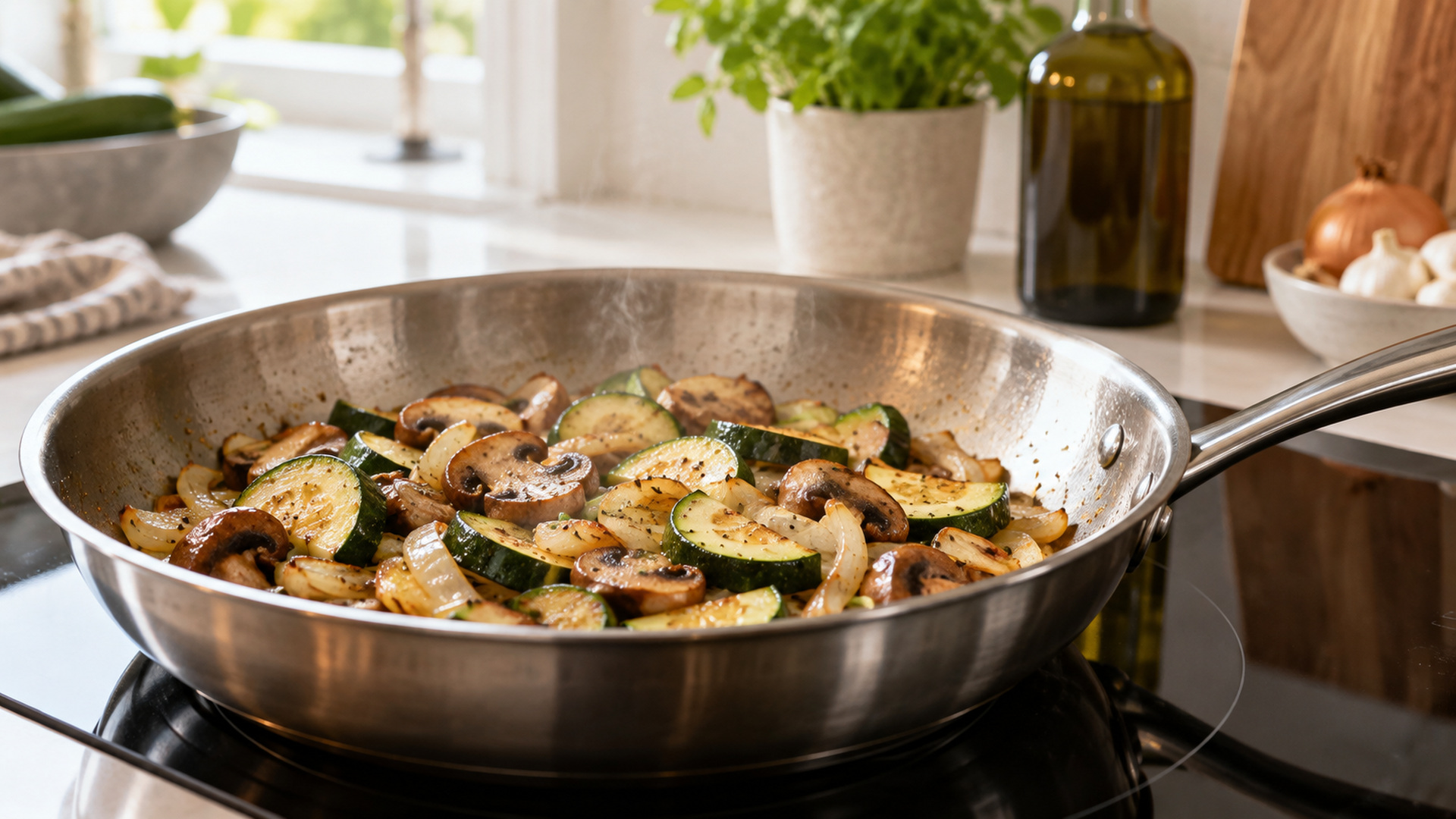
Make extra-virgin olive oil your default.
Do not leave oil heating in an empty pan for a long time or overheat it until it smokes. Any oil deteriorates if heated too hot for too long or used repeatedly.
I therefore use only as much as needed and do not reuse it.
What about deep-fried food? In my view, skipping it is the best option. But when you really want it, olive oil is a perfectly practical choice.
Store oil away from heat and light, with the lid closed.
Even with olive oil, buying a manageable bottle is better than keeping a large container open for a long time.
And use butter, lard, or coconut oil in moderation when their flavor is what the dish needs.
References and further reading
The available paper and institutional links appear alongside the relevant passages above.
Heat stability: Abrante-Pascual et al., Foods, 2024; De Alzaa et al., Acta Scientific Nutritional Health, 2018; UC Davis Olive Center guidance.
Effects on human health: Estruch et al., NEJM, 2018; Desjardins et al., AJCN, 2024; Steen et al., Annals of Internal Medicine, 2026 (published online in 2025); Neelakantan et al., Circulation, 2020; Pourrajab et al., Critical Reviews in Food Science and Nutrition, published online in 2022 and in print in 2023; Zhang et al., JAMA Internal Medicine, 2025.
Quality, storage, and cooking: UC Davis summary of Green and Wang's study, 2023; Harvard Nutrition Source guidance on coconut oil; Qin et al., Heart, 2021.