Many people now take creatine as an exercise supplement. I also take it occasionally when I am making a serious effort with resistance training.
Sometimes, however, a health check shows a higher creatinine level after someone starts taking creatine. Does that really mean something has gone wrong with the kidneys?
It can be even more worrying when the report also lists a low eGFR, a measure of kidney function.
To give the conclusion first, these two numbers alone cannot establish kidney damage. Creatine supplementation can affect creatinine levels, and eGFR calculated from creatinine can change along with them.
That does not mean an elevated result should simply be dismissed as an effect of a supplement. We need to find out what changed the numbers.
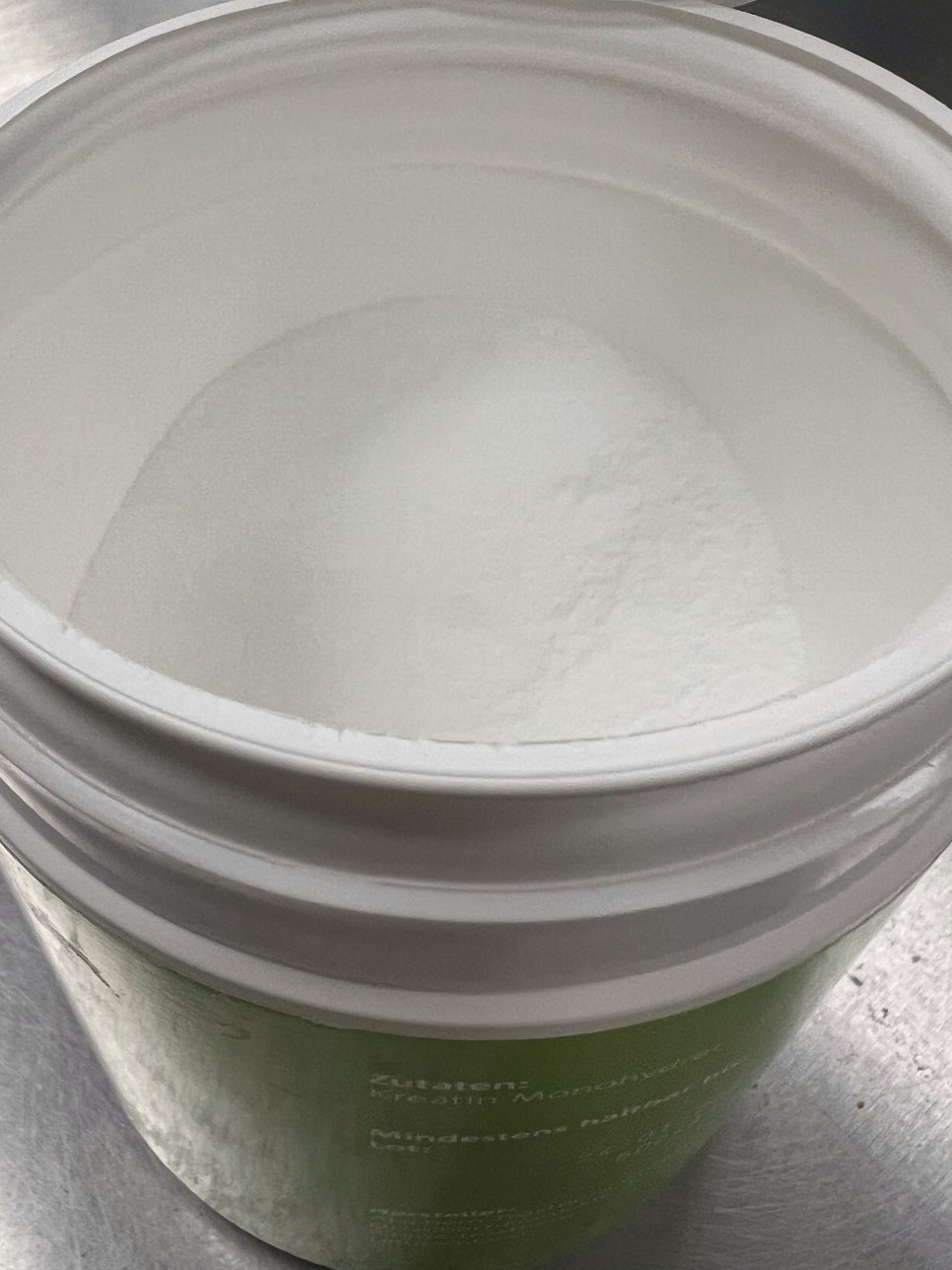
Source: Awkwafaba / Wikimedia Commons / CC BY-SA 4.0 / original image used without editing. Links to the original and license appear in the references.
Similar names, different roles
Creatine is involved in supplying energy when muscles produce force over a short period. Creatinine is a waste product formed during creatine metabolism. Despite their similar names, they are not the same substance.
Creatinine is removed from the blood through the kidneys. If a large amount remains in the blood, we may therefore suspect that the kidneys are not working well. But the level depends not only on how well the kidneys process it, but also on how much the body produces.
Greater muscle mass, recent intense exercise, or eating a large amount of cooked meat can also affect the result. The US National Kidney Foundation lists creatine supplements among the factors that can raise creatinine independently of actual kidney function.
Creatinine and eGFR are not two independent tests
The eGFR on a laboratory report stands for “estimated glomerular filtration rate.” It is a calculated estimate of the kidneys’ ability to filter blood. It is commonly calculated using blood creatinine, age, and sex.
With this method, higher creatinine can lead to a lower calculated eGFR. Two numbers worsening together does not mean that two separate tests have confirmed kidney damage. Think of them as results derived from the same starting point.
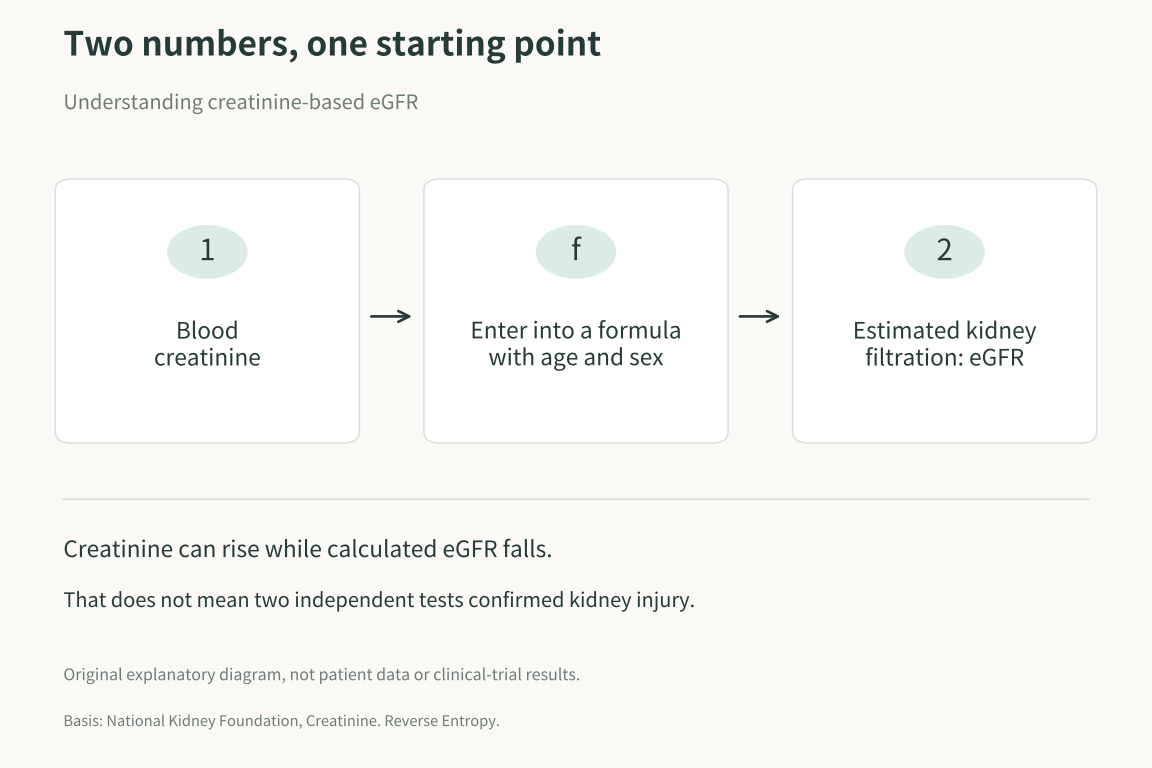
Source: an original explanatory diagram. Based on National Kidney Foundation, Creatinine. This is not a photograph or a graph of clinical-trial results.
This does not make the tests useless. It means that supplements and recent habits need to be considered to interpret the numbers properly. Creatinine can also rise because kidney function has genuinely declined, so it is important to compare the result with earlier tests and consider how quickly it has changed.
Fortunately, there is research in humans
A clinical trial published in 2020 studied healthy young men who performed resistance training. It compared creatine monohydrate at 3 g or 5 g per day with placebo for 35 days. Thirty-six men enrolled; after six who did not meet the exercise-attendance requirement were excluded, 30 completed the study.
In the creatine groups, creatinine increased and calculated eGFR decreased compared with the values before supplementation. In contrast, there were no significant changes in urinary protein, urinary albumin, or the investigational markers of kidney injury. Between-group differences in the markers assessed were also not significant.
These findings support the explanation that “creatinine rose without kidney injury.” However, the study was small and short. It does not guarantee safety for people with kidney disease, older adults, or those taking large amounts for a long time.
If your results change, start by telling your clinician what you take
The product name and ingredients, daily dose, and date you started taking it can help with interpretation. Write down other supplements and medicines as well as creatine. It is also helpful to mention recent intense exercise or changes in diet.
There is no need to drink excessive amounts of water or stop prescribed medication on your own to make your numbers look better before a test. Whether to pause creatine and when to repeat the tests are best decided with your clinician, based on the purpose of testing and the extent of the change.
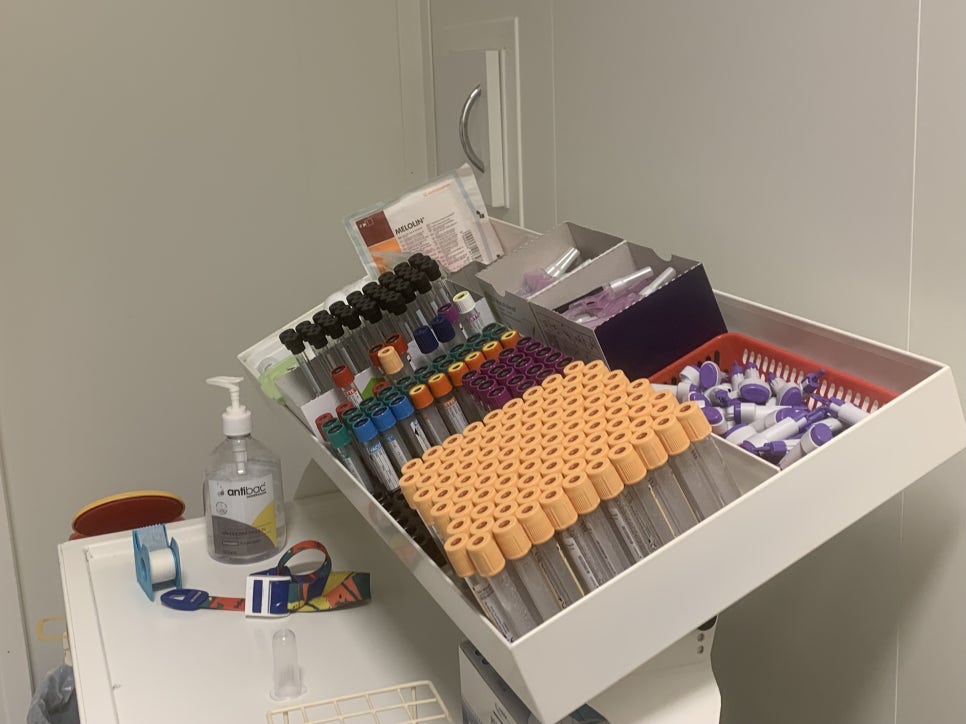
Source: Photo: Marius Vassnes / Wikimedia Commons / CC BY-SA 4.0 / original image used without editing. Links to the original and license appear in the references.
If a creatinine-based calculation may not reflect the person’s actual condition, another blood marker called cystatin C can be used alongside it. The National Kidney Foundation explains that eGFR based on both creatinine and cystatin C is more accurate than estimates based on either one alone. Not everyone needs additional testing; a clinician determines whether it is necessary.
A urine albumin test can also help. While a blood test looks at “how much is filtered,” a urine test checks whether proteins in the blood are leaking into the urine. The US National Institute of Diabetes and Digestive and Kidney Diseases recommends both blood tests and urine albumin testing in the evaluation of kidney disease.
Before concluding that the supplement is responsible
If a health check shows a clear change from your previous results, be sure to have the findings reviewed in a medical consultation. Especially if you already have kidney disease or an abnormal urine test, it is important not to decide for yourself that creatine is the cause. Early kidney disease may have no symptoms, so feeling well does not rule it out.
References and conditions for using the photographs
Vilar Neto JO et al. Novel renal biomarkers show that creatine supplementation is safe: a double-blind, placebo-controlled randomized clinical trial. Toxicology Research. May 13, 2020. Full text of the human clinical trial
National Kidney Foundation. Creatinine. Updated June 1, 2023. Guide to creatinine and interpreting test results
NIDDK. Chronic Kidney Disease Tests & Diagnosis. Reviewed October 2016. Guide to blood and urine tests for kidney disease
Creatine-powder photograph: Awkwafaba, original photograph page. Blood-collection-equipment photograph: Photo: Marius Vassnes, original equipment photograph page. Both photographs are used without editing under the CC BY-SA 4.0 license. They do not endorse a particular product or institution. The explanatory diagram was created to help readers understand the article and is not a photograph of a real patient or experiment.
#Creatine #Creatinine #KidneyTests #HealthCheck #eGFR #Supplements #ReverseEntropy