“I hear creatine is good for training, but doesn’t it make your hair fall out?”
I have been hearing this question quite often lately.
Gaining muscle while losing hair would hardly be an appealing trade. If you already worry about your hairline or crown, it is understandable to hesitate.
If concern about hair loss is keeping you from trying creatine, a 2025 randomized trial that actually examined hair is worth a look.
The conclusion first: when resistance-trained men took 5 g a day for 12 weeks, changes in hair density and thickness did not differ significantly from those in the placebo group. Lak et al., 2025
I do not think a rumor about hair loss, on its own, is a reason to avoid creatine.
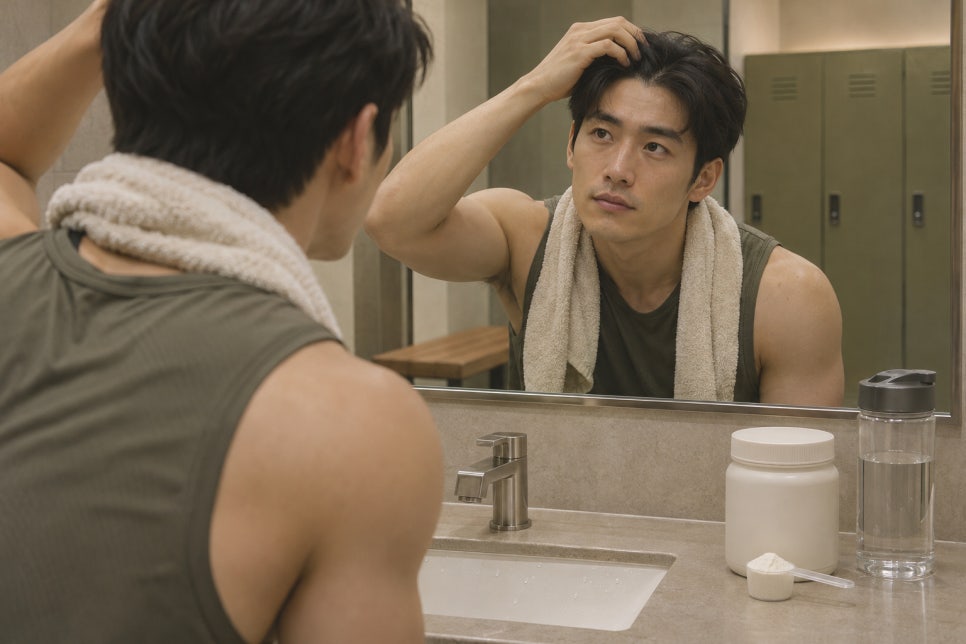
1. The rumor began with blood tests in rugby players in 2009
A small double-blind crossover study published in 2009 recruited 20 male rugby players. The creatine regimen was 25 g a day for the first seven days, then 5 g a day for another 14 days.
During the creatine phase, blood DHT rose 56% above baseline by day 7 and was still 40% higher at day 21. DHT is a hormone involved in androgenetic hair loss, so the finding understandably attracted attention. van der Merwe et al., 2009 · MedlinePlus
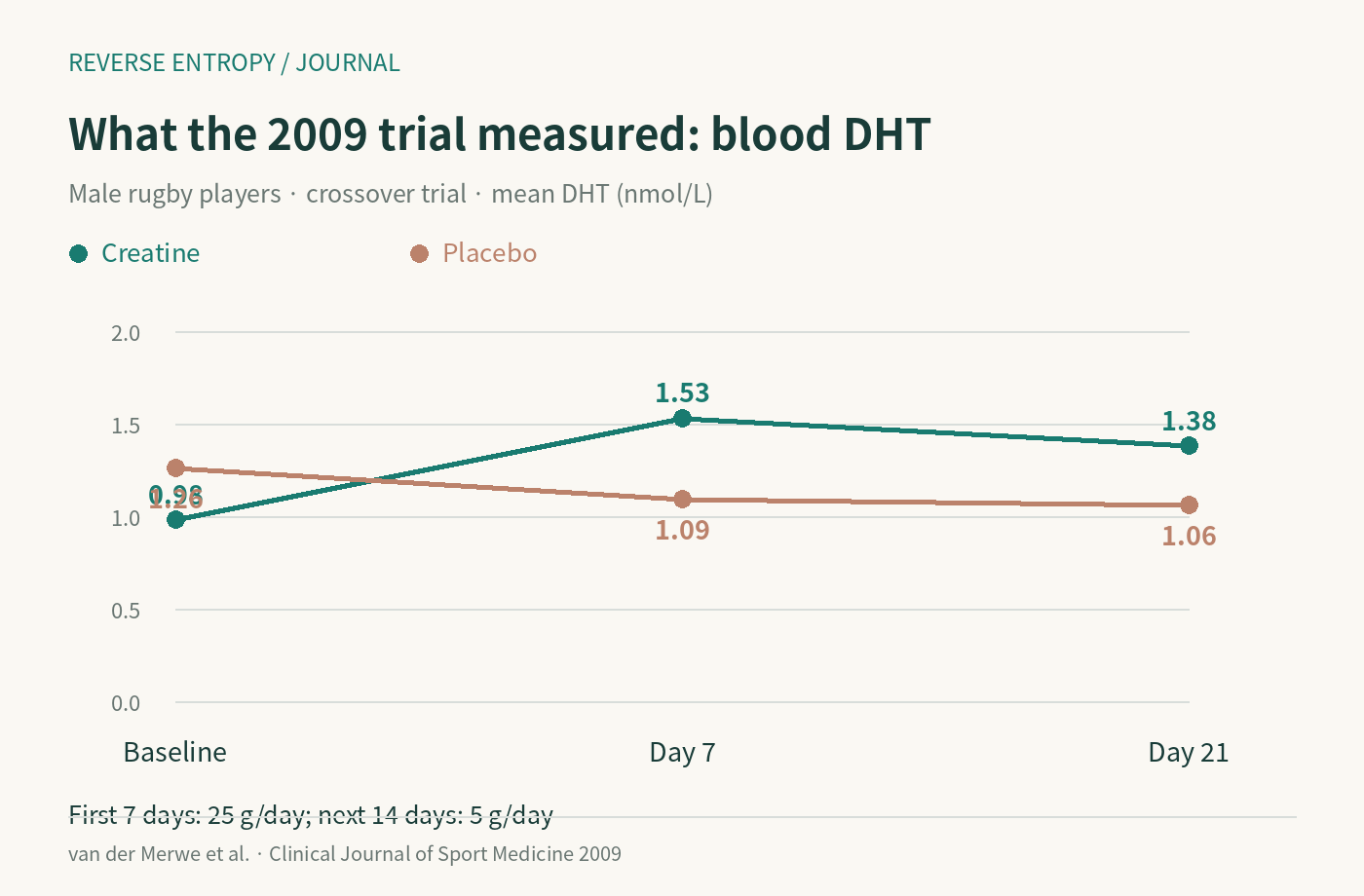
What the researchers measured in 2009 was hormone levels in the blood. As the result spread, “DHT increased” turned into “creatine makes your hair fall out.”
2. A DHT result alone does not decide the fate of a hair follicle
DHT, or dihydrotestosterone, is an androgen made from testosterone. In genetically susceptible follicles, it contributes to a shorter growth phase and progressively finer hairs. MedlinePlus
We also need to consider the characteristics of the follicle receiving that signal.
A study of scalp tissue from 24 men and women with pattern hair loss found more androgen receptors and DHT-producing enzymes in frontal follicles than in follicles at the back of the head. Even within one person’s scalp, the conditions for receiving and processing hormonal signals differed by location. Sawaya and Price, 1997
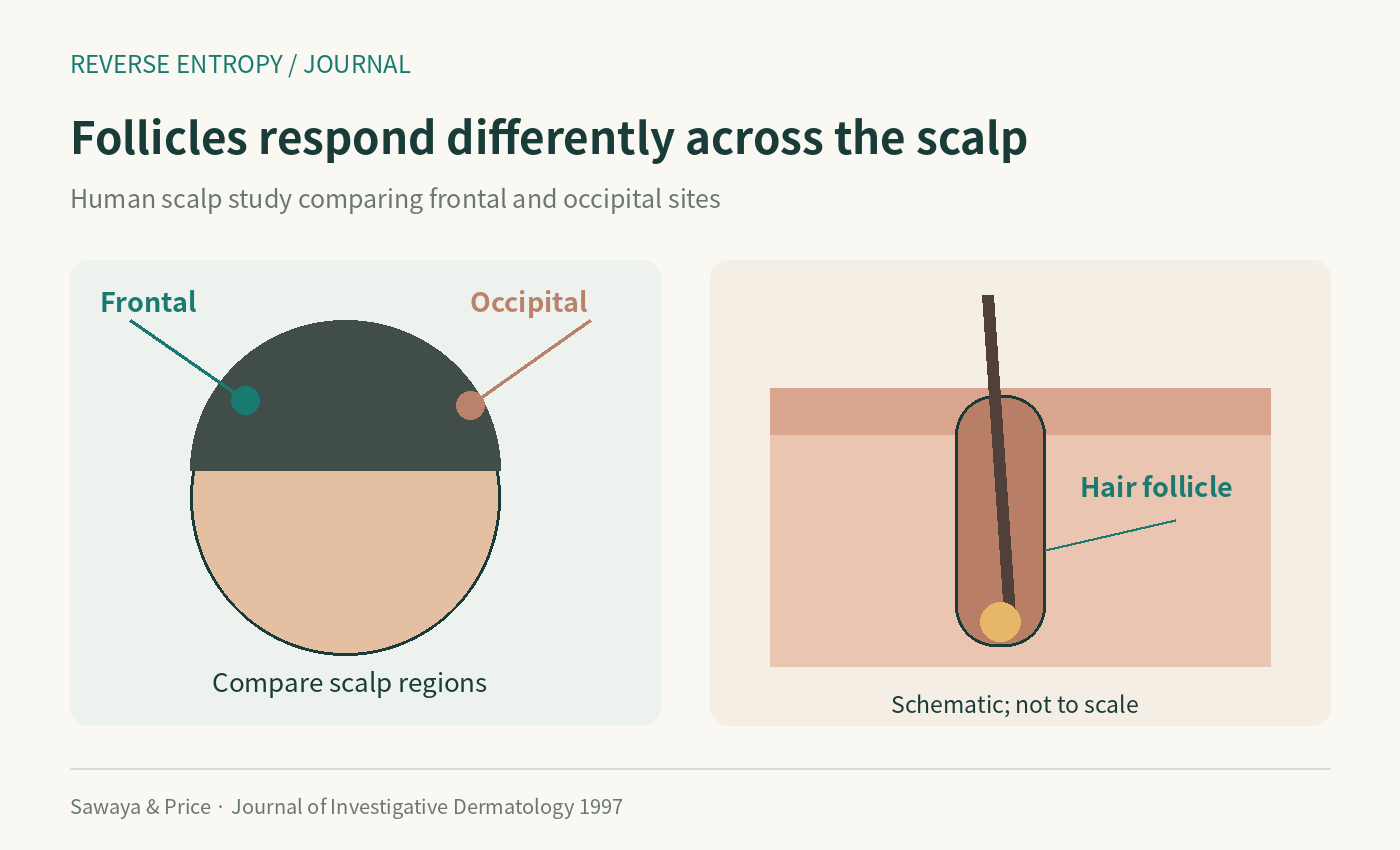
That brings us to the question that goes one step beyond a blood-test result: “Did the people taking creatine actually develop thinner hair or lose more of it?”
The 2025 trial addressed precisely that question.
3. This time, the researchers examined DHT and the hair itself
In this double-blind randomized trial, published on April 23, 2025, resistance-trained men aged 18–40 took either creatine monohydrate 5 g a day or a placebo for 12 weeks. There was no high-dose loading phase.
Thirty-eight men completed the trial. Hair data were available for 37, whose crown areas were photographed under standardized lighting and magnification. Lak et al., 2025
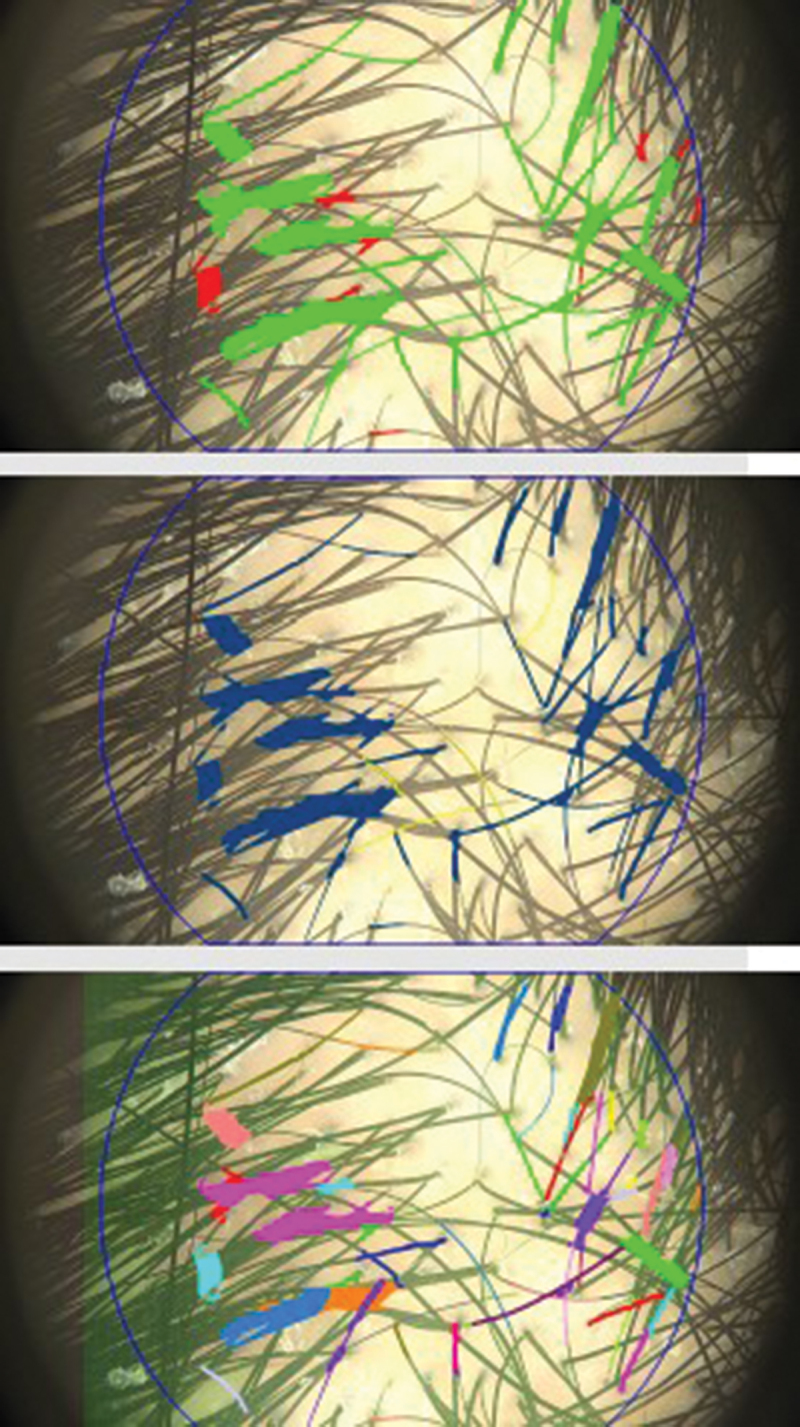
Blood DHT: no significant creatine-related rise was found.
Hair count and density: changes did not differ significantly between the groups.
Cumulative hair thickness: changes did not differ significantly between the groups.
The proportions of hairs in the growth and resting phases: changes did not differ significantly between the groups.
When a question previously inferred from blood tests was examined in the actual hair, the trial found no signal of creatine-related deterioration. Lak et al., 2025
4. If you use creatine, start with a well-studied form and dose
Creatine helps rapidly replenish ATP, an energy source used by muscle. Supplementation increases muscle creatine stores and can support repeated short, intense efforts and training adaptations. ISSN position stand
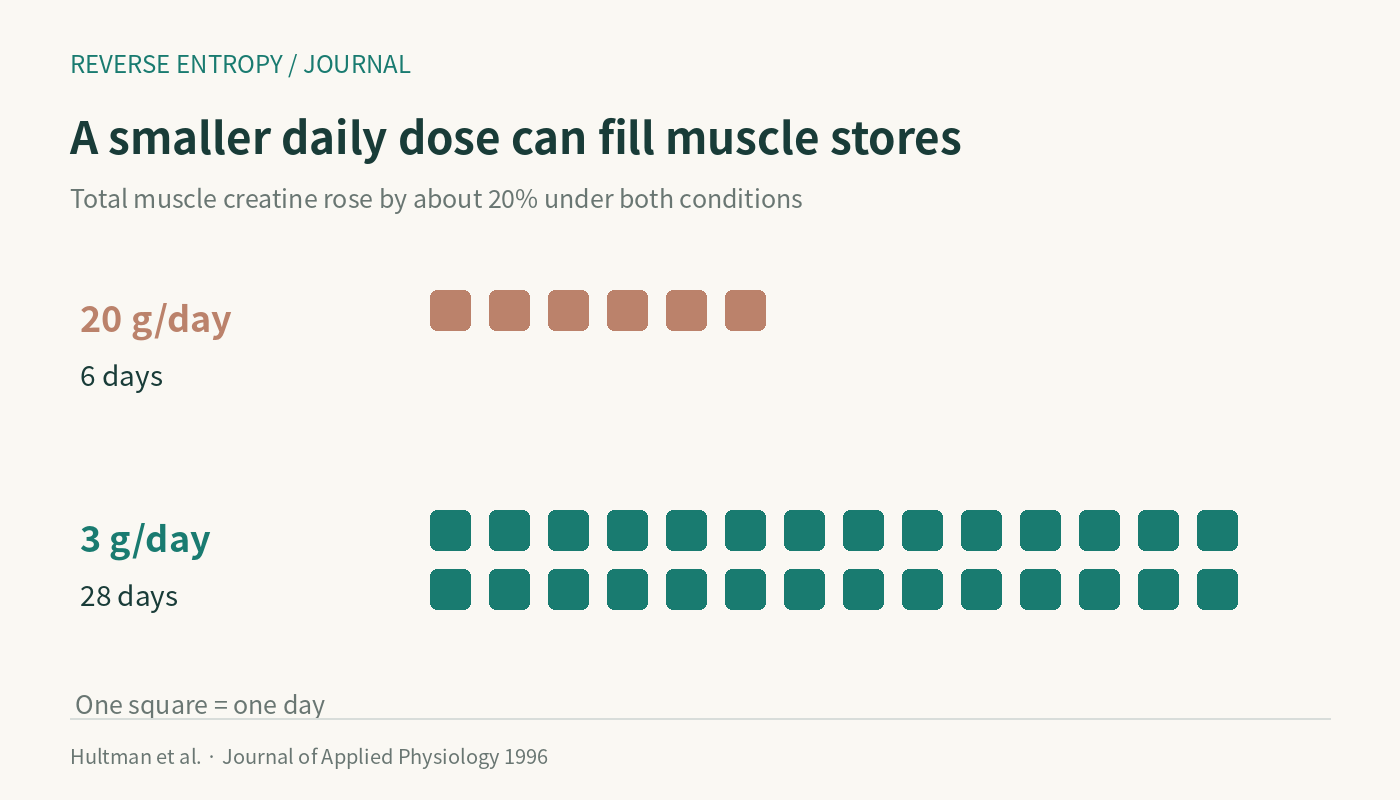
For healthy adults considering it as a training supplement, a common approach is to take 3–5 g of creatine monohydrate—the most extensively studied form—each day. Starting with a loading phase of 20–25 g a day is not essential. ISSN position stand
In a study that directly sampled human muscle, taking 3 g a day for 28 days increased total muscle creatine by approximately 20%. Stores can be filled gradually as well. Hultman et al., 1996
When I choose a supplement, I care more about the ingredient, dose, and purpose than an impressive-sounding product name.
5. If your hair starts shedding after you begin taking it, consider the whole picture
Imagine starting a training program, adding creatine, sharply cutting your food intake, and losing weight rapidly. A few months later, if your hair starts shedding, the most memorable new supplement may seem like the cause.
In reality, marked weight loss, illness, or severe stress can trigger telogen effluvium. The shedding may begin several months after the triggering event. Insufficient protein or iron, thyroid disease, and pre-existing hereditary hair loss also need consideration. American Academy of Dermatology: shedding · Causes of hair loss
Rather than stopping at “it must be the creatine,” we should look at changes in diet and weight, recent health, and the condition of the scalp and hair.
I give more weight to studies that examined actual hair than to a rumor
Whether to use creatine depends on your training goals and health. If you are losing hair, consider when and where the change began, together with what happened to your diet or weight in the preceding months.
You do not have to assume that building muscle requires sacrificing your hair.
Original studies and sources
1. Lak M, et al. Does creatine cause hair loss? A 12-week randomized controlled trial. JISSN. First published April 23, 2025. DOI: 10.1080/15502783.2025.2495229.
2. van der Merwe J, Brooks NE, Myburgh KH. Three weeks of creatine monohydrate supplementation affects dihydrotestosterone to testosterone ratio in college-aged rugby players. Clinical Journal of Sport Medicine. 2009;19(5):399–404. DOI: 10.1097/JSM.0b013e3181b8b52f.
3. Sawaya ME, Price VH. Different levels of 5alpha-reductase type I and II, aromatase, and androgen receptor in hair follicles of women and men with androgenetic alopecia. Journal of Investigative Dermatology. 1997;109(3):296–300. DOI: 10.1111/1523-1747.ep12335779.
4. Hultman E, et al. Muscle creatine loading in men. Journal of Applied Physiology. 1996;81(1):232–237. DOI: 10.1152/jappl.1996.81.1.232.
5. Kreider RB, et al. International Society of Sports Nutrition position stand: safety and efficacy of creatine supplementation in exercise, sport, and medicine. June 13, 2017. DOI: 10.1186/s12970-017-0173-z.
6. Official medical information: US National Library of Medicine: androgenetic alopecia; American Academy of Dermatology: hair shedding and causes of hair loss.
Scope of the research: the 2025 trial assessed 12 weeks in resistance-trained men. Differences associated with family history and outcomes over several years remain questions for further research. Some authors disclosed advisory or support relationships with the supplement industry.