We are familiar with the idea that hair and muscle decline as we age. But did you know that we can also lose a chromosome?
As men age, the entire Y chromosome can disappear from some of their blood cells.
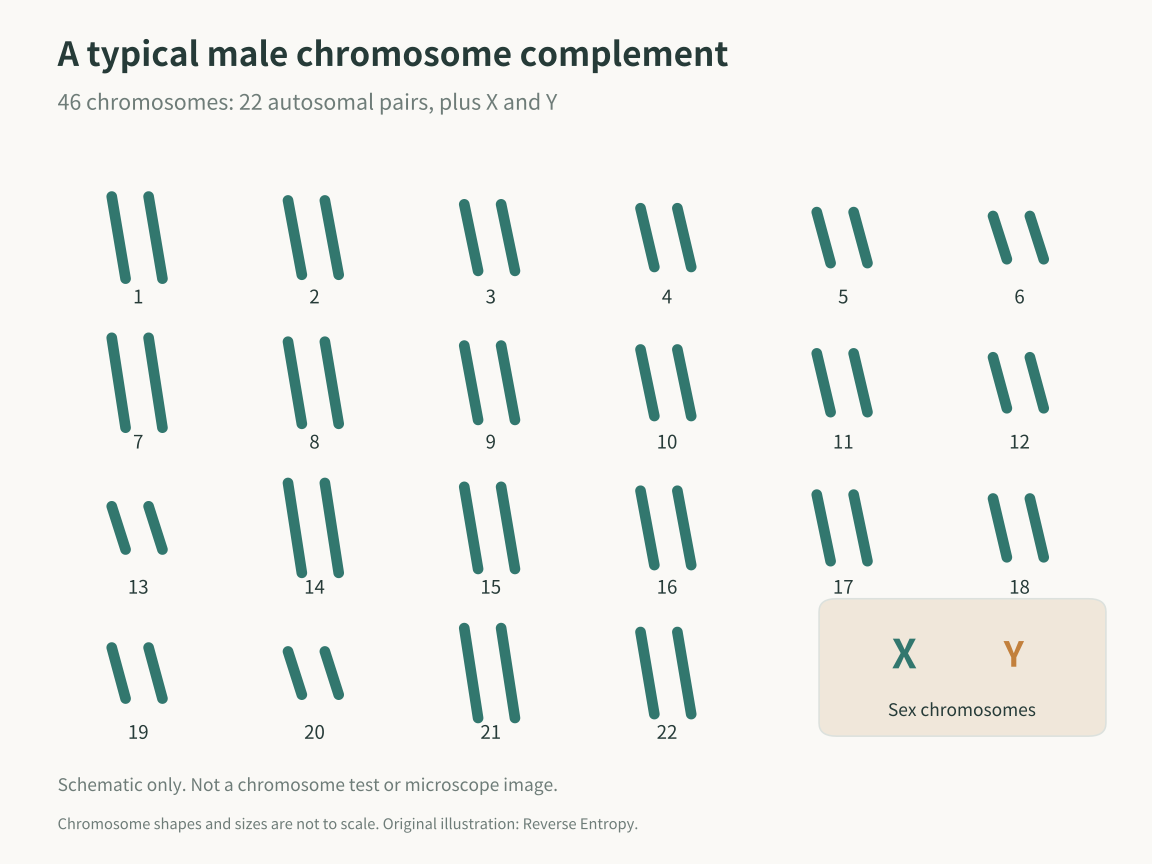
This is called mosaic loss of the Y chromosome, or mLOY.
It may sound like an extremely rare genetic disorder, but it is observed more often than you might expect in older men. A large study published in 2019 detected this change in approximately 44% of men aged 70. 1
How can a cell survive after losing a chromosome? And could a change in blood cells also affect the heart?
1. Cells with and without the Y chromosome coexist
Male cells have one X chromosome and one Y chromosome. Over the course of life, however, some cells can lose the Y chromosome. This is particularly often observed in the blood-forming cell lineage.
The same person then has a mixture of cells with and without a Y chromosome. A state in which cells with different genetic compositions coexist in one person is called “mosaicism.”
Imagine examining 100 white blood cells. If 80 contain both X and Y, while the remaining 20 have lost Y and retain only X, that person's blood contains both types of cells.
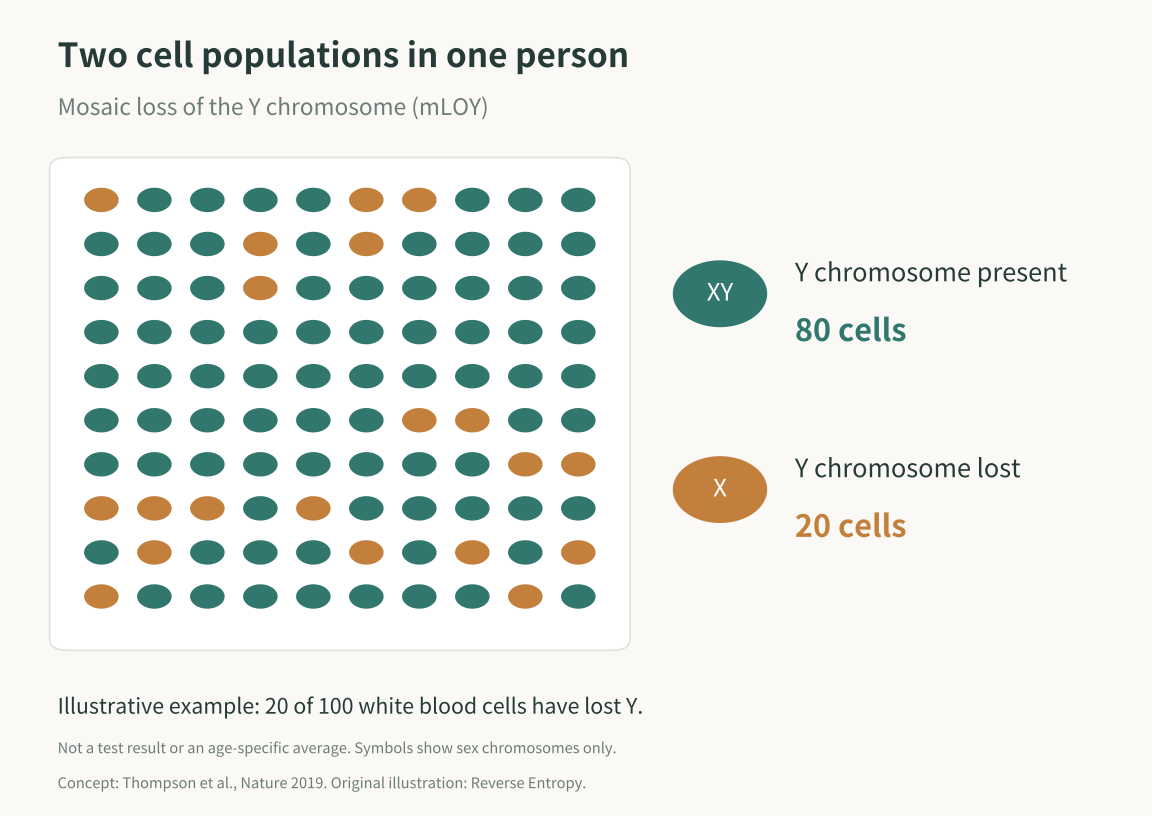
Source: Thompson DJ et al., Nature, 2019;575:652–657. Original illustration by Reverse Entropy based on the concept of mLOY. Image source Original graphic by Reverse Entropy; no figure from the original paper was reproduced.
This does not mean that all the cells throughout the body change at once. It is an acquired change in some blood cells, and the proportion of affected cells differs from person to person.
Rather than a single, definitive disease name, mLOY is best understood as a term for the state in which some cells have lost their Y chromosome. 1
2. Cells that lose a chromosome can survive and multiply
When cells divide, they copy their DNA and distribute the chromosomes to two daughter cells. Errors can occur during this process, including chromosomes not being distributed correctly.
Such changes can also occur in hematopoietic stem cells, which produce blood cells. If a cell that has lost its Y chromosome survives and produces descendants, blood cells carrying the same change can increase in number. 1
What is interesting here is that losing one chromosome does not necessarily cause a cell to die immediately.
Some continue to survive and proliferate, making up a portion of the blood cell population. Loss of the Y chromosome must be distinguished from “cellular senescence,” in which cells stop dividing.
3. It was detected in approximately 44% of men aged 70
The study published in Nature in 2019 analyzed genomic data from 205,011 men in the UK Biobank.
When the researchers used a more sensitive analytical method, the proportion of people with detectable mLOY was approximately 2.5% at age 40 and 43.6% at age 70. In other words, it was detected in more than four out of every ten 70-year-old men in this study. 1
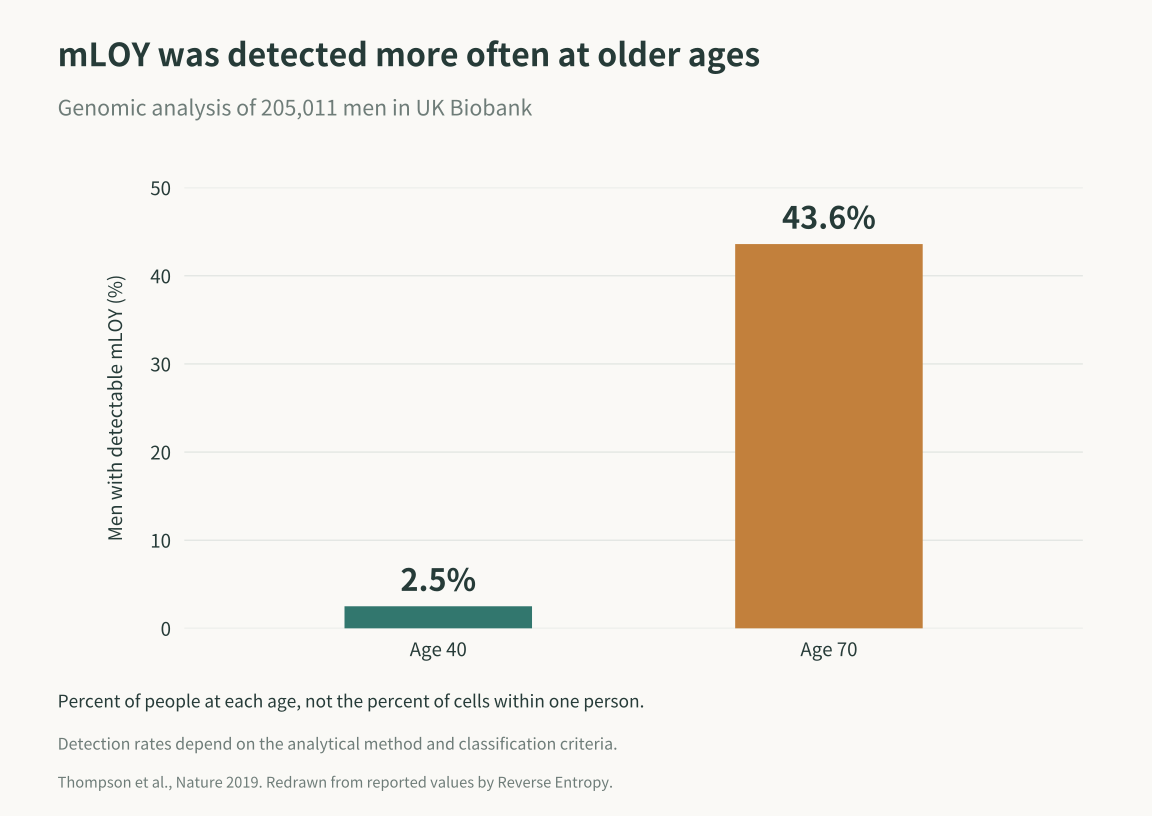
Source: Thompson DJ et al., Nature, 2019;575:652–657, values reported in the Results and in connection with Figure 1. Reconstructed by Reverse Entropy. Image source Original graphic by Reverse Entropy; no figure from the original paper was reproduced.
These figures represent the proportion of people at each age in whom mLOY was detected. By contrast, the earlier example of 100 white blood cells described the proportion of altered cells within a single person.
Detection rates can vary with the sensitivity of the test and the criteria used. The point to note here is that this change is quite commonly observed in some blood cells of older men.
4. Smoking is associated with it
Apart from age, smoking is one of the associated factors that has been repeatedly identified.
A study published in Nature Genetics in 2016 found mLOY more frequently in current smokers. The association tended to weaken the longer it had been since quitting. Genetic predisposition was also involved. 2
The study examined the relationship between the frequency of observed mLOY and smoking history, not a process by which a missing chromosome is recreated.
I regard this as important. It is evidence that genetic changes in some cells can be connected not only to age, but also to the environments and lifestyles we experience.
5. What does the Y chromosome do beyond determining sex?
When we think of the Y chromosome, sex determination and reproductive function usually come to mind first. That may make it seem as though losing the Y chromosome from blood cells later in life would have little effect.
However, a 2021 study analyzing human immune cells found altered activity in genes on other chromosomes as well in cells that had lost the Y chromosome. Which genes were affected differed according to the type of immune cell. 3
Gene expression refers to which genes' information a cell uses and how much it uses. This provides a clue that losing the Y chromosome can be connected to how the cell as a whole operates.
An analogy would be a company in which a change in one department affects the work of other departments.
Could immune cells altered in this way also affect other organs?
6. Changes in blood cells increased the likelihood of death from heart disease
In July 2022, Soichi Sano and colleagues published a study in Science linking mLOY with heart disease.
The researchers analyzed blood genomic data and mortality data from men in the UK Biobank. The median follow-up was 11.5 years.
An association was observed between the proportion of white blood cells that had lost the Y chromosome and cardiovascular-related mortality. In an exploratory analysis, the researchers divided participants using a threshold of more than 40% of white blood cells. This group's relative risk of cardiovascular-related death was approximately 31% higher than that of the comparison group. 4
How might this connection in the human follow-up data be explained? The researchers used mouse experiments to examine more closely how Y chromosome loss in blood cells could affect the heart.
7. The heart changed without changing the heart cells
The researchers transplanted bone marrow cells in which the Y chromosome had been removed by gene editing into mice. This created a model of mLOY in the blood-forming cell lineage.
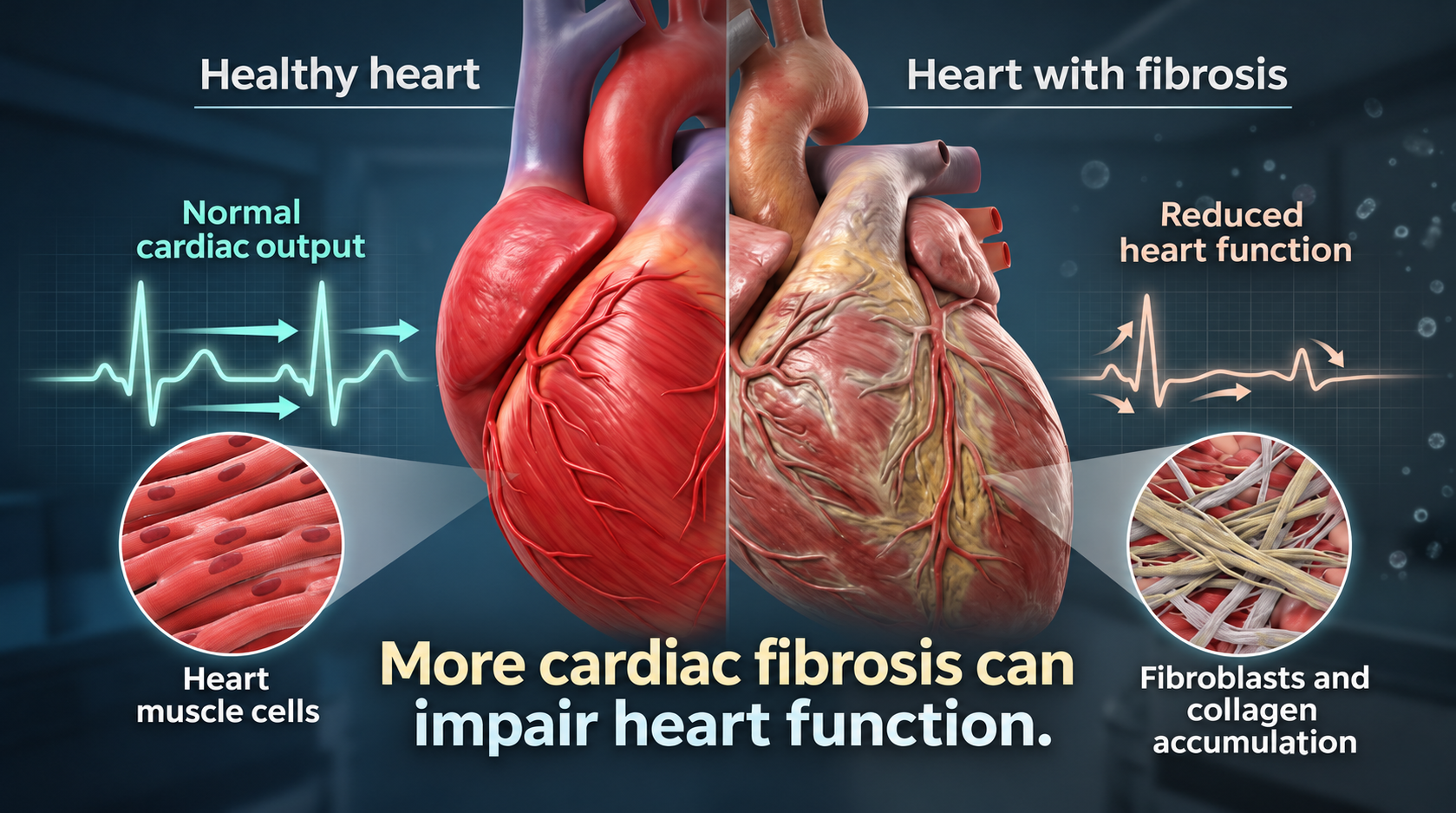
As these mice aged, they developed more cardiac fibrosis and a greater decline in cardiac function.
Fibrosis is the excessive accumulation of scar-like fibrous material in tissue. The heart's tissue needs to move flexibly to contract and relax, and excessive fibrosis can interfere with that movement.
The researchers focused on macrophages that had entered the heart. Macrophages are immune cells involved in clearing damaged tissue and in the repair process. Macrophages that had lost the Y chromosome showed fibrosis-promoting characteristics. 4
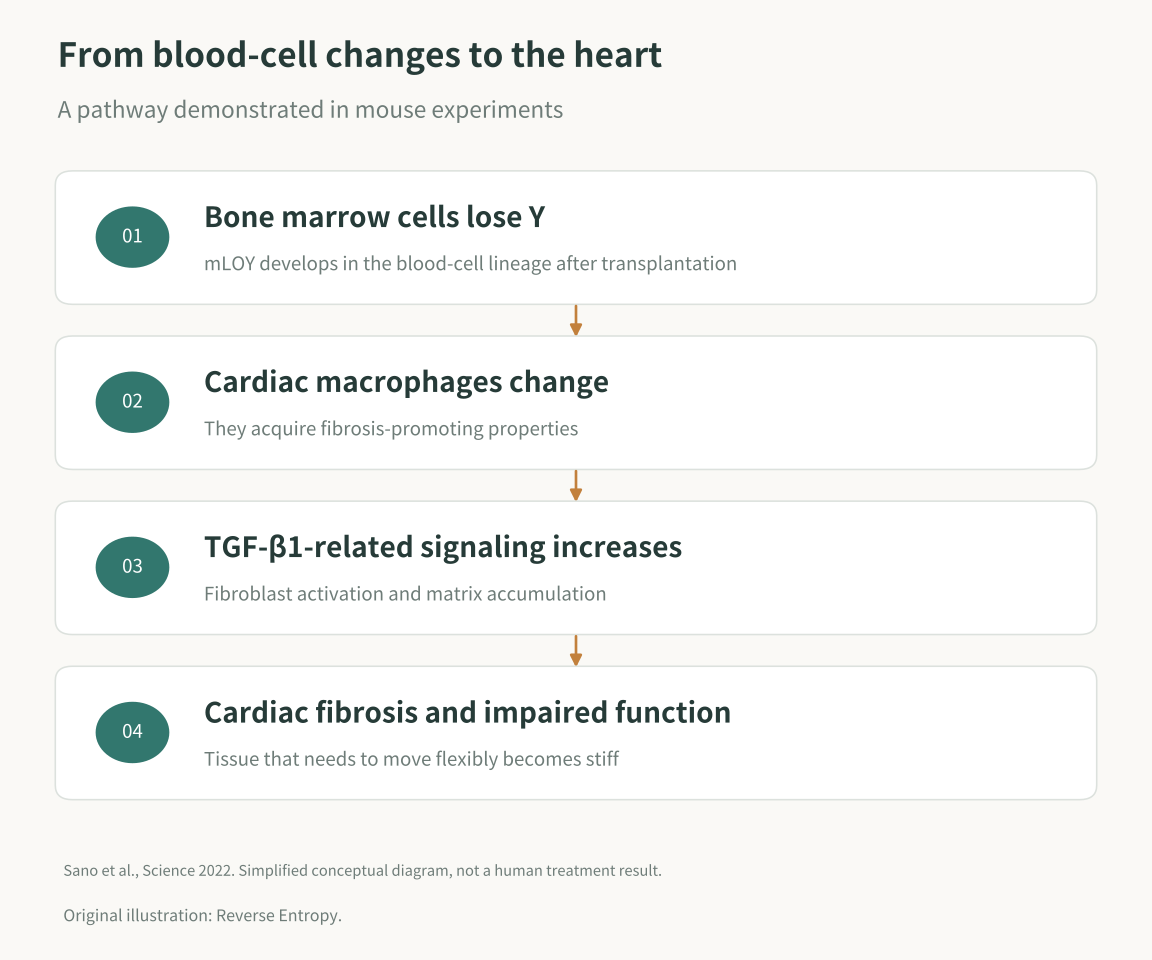
Source: Sano S et al., Science, 2022;377:292–297. Original illustration by Reverse Entropy based on the study. Image source Original graphic by Reverse Entropy; no figure from the original paper was reproduced.
A signal called TGF-β1 was involved in this process. Although the name may be unfamiliar, you can think of it as one of the signals that regulate tissue repair and matrix production. When this signal becomes excessive, fibroblasts can become activated and too much matrix can accumulate in the tissue.
In an additional experiment that placed pressure overload on the heart, an antibody blocking TGF-β1 partly alleviated the deterioration of cardiac function in mLOY mice. 4
In other words, changes in immune cells derived from the blood could alter the condition of the heart without directly changing the chromosomes of the heart cells.
AI disclosure information
8. Where does the aging of an organ begin?
This is actually the question that interests me most.
Could the causes of an organ's aging lie somewhere beyond the organ itself?
When cardiac function declines, we naturally think first about the heart. But the process shown in this study begins in the bone marrow and blood cells. Changes in the signals delivered by immune cells can affect the state of tissue in another organ.
An analogy would be a change in how a building's maintenance and repair team operates.
More repair is not always better. The team needs to restore what needs fixing, but if it also rigidly fills in structures that need to move, it can interfere with function instead.
I hope future studies will clarify which immune cell functions mLOY changes, by how much, and whether those effects can be controlled. When thinking about anti-aging, I believe we need to consider not only damage to individual cells but also the signals cells exchange and the ways they maintain tissue.
9. Should you get tested or treated now?
mLOY cannot be identified simply from the white blood cell count in a routine blood test. In research, investigators analyze blood cell DNA to estimate whether and to what extent the Y chromosome has been lost, or use methods that examine the chromosomes in cells directly. 1 4
The studies discussed here were not clinical trials assessing whether screening men in the general population and treating them according to the results reduces heart disease. These findings alone therefore do not provide a reason to start a special medication or supplement.
Detection also does not mean that a person will inevitably develop heart disease. The proportion of altered cells and the person's health differ from one individual to another, so there is no need to become overly worried.
For now, I think it is better to view this phenomenon as a clue to understanding male aging and immune cells more deeply, rather than as a reason for anxiety.
Closing thoughts
It is easy to think of our genes as fixed at birth and unchanged throughout life. Mosaic loss of the Y chromosome shows that the genetic composition of some cells can change as we live.
The effects of that change may not stop at the affected cell. If changes in blood cells can influence the repair and function of other organs, our view of aging needs to broaden as well.
Beyond asking, “Which organ has aged?” we can also ask, “Might there be a way to make that organ young again?”
These are questions raised by the loss of one small chromosome. I hope that research uncovering these connections will open up new possibilities for anti-aging treatments.
References
1. Thompson DJ, et al. Genetic predisposition to mosaic Y chromosome loss in blood. Nature. 2019;575:652–657. DOI: 10.1038/s41586-019-1765-3. Paper · Open full text
2. Zhou W, et al. Mosaic loss of chromosome Y is associated with common variation near TCL1A. Nature Genetics. 2016;48:563–568. DOI: 10.1038/ng.3545. Paper · Open full text
3. Dumanski JP, et al. Immune cells lacking Y chromosome show dysregulation of autosomal gene expression. Cellular and Molecular Life Sciences. 2021;78:4019–4033. DOI: 10.1007/s00018-021-03822-w. Open full text
4. Sano S, et al. Hematopoietic loss of Y chromosome leads to cardiac fibrosis and heart failure mortality. Science. 2022;377:292–297. DOI: 10.1126/science.abn3100. Paper · Open full text
#YChromosome #MosaicLossOfYChromosome #mLOY #MensHealth #ImmuneAging #HeartHealth #HeartFailure #CardiacFibrosis #HematopoieticStemCells #AntiAging #Healthspan #ReverseEntropy #CheongdamHin