The day after a workout, your legs feel fine even when you walk downstairs. You may wonder whether you took it too easy yesterday.
But you can get plenty of benefit from exercise without muscle soreness.
More pain does not mean more muscle growth.
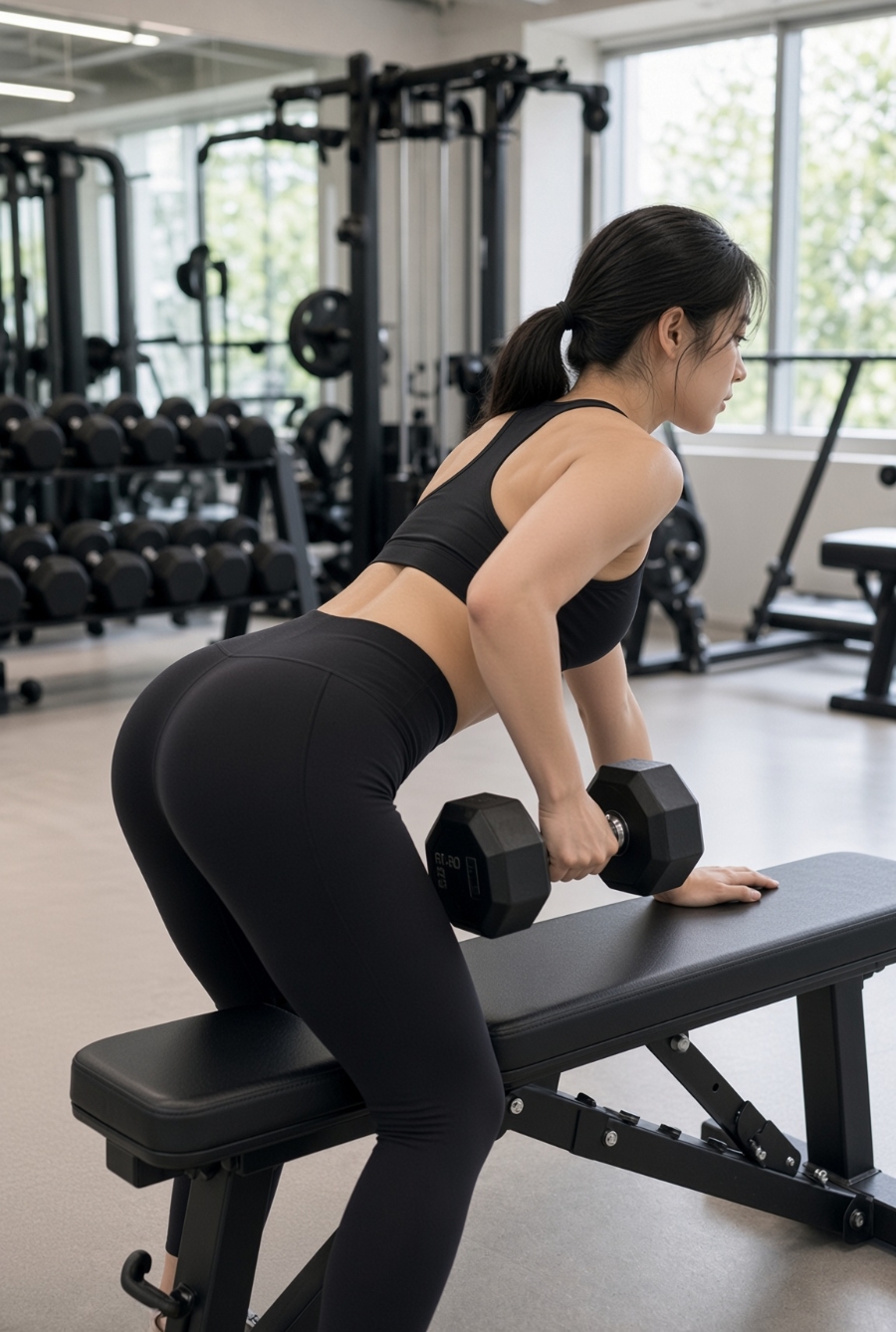
Pain and muscle gain did not rise together.
Starting a new exercise or lifting weights after a long break gives your body an unfamiliar stimulus. It may hurt at first, then hurt less as you repeat the same exercise. That does not mean your muscles stop changing.
Let me introduce a well-known exercise-physiology study: Damas et al., 2016.
1. What did the experiment involve?
The researchers had 10 healthy men in their twenties who had not been regularly training their lower bodies complete 10 weeks of demanding lower-body exercise, twice a week, using leg presses and leg extensions.
At weeks 1, 3, and 10, they took thigh-muscle biopsies before exercise and again 24 and 48 hours afterward to track three things:
How much muscle damage had occurred? Muscle damage and soreness.
How much muscle protein was being made? The rate of protein synthesis.
How much had the muscles actually grown? Genuine muscle growth.
2. The results: a surprise in week 1, a reversal in week 3
The results were quite different from what many of us might expect.
Week 1: After the first workout, there was substantial disruption of the muscle’s microscopic structure and pronounced soreness. Protein synthesis also showed its largest increase of the 10-week period.
But there was a twist.
Even a large increase in protein synthesis in week 1 was not correlated with the amount of muscle growth at the end of 10 weeks.
The early appearance of a larger thigh also reflected inflammation-related edema, or swelling, rather than simply new muscle.
Week 3: less repair, more building. After roughly five repetitions of the same workout, the body adapted, and muscle damage and soreness fell sharply.
The total protein-synthesis response was somewhat lower than in week 1, but with less damage to repair, newly synthesized proteins were now more closely linked to building muscle.
Week 10: genuine muscle growth becomes clear. Soreness and damage had largely subsided. With the swelling reduced, an increase in muscle-fiber cross-sectional area was evident.
Protein-synthesis rates in weeks 3 and 10 showed a very strong correlation with the final amount of muscle growth, with correlation coefficients around 0.9.
3. Two practical training tips from this study
First, do not chase muscle soreness.
Not feeling sore after a workout does not mean the stimulus was inadequate.
It can instead be a positive sign that your body has adapted and can devote more of its resources to growth rather than repairing unnecessary damage.
Second, do not change your routine too often.
Some people switch exercises every week, just as their bodies are beginning to adapt, and make themselves sore each time.
The lesson here is that repeatedly doing this may keep sending you back to the “week 1 repair job” instead of helping you build muscle efficiently.
Once a movement feels familiar and soreness decreases, gradually increasing the weight or repetitions is a productive route to muscle growth.
The key is that muscles do not need to be battered and torn apart to grow. After adapting to the damage, they can grow as you progressively increase the weight or repetitions.
Source: Samuel Girven / Unsplash, Unsplash License. Original photograph.
But training the same muscles every day simply because they do not hurt is not a good idea either.
The absence of soreness does not prove that recovery is complete. Just as soreness should not be your scorecard for a workout, it should not be your only guide to when you train again.
The National Institute on Aging recommends training the major muscle groups on at least two days a week, while allowing recovery time rather than working the same muscles hard on two consecutive days.
When deciding how much to do, consider not only pain but also whether you can perform your usual movements steadily. On days when fatigue makes your form deteriorate, it is better not to insist on the planned weight or volume.
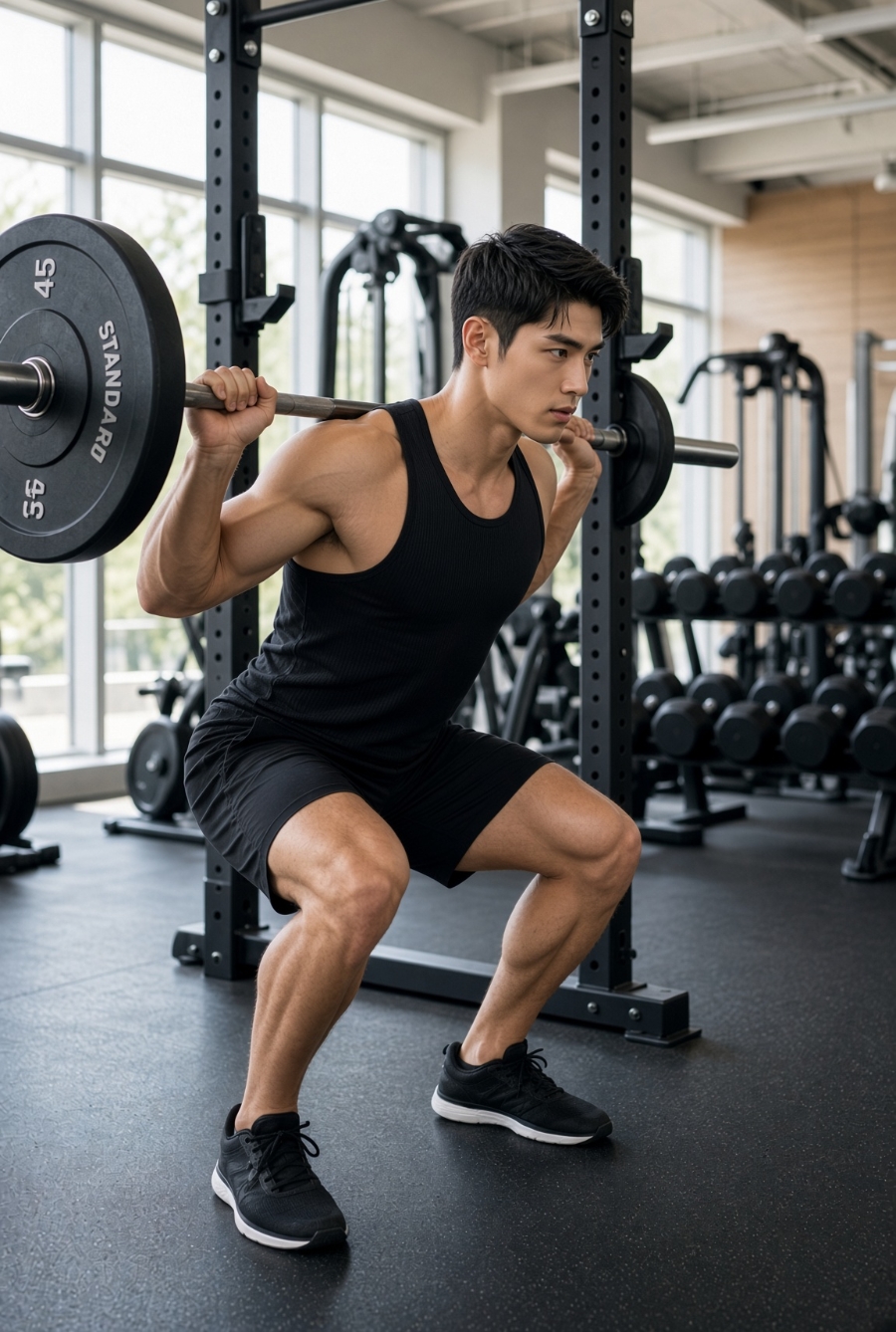
Do not push through unusually severe pain.
If soreness is far worse than expected, your urine turns dark like tea or cola, or you feel too weak to carry out your usual activities, stop exercising and seek medical care immediately.
These may be signs of rhabdomyolysis, a serious breakdown of muscle tissue.
If a joint hurts during exercise or the same movement repeatedly causes pain, have a clinician or physical therapist check the movement rather than pushing harder.
After a workout, ask yourself “Did I complete today’s planned movements without overdoing it?” before wondering “How sore will I be tomorrow?” Your training can add up even when soreness is mild. Allowing time to recover and adjusting the intensity using your training records is more sustainable than deliberately trying to make yourself hurt.
References
Damas et al., 2016: original human resistance-training study. Ten young men completed 10 weeks of lower-body training. The study examined how soreness and muscle-damage markers related to muscle growth.
National Institute on Aging guidance on strength exercise, recovery, and safety. Reviewed January 14, 2025, as cited in the original article. This guidance is mainly for older adults; an appropriate intensity will differ between individuals.
CDC guidance on warning signs of rhabdomyolysis. January 14, 2025, as cited in the original article. Advice on seeking care for severe muscle pain, dark urine, or marked weakness.
#MuscleSoreness #StrengthTraining #ExerciseBenefits #ExerciseRecovery #HomeWorkouts #HealthInformation #ReverseEntropy