By Choi Kyeong Rok | Reverse Entropy
To start with the conclusion:
Yes, oral glutathione can have effects too. It may help improve skin tone and support antioxidant defenses, and potential support for liver function is also worth considering.
For my own anti-aging care, I take 300 mg of liposomal glutathione daily, together with vitamin C and zinc.
In the clinic, I sometimes have patients with melasma take oral glutathione for approximately three months and observe their response.
Glutathione is an antioxidant that our bodies make themselves. It helps cells respond to oxidative stress and is used in the liver to process some harmful substances. If it can be supplemented orally, it may help support both skin and overall health.
Photo: NIAID, 2017. Original photograph · CC BY 2.0. Cover layout and labels localized; photograph retained.
Source: NIAID, Capsules Spilling from Bottle, 2017 / Wikimedia Commons. Cover editing: Reverse Entropy.
Which form, then, is best to take?
Reduced and acetylated glutathione: what is the difference?
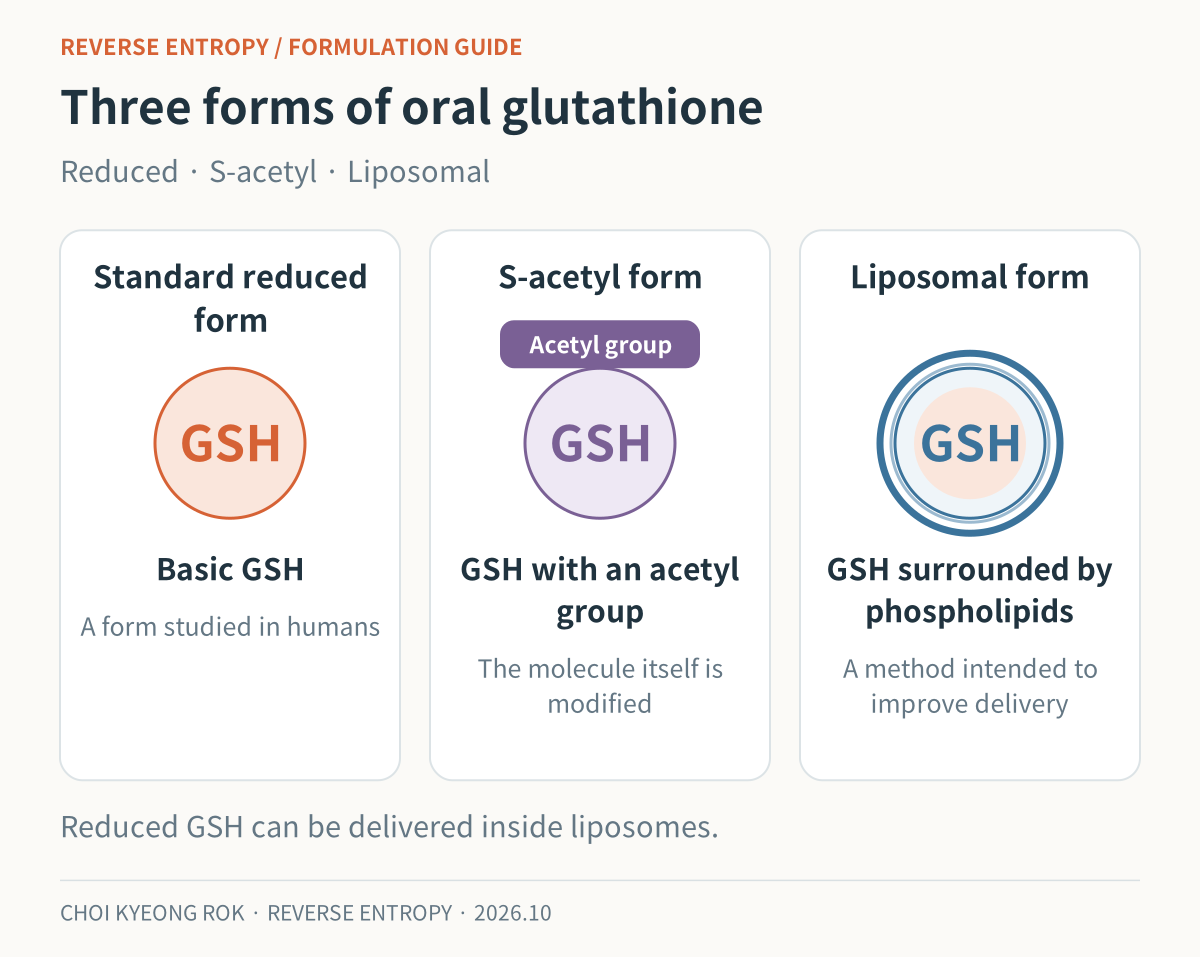
The most basic form is reduced glutathione, or GSH. It is the form that acts as an antioxidant in our bodies, and it also has the largest body of research on oral use.
A placebo-controlled trial published in 2015 gave 54 healthy adults 250 mg or 1,000 mg daily for six months. In the high-dose group, glutathione concentrations in red blood cells, plasma, and lymphocytes increased by an average of approximately 30–35% from baseline. The study showed that oral glutathione can increase the body's stores. [1]
S-acetyl glutathione, or SAG, adds an acetyl group to improve stability and delivery.
In October 2026, a clinical trial comparing the two forms in 90 women was published. Participants took acetylated glutathione 200 mg daily, reduced glutathione 500 mg daily, or placebo for 12 weeks. In analyses accounting for differences in pigmentation at baseline, the acetylated form improved some early melanin measures more quickly. This is a finding that makes acetylated glutathione worth considering for skin tone. [2]
Another oral formulation surrounds the ingredient with phospholipids to improve absorption:
the liposomal form.
AI-assisted image · Learn more
Source: Original conceptual diagram by Reverse Entropy. Richie et al., 2015; Kusumawardani et al., 2026; Sinha et al., 2018. [1–3]
Is the liposomal form better?
I prefer the liposomal form because of its potential to improve delivery efficiency.
Liposomes are small vesicles made from phospholipids. The technology places glutathione inside them to protect it during digestion and deliver it into the body. The same ingredient may be absorbed differently depending on how it is packaged for delivery.
In a pilot study, 12 adults took 500 mg or 1,000 mg of liposomal glutathione daily for four weeks. Body glutathione levels increased, and some oxidative-stress markers improved. These human data demonstrate the potential of the delivery technology. [3]
That is why the quality of the finished product is important to me when choosing a liposomal product. Delivery performance can differ with phospholipid composition, particle stability, and the technology used to encapsulate the ingredient.
When selecting a product, I look at both the actual glutathione content and the data on that product's formulation. In particular, I check the amount of yeast extract and the amount of glutathione it contains.
Some products are labeled “1,000 mg of glutathione-containing yeast extract,” for example.
Here, 1,000 mg is the weight of the entire yeast extract, including its glutathione.
To determine how much glutathione is actually present, you also need to check the glutathione percentage in the ingredient.
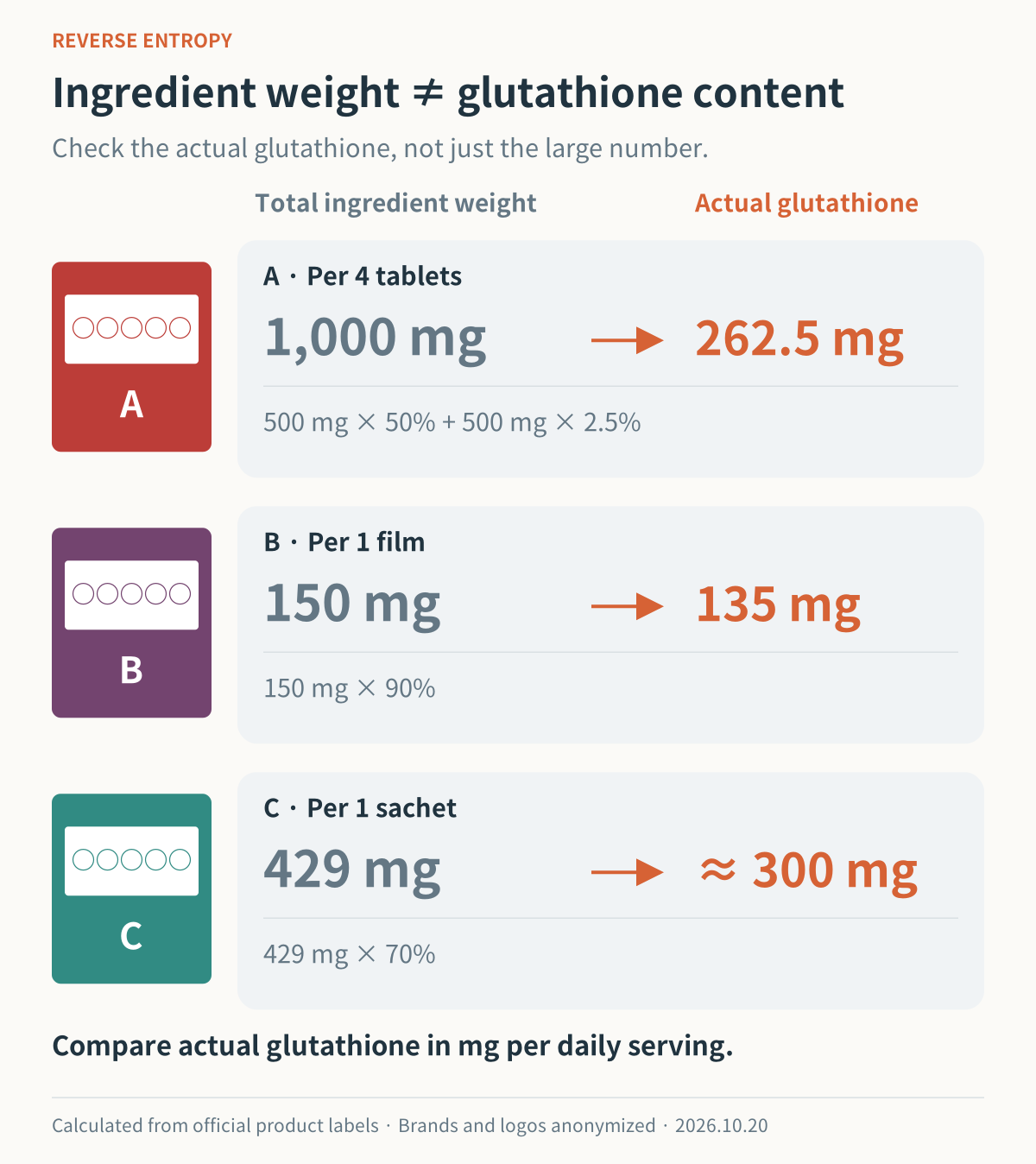
When I compared the content labels on several products, I found the following.
① Glutathione Plus, with the brand partially masked in the original: 1,000 mg of ingredients in total
The formulation described by the official store for four tablets was as follows.
- 500 mg of an ingredient containing 50% glutathione
- 500 mg of an ingredient containing 2.5% glutathione
The amount of glutathione itself is therefore 500 × 0.5 + 500 × 0.025 = 262.5 mg. The 1,000 mg refers to the combined weight of the two ingredients.
② Liposomal Glutathione Ultra 9X, with the brand partially masked in the original
- Total weight of one film: 370 mg
- Proportion of liposomal glutathione yeast extract: 40.54%
- Glutathione content within that ingredient: 90%
The calculation is 370 × 0.4054 × 0.9 ≈ 135 mg.
③ Liposomal Glutathione, with the brand partially masked in the original: 429 mg of ingredient, approximately 300 mg of glutathione
The package lists 429 mg of yeast extract, 70% glutathione content, and 300 mg of glutathione together.
429 × 0.7 = 300.3 mg, or approximately 300 mg.
The labels were written in a way that made them quite difficult to understand.
I am not recommending these products.
They are simply examples.
I have also heard that NAC is better
When considering skin care and antioxidant support together, my choice is liposomal glutathione rather than NAC.
NAC stands for N-acetylcysteine. It helps the body synthesize glutathione by supplying cysteine, one of its building blocks. Oral glutathione supplies GSH and contributes to the body's glutathione status through absorption and metabolism. [4]
I choose liposomal glutathione because it supplies GSH in a form designed to improve delivery, while allowing me to take the skin-related clinical data on oral glutathione into account as well.
There is also research on NAC's skin effects. In a 2024 trial involving 50 women with melasma, NAC 600 mg twice daily for eight weeks did not produce additional improvement in melasma over the group using sunscreen and placebo. [5]
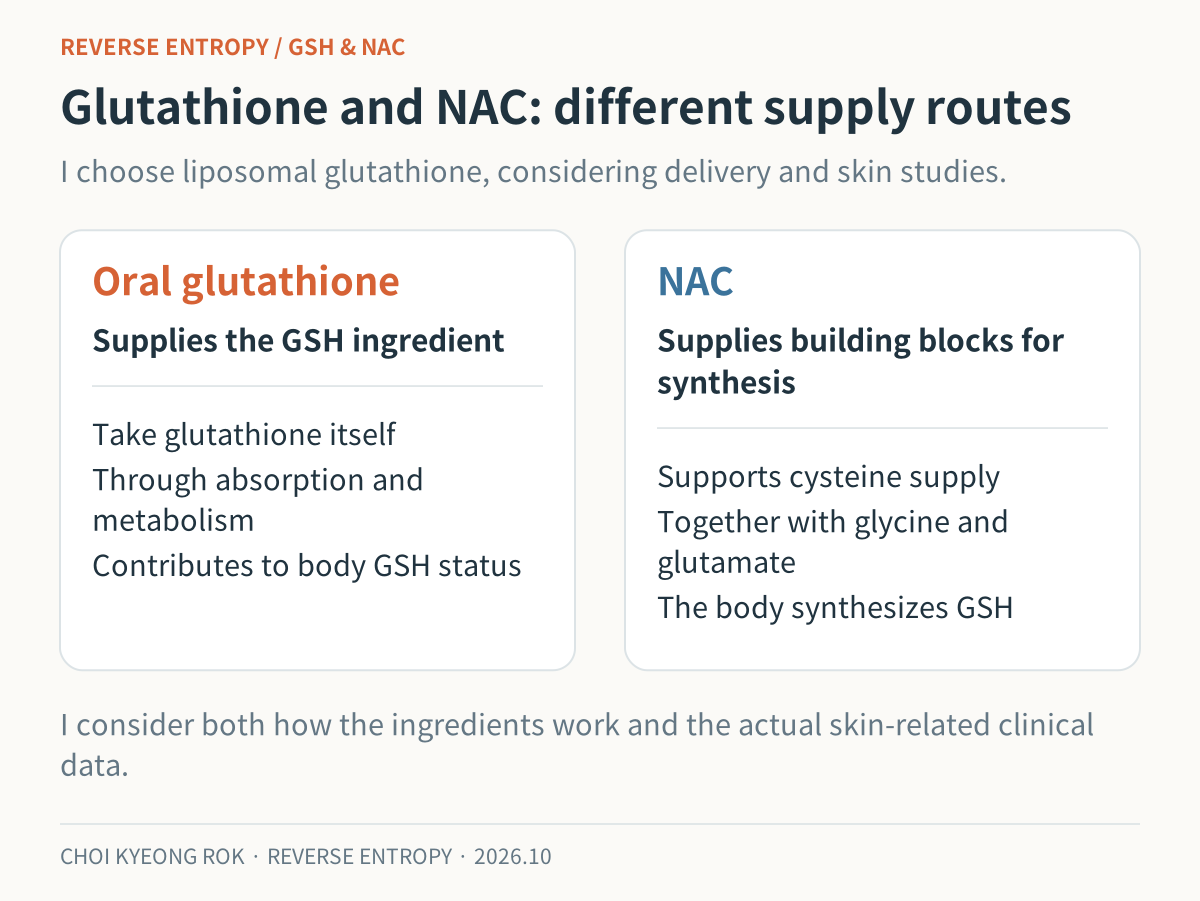
Source: Original conceptual diagram by Reverse Entropy. Schmitt et al., Redox Biology, 2015. [4]
What effects can we expect?
1. Improvements in skin tone and pigmentation
Oral glutathione may help brighten skin tone.
Clinical trials have directly evaluated oral use.
1. Arjinpathana et al.
60 adults · 500 mg daily for four weeks · The melanin index decreased significantly more than with placebo at two of the six sites measured.
2. Weschawalit et al.
60 adults · 250 mg daily for 12 weeks · Improvements in melanin index at some sites and in skin-related measures.
3. Kusumawardani et al.
90 women · Acetylated glutathione 200 mg or reduced glutathione 500 mg for 12 weeks · Faster improvement in some early melanin measures with the acetylated form.
These findings provide a basis for expecting possible changes in skin tone over several weeks to months of use. [2,6,7]
I sometimes have patients with melasma use it for approximately three months and observe their response.
It tends to cause very few side effects, and in my clinical experience some patients occasionally show improvements in pigmentation. Of course, medicines such as tranexamic acid are much more effective, but these medicines also have more severe side effects.
I therefore see glutathione as an additional aid that can be used alongside skin treatment.
2. Supporting antioxidant defenses
From a broader perspective than skin brightening, glutathione's central role is in cellular antioxidant defense.
Our bodies experience oxidative stress as they produce energy and respond to external stimuli. Glutathione helps manage the oxidative burden generated during these processes.
The six-month oral study described earlier found increased glutathione stores, while the liposomal pilot study found lower oxidative-stress markers. These findings provide evidence that oral glutathione can supplement the body's antioxidant defenses. [1,3]
This is also why I take it daily for anti-aging care. Alongside exercise and body-fat management to maintain metabolic health, I am supplementing resources that cells need to respond to oxidative stress.
3. Supporting liver function
Glutathione is also important in the liver's antioxidant and detoxification processes. This role can be seen in the approved indications of medicines.
In Korea, some prescription injectable glutathione medicines include improvement of liver function in chronic liver disease among their approved indications. There are also oral reduced-glutathione medicines approved for drug intoxication; Tachion tablets are one example. [8,9]
A study has also examined liver markers after oral use. In a single-arm pilot study, patients with fatty liver took 300 mg daily for four months. ALT decreased among the 29 participants who completed the study. These data support the potential of oral glutathione as an aid to liver function. [10]
Glutathione is an ingredient that can be considered not only for the skin, but also for supporting the liver's antioxidant and detoxification functions.
Why I take vitamin C and zinc with it
I take glutathione together with vitamin C and zinc.
Vitamin C and glutathione work within an interconnected antioxidant system. Glutathione helps recycle oxidized vitamin C, and vitamin C can share the oxidative burden. [11]
In a study supplementing vitamin C in 48 adults with low vitamin C status, lymphocyte glutathione increased by an average of approximately 18% after 13 weeks. This biochemical and human research provides a background for using the two together to supplement antioxidant defense. [12]
Zinc is a nutrient needed for immunity and the function of many enzymes. Some people worry about zinc deficiency with long-term use.
However, evidence that usual oral glutathione intake causes zinc deficiency in humans remains limited.
Even so, I take a small amount of zinc alongside it as part of looking after immunity and mineral intake.
I adjust the zinc dose by counting the amounts in other supplements too, because excessive supplementation can interfere with copper absorption. [13]
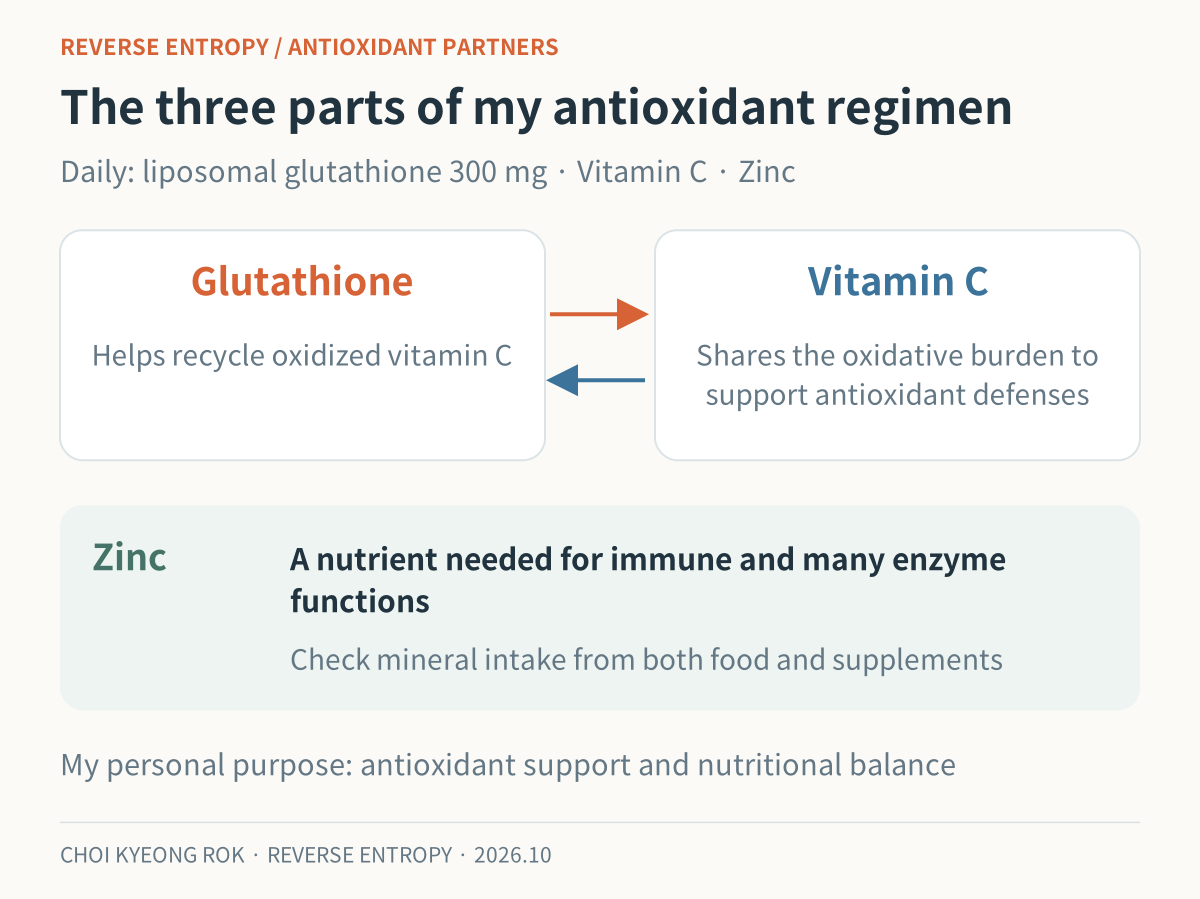
Source: Original image created by Reverse Entropy. May et al., 1996; Lenton et al., 2003; NIH Office of Dietary Supplements. [11–13]
References
Literature checked: October 19, 2026. The 300 mg daily dose is the author's personal regimen, and the responses of patients with melasma reflect the author's clinical experience.
1. Richie JP Jr, et al. Randomized controlled trial of oral glutathione supplementation on body stores of glutathione. European Journal of Nutrition. 2015. PubMed
2. Kusumawardani A, et al. Skin Lightening and Evenness Effects of Oral Supplementation With S-Acetyl Glutathione in Comparison With Reduced Glutathione: A Double-Blind, Placebo-Controlled Clinical Trial. Journal of Cosmetic Dermatology. 2026;25:e71223. Full text
3. Sinha R, et al. Oral supplementation with liposomal glutathione elevates body stores of glutathione and markers of immune function. European Journal of Clinical Nutrition. 2018; published online in 2017. Full text
4. Schmitt B, et al. Effects of N-acetylcysteine, oral glutathione (GSH) and a novel sublingual form of GSH on oxidative stress markers: A comparative crossover study. Redox Biology. 2015;6:198–205. Full text
5. Alfredo MAC, et al. Lack of efficacy of oral N-acetylcysteine in the treatment of facial melasma in women: a randomized, double-blind, placebo-controlled clinical trial. Anais Brasileiros de Dermatologia. 2024;99:928–931. Full text
6. Arjinpathana N, Asawanonda P. Glutathione as an oral whitening agent: a randomized, double-blind, placebo-controlled study. Journal of Dermatological Treatment. 2012; published online in 2010. PubMed
7. Weschawalit S, et al. Glutathione and its antiaging and antimelanogenic effects. Clinical, Cosmetic and Investigational Dermatology. 2017. Full text
8. Ministry of Food and Drug Safety, Republic of Korea. Marketing authorization report for Tachion Injection (vial) (reduced glutathione). Authorized December 14, 2017. Final approved labeling, page 2: improvement of liver function in chronic liver disease. Original authorization report
9. Ministry of Food and Drug Safety, Republic of Korea, NEDrug. Product information for Tachion Tablets 100 mg. Product code 202401710. Nonprescription medicine; indication: drug intoxication. Official product information
10. Honda Y, et al. Efficacy of glutathione for the treatment of nonalcoholic fatty liver disease: an open-label, single-arm, multicenter, pilot study. BMC Gastroenterology. 2017;17:96. Full text
11. May JM, et al. Ascorbate recycling in human erythrocytes: role of GSH in reducing dehydroascorbate. Free Radical Biology and Medicine. 1996. PubMed
12. Lenton KJ, et al. Vitamin C augments lymphocyte glutathione in subjects with ascorbate deficiency. American Journal of Clinical Nutrition. 2003. PubMed
13. NIH Office of Dietary Supplements. Zinc: Fact Sheet for Health Professionals. Physiological functions of zinc, excessive intake, and copper absorption. Official information
#Glutathione #OralGlutathione #LiposomalGlutathione #ReducedGlutathione #AcetylGlutathione #NAC #SkinTone #Melasma #Antioxidants #LiverHealth #ReverseEntropy