Could immunity hold the secret to aging?
As we get older, our skin develops wrinkles and our muscles shrink.
But one organ in our body starts to shrink earlier than these changes appear: the thymus.
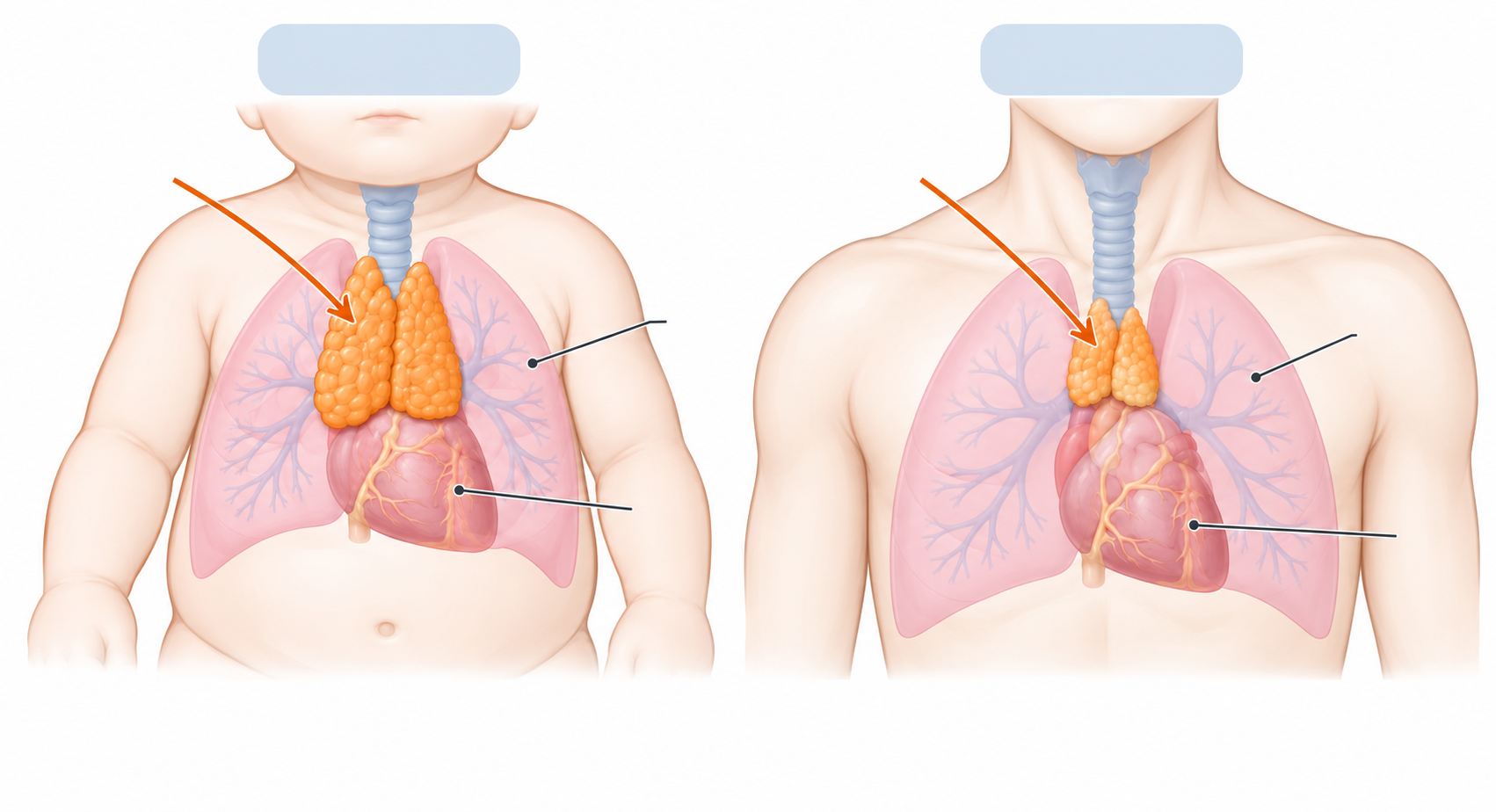
It is a small immune organ behind the breastbone, just above and in front of the heart.
It is active during childhood, but much of its tissue is replaced by fat as we grow. It does not disappear completely.
In 2019, scientists published an intriguing study.
After treatment intended to restore an involuted thymus, thymic MRI findings and estimates of biological age changed.
What happened?
AI-assisted image · Learn more
1. The thymus is a school that trains immune cells
Our bodies have immune cells that identify threats. Among the most important are T cells.
They attack infected cells or regulate the activity of other immune cells.
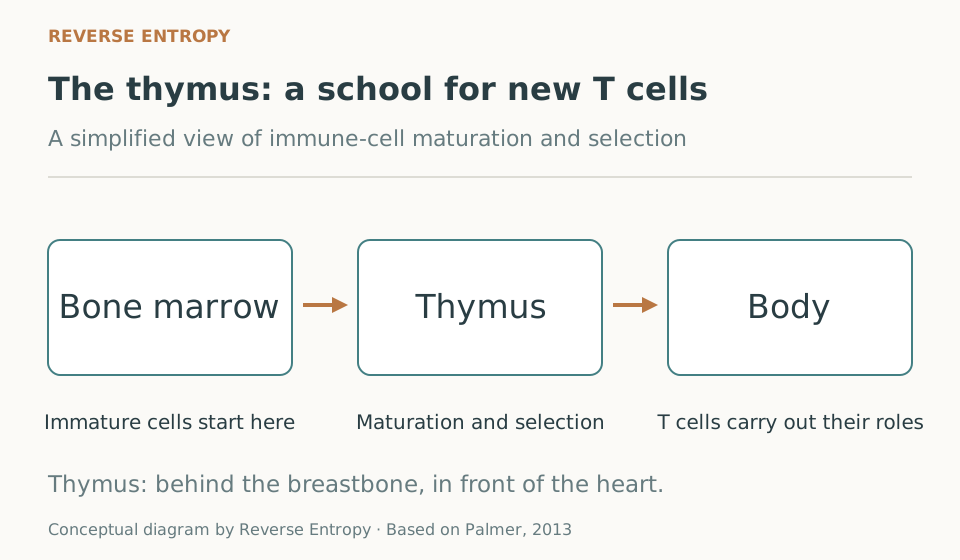
But they do not work properly from the start. Immature cells from the bone marrow travel to the thymus, where they mature and undergo selection.
The bone marrow sends the new students, and the thymus is their school.
Another important role is filtering out cells that might attack our own bodies.
After completing their education, T cells spread throughout the body to protect us.
Source: Created by Reverse Entropy. Conceptual diagram based on Palmer, 2013.
2. Its size shrinks rapidly with age
The thymus is particularly active in childhood.
As we grow, the tissue in which T cells mature gradually decreases and fat increases. This is called thymic involution.
Some function remains in adults, but the capacity to supply new T cells generally declines.
The immune system comes to rely more heavily on cells that remember pathogens it has already encountered. Its ability to respond to new threats may also be affected.
This raises a question for me.
Does the thymus shrink because the body ages? Or does thymic involution accelerate other aspects of aging?
The influence may run in both directions.
I am interested in the possibility that the thymus is one of the important contributors to aging.
3. Researchers tried restoring the human thymus
This was the TRIIM study, published in 2019.
It analyzed approximately one year of treatment in nine men aged 51–65. Ten were initially enrolled, but nine were included in the outcome analysis.
The main drugs were growth hormone, DHEA, and metformin.
Growth hormone was chosen for its potential to restore thymic tissue. Because it can cause problems with glucose and insulin regulation, the researchers added the other two drugs to try to reduce the metabolic burden.
Because several drugs were used together, it is not possible to separate which ingredient produced which change.
4. The thymus looked different on MRI
After treatment, the proportion of nonfat thymic tissue increased, with meaningful changes observed in seven of the nine men.
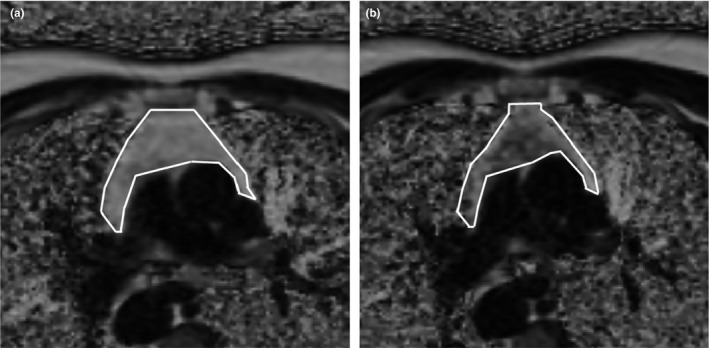
Source: Fahy GM et al. Reversal of epigenetic aging and immunosenescent trends in humans. Aging Cell. 2019;18:e13028. Figure 2. Reproduced unchanged.
Fahy et al., Aging Cell (2019), Figure 2. CC BY 4.0. Original research figure unchanged.
Part of the school building had been put back into use.
An increase in nonfat tissue on MRI is not the same as full restoration of immune function.
Still, the finding is interesting because it suggests that the adult thymus retains some capacity to change.
5. Immune-cell-related markers changed too
Some aspects of immune-cell composition in the blood changed, and markers associated with naïve T cells also increased.
These are T cells that have not yet encountered a specific pathogen. You can think of them as new immune recruits ready to respond to unfamiliar enemies.
This raised the possibility of greater resistance to infection or cancer.
6. Chronological age increased, but the age estimated by testing decreased
The researchers also analyzed DNA methylation, chemical marks attached to DNA.
An epigenetic clock is a tool that estimates age from these patterns.
After approximately one year, averaging the results from several clocks showed a shift toward an estimated age approximately 1.5 years younger than before treatment.
When the year that had passed on the calendar was also taken into account, the gap between estimated age and chronological age had improved by approximately 2.5 years.
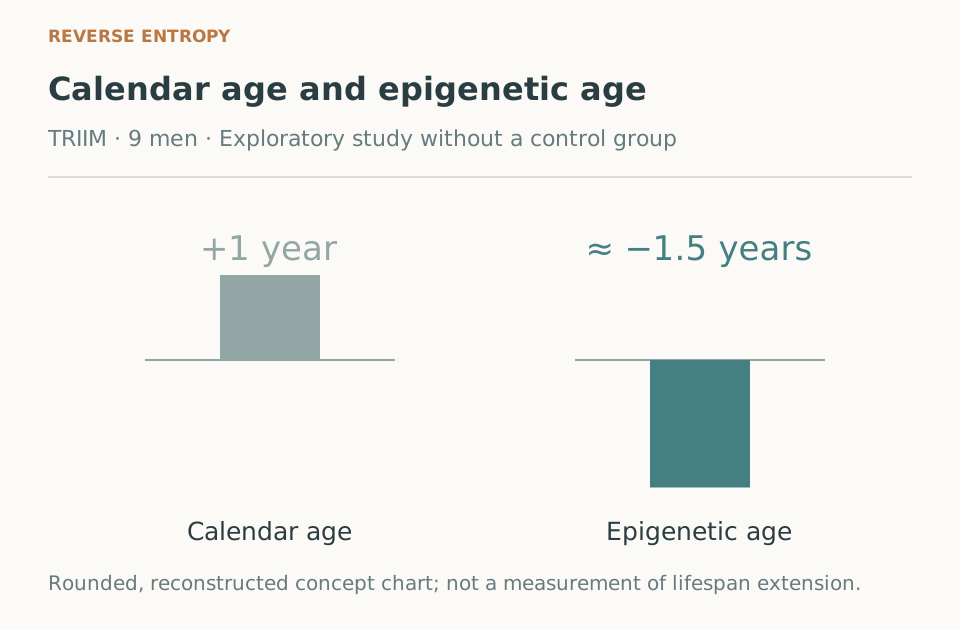
Source: Created by Reverse Entropy, based on the findings of Fahy GM et al., 2019.
7. How should we read these results?
DNA methylation clocks are useful, but they do not perfectly measure every aspect of aging in the body.
Above all, this was a small study of nine people with no placebo control group.
It is also difficult to separate whether thymic restoration caused the change in age estimates or whether other drug effects were responsible.
That does not make the study meaningless.
Its importance lies in observing, in humans, the possibility of changing an involuted thymus and immune-related markers again.
8. The thymus is also part of my personal anti-aging protocol
I consider the immune system's role in aging important.
I therefore include a thymus-related approach to immune regulation in my personal protocol.
What I use is a peptide called thymosin alpha 1 (thymosin α1).
Its main activities include the following.
Regulation of T-cell responses
T cells play an important role in recognizing virus-infected and abnormal cells.
Thymosin alpha 1 may influence T-cell maturation and function, as well as immune signaling.
Immune responses involving natural killer (NK) cells
NK cells are innate immune cells that recognize infected cells and some abnormal cells.
Some studies have observed changes in NK-cell activity or immune-related markers after thymosin alpha 1 administration.
Dendritic cells and innate immune responses
Thymosin alpha 1 has also been studied for its effects on dendritic cells and Toll-like receptor-related immune signaling.
These actions help the body respond to infection.
My interest is not in making immunity indiscriminately stronger.
It is in whether we can maintain balanced immune function as we age.
The immune system is involved not only in defense against infection, but also in clearing damaged cells, monitoring abnormal cells, and repairing tissues.
9. Could the thymus be one of the causes of aging?
The immune system is connected with many tissues, including the skin, blood vessels, muscles, and brain.
If changes in the immune system make it harder to clear damaged cells and regulate inflammation, the tissue environment may also be affected.
I am interested in the possibility that thymic involution accelerates other aspects of aging.
Of course, much still needs to be tested.
A larger thymus or a lower estimated age is not enough on its own.
Will the supply of new T cells actually improve?
Will the range of T cells able to respond to different threats become more diverse?
Will vaccine responses and defenses against infection improve?
Will surveillance of abnormal cells and chronic inflammation improve too?
Ultimately, can this extend the time we live in good health?
Controlled trials involving more people and long-term observation are needed.
Finally
I do not think the goal of anti-aging is simply to lower a test-based age by a few years.
What matters is preserving the body's ability to protect itself, clear damage, and recover for longer.
In that sense, the thymus is an intriguing subject for research.
What if we could restore the function of an organ that involutes as we become adults, and that change could also benefit other organs?
The answer is not yet known. But I intend to keep following research on thymic regeneration and immune aging.
Perhaps one important anti-aging strategy may be to help an aging immune system function properly again.
References
Fahy GM, Brooke RT, Watson JP, et al. Reversal of epigenetic aging and immunosenescent trends in humans. Aging Cell. 2019;18(6):e13028.
Palmer DB. The effect of age on thymic function. Frontiers in Immunology. 2013;4:316.
Thymosin alpha 1: A comprehensive review of the literature. World Journal of Virology. 2020.
#Thymus #ThymicRegeneration #ImmuneAging #AntiAging #BiologicalAge #TCells #ThymosinAlpha1 #TRIIM #ImmuneSystem #HealthyLifespan #ReverseEntropy