You reach for melatonin because you cannot sleep, but you are still tossing and turning long after taking it. Does that mean the dose was too low?
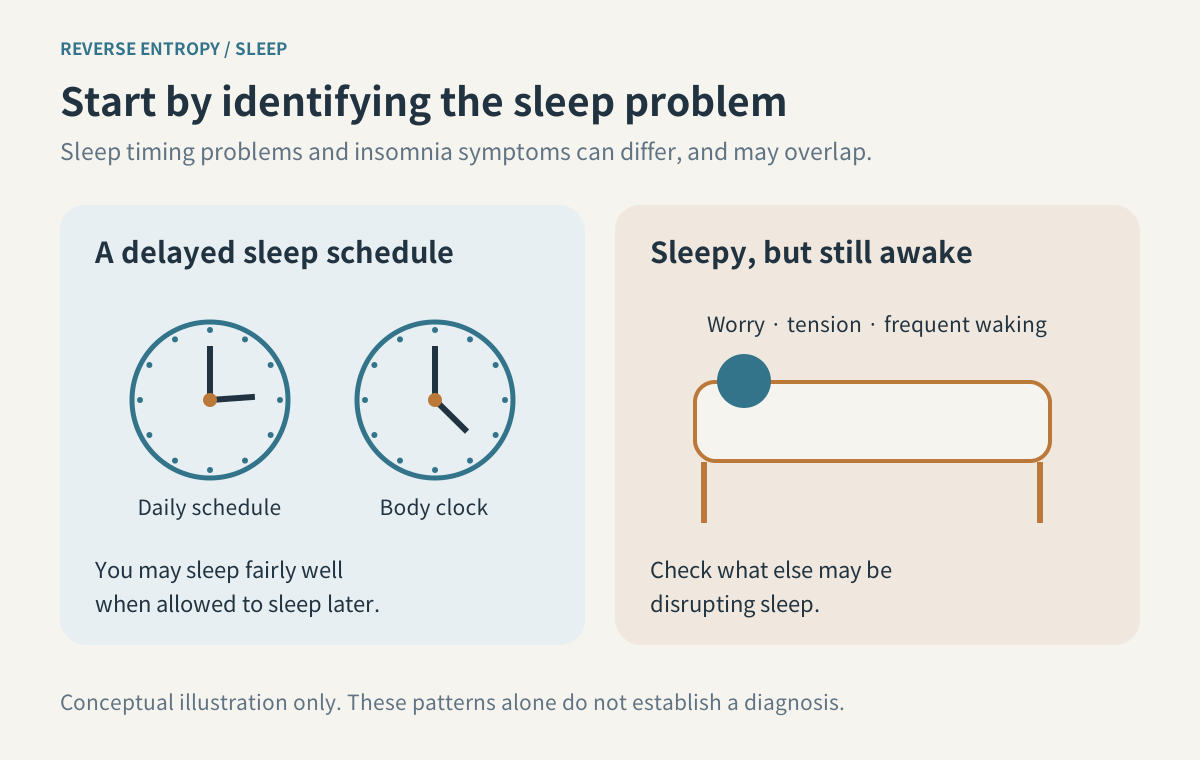
There is something to check before increasing the dose. Falling asleep later than you would like and staying awake despite wanting to sleep are not the same problem. Melatonin is especially useful in certain situations.
Melatonin tells your body that night has arrived
Melatonin is a hormone made in the brain. Its release increases as it gets dark, influencing the body's daily rhythm and sleep. Bright light at night can weaken this signal.
Melatonin can also promote sleepiness. But it should not be thought of as a drug that sends anyone straight to sleep simply by taking it. It is more important to find out when your body thinks it is nighttime and why you are having trouble sleeping.
For example, some people do not feel sleepy until late at night, but feel refreshed when they can go to bed late and wake up late on days without scheduled commitments. In many such cases, the problem lies in the timing of their sleep rhythm.
Others are tired and sleepy, yet lie in bed worrying without falling asleep, or wake up frequently during the night. In these cases, causes beyond sleep timing also need to be considered. The two problems can occur together.
Source: Original infographic by Reverse Entropy. Based on Sletten et al., PLOS Medicine, 2018, and guidance from the US NIH's NCCIH and NHLBI.
Melatonin can be particularly helpful for restoring your sleep rhythm
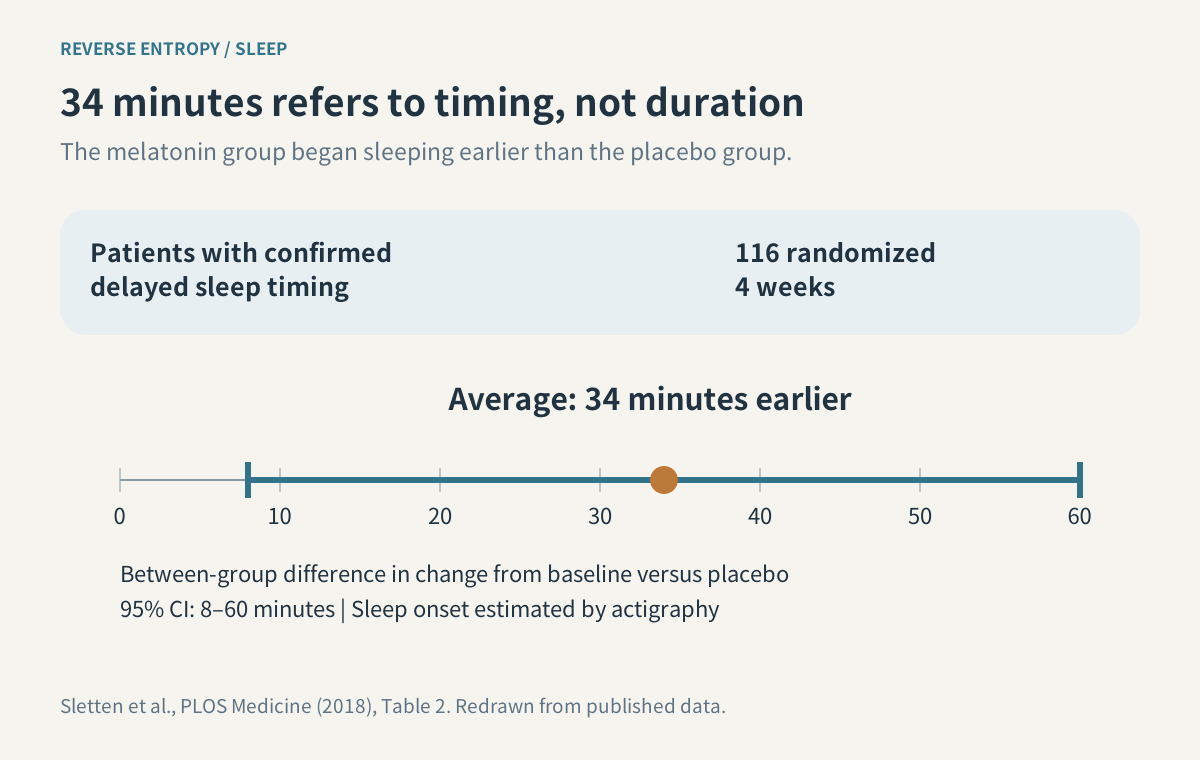
In 2018, Australian researchers selected patients with delayed sleep-wake phase disorder whose melatonin rhythm was also confirmed to be delayed relative to their desired bedtime. They randomly assigned 116 participants to compare melatonin with a placebo over four weeks.
Both groups adjusted their routines to go to bed at a set target time. Under those conditions, the melatonin group's sleep onset moved an average of 34 minutes earlier than the placebo group's. This was estimated using a wrist-worn activity monitor.
There is an important distinction here. The 34 minutes does not mean that participants slept for 34 minutes longer. Nor does it mean that everyone's time from lying down to falling asleep was shortened by 34 minutes. It refers to a shift in sleep timing. Your sleep rhythm matters more than you might think. Going to sleep and waking up at consistent times each day is an essential habit when overcoming insomnia.
Source: Sletten TL et al., PLOS Medicine, 2018, Table 2. Created by Reverse Entropy using published numerical data. The paper is licensed under CC BY.
Before increasing the dose, check the signals of night and day
If you are trying to shift a delayed sleep rhythm but spend every evening looking at your phone under bright lights, and your wake-up time changes dramatically on weekends, your body is receiving inconsistent time signals.
Start by keeping your wake-up time as consistent as possible, getting sunlight during the day, and dimming lights and screens at night. Also consider whether you rely on caffeine or alcohol close to bedtime. Alcohol may make you sleepy at first, but it can lead to sleep that is easily interrupted during the night. Be especially careful with drinks whose caffeine content you may overlook, such as cola or Bacchus, a Korean energy drink. Some of my own patients have overcome insomnia after giving up coffee and cola.
Keeping a record of your bedtime and wake-up time, nighttime awakenings, naps, and caffeine intake makes adjustments much easier. Record the names of any products you take and the times you take them as well.
Long-standing insomnia may need a different treatment
Melatonin may not be effective enough for insomnia that has continued for a long time. Cognitive behavioral therapy for insomnia, or CBT-I, is recommended as the first-line treatment for these patients.
The name may sound complicated, but this treatment addresses both anxiety about not being able to sleep and habits such as lying awake in bed for long periods. It is more than simply telling someone to relax. It makes concrete adjustments to sleep schedules and behavior.
Melatonin can also cause side effects such as headaches, dizziness, and daytime sleepiness, and the safety of long-term use is not fully established. People taking anticoagulants, those with epilepsy, and those who are pregnant or breastfeeding should consult a healthcare professional before using it. Avoid giving it to children on your own initiative.
When the reasons for poor sleep differ, trying to solve them all with the same product makes it harder to find an answer. If melatonin does not seem to work, rather than looking for a higher dose, first ask whether your sleep timing is delayed or whether something else is disrupting your sleep.
References
1. Sletten TL et al. Efficacy of melatonin with behavioural sleep-wake scheduling for delayed sleep-wake phase disorder: A double-blind, randomised clinical trial. PLOS Medicine. 2018;15:e1002587. Original paper PDF
2. US NIH NCCIH. Melatonin: What You Need To Know. Updated May 2024. How it works, effectiveness, and safety
3. US NIH NHLBI. Insomnia: Treatment. Insomnia treatment and sleep habits
4. US NIH NHLBI. Circadian Rhythm Disorders: Treatment. Sleep rhythms and light exposure
#Melatonin #MelatoninEffects #Insomnia #SleepRhythm #TroubleSleeping #SleepHabits #BodyClock #ReverseEntropy